
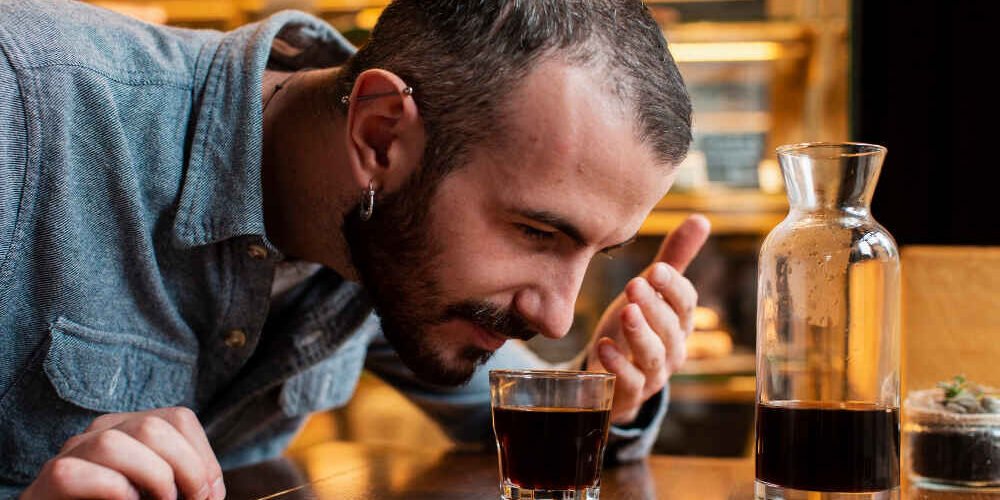
Astringency in coffee is a characteristic that many coffee lovers find interesting, although it is often confused with bitterness. This tactile sensation causes dryness in the mouth and is related to phenolic compounds, such as tannins.
This article will address how to distinguish astringency from common bitterness in cupping. Through a better understanding of these sensations, one can appreciate the complexity of coffee more deeply. Coffee Sapiens delves into this topic to share essential knowledge.
Tactile sensation in coffee: key to the tasting experience
Tactile sensation is essential to appreciate coffee in all its complexity. Astringency, which manifests as a sensation of dryness, plays a crucial role in this experience.
What is astringency and how does it manifest in the mouth?
Astringency can be defined as a tactile sensation that causes a contraction in the mouth. This property, similar to what can be experienced with certain wines or fruits, translates into a perception of dryness that can enrich the tasting experience.
Compounds responsible for the sensation of dryness
Phenolic compounds, such as chlorogenic acids and tannins, are the main ones responsible for this sensation. By interacting with the proteins in saliva, these elements create that characteristic sensation in the mouth that allows us to identify astringency in coffee.
Differences between tactile sensation and flavor
It is essential to distinguish between tactile sensation and flavor. Astringency is a sensory experience that does not translate into a flavor profile per se, while flavors are perceived through the taste buds. Thus, a coffee can have notable astringency without necessarily having a strong or defined flavor.
Relationship between astringency and the perception of quality coffee
The perception of astringency is intrinsically linked to coffee quality. In well-balanced coffees, a certain amount of astringency can be desirable, as it adds complexity. However, an excess could ruin the tasting experience and make the coffee feel harsh.
Comparison between astringency in coffee and red wines
Astringency in coffee can be compared to that found in some red wines. Both offer a similar sensation of dryness, caused by phenolic compounds. However, each beverage brings its own character through its production process and its ingredients.
Understanding bitterness in the cup
This phenomenon is key to appreciating a coffee’s flavor profile. Below are its characteristics and how it manifests in the different varieties of coffee.
Nature and origin of bitterness in different coffee varieties
Bitterness in coffee can vary considerably depending on the variety and the brewing method. It is important to understand what causes it in order to fully enjoy the tasting experience.
Role of chlorogenic acids and other phenolic compounds
Phenolic compounds, especially chlorogenic acids, are fundamental in the formation of bitterness. During the roasting process, these compounds break down, releasing bitter flavors that can be accentuated or toned down depending on the roast level.
Bitterness in Arabica coffees and their varieties
Arabica coffee, known for its smooth profile, presents a less aggressive bitterness compared to other varieties such as Robusta. This is due to its lower concentration of bitter compounds, which makes it more appreciated among coffee lovers.
Perception of bitterness in coffee cupping
The perception of bitterness manifests mainly on the back of the tongue. For cuppers, this adds an interesting complexity, as it interacts with other flavors and aromas, creating a more harmonious profile.
How bitterness contributes to the balance of sweet and acidic flavors
Well-managed bitterness can balance notes of sweetness and acidity, which are vital for dynamic cupping. This contrast allows flavors to stand out, enriching the overall experience in the cup.
Method for distinguishing astringency from bitterness in cupping
Understanding how to distinguish astringency from bitterness is essential for coffee lovers. This process allows a better appreciation of the nuances in each cup.
Identification of tactile sensations vs. taste sensations
Tactile sensations refer to the perception of texture in the mouth, while taste sensations focus on the flavors detected by the taste buds. In coffee cupping, it is vital to recognize how these two experiences interact.
- Astringency generates a sensation of dryness and contraction, which should not be confused with flavor.
- Bitterness, in contrast, is experienced mainly on the back of the tongue and is linked to a clear flavor profile.
Recommended practices for developing sensory perception
To refine one’s sense of cupping, it is useful to adopt some strategies. Establishing a regular cupping routine can be very beneficial.
- Participate in guided cupping sessions to explore different flavor profiles.
- Try various extraction methods that alter astringency and bitterness.
Use of tasting notes to differentiate sensations in the cup
Keeping a written record of cupping experiences can be a valuable tool. By noting impressions about astringency and bitterness, patterns and preferences can be identified.
- Include observations about the texture of the beverage.
- Record the intensity of the bitter flavor and its interaction with other elements.
Factors that influence astringency during coffee preparation
Astringency in coffee can be shaped by various variables during its preparation. Below are the most relevant aspects that affect this characteristic.
Importance of grind size and its impact on extraction
The grinding of coffee is crucial, as it directly affects the amount of compounds extracted during preparation. Coffee ground too fine can release more astringent compounds, generating an excessive sensation of dryness in the mouth.
How to choose the right grinder to avoid excess astringent compounds
Selecting a quality grinder is essential. Flat burr grinders offer a uniform grind, while blade grinders can produce particles of different sizes, increasing the risk of over-extraction and astringency.
Water temperature and contact time: effects on astringency
Water temperature is another determining factor. Water that is too hot can extract astringent compounds, while prolonged contact time can intensify this perception. Ideally, it is recommended to keep the temperature between 90 and 96 degrees Celsius.
Brewing methods and their relationship with the astringent sensation
The method used to prepare coffee significantly impacts astringency. Different techniques produce varied results.
Cold brew preparation and reduction of astringency
Cold brew, due to its cold extraction method, tends to result in a less astringent coffee, offering a smoother and more pleasant experience.
Comparison between espresso, pour-over, and French press
- Espresso, due to its high pressure, can extract bitter and astringent compounds quickly.
- Pour-over allows finer control over extraction time, helping to balance astringency.
- The French press, with longer contact time, can lead to a high presence of astringency if not properly controlled.
Influence of varieties and processing on astringency and bitterness
Coffee varieties and their processing methods play a fundamental role in the development of the astringency and bitterness present in the cup. These factors define the organoleptic characteristics of coffee, influencing the tasting experience.
Phenotypic characteristics of Arabica coffee varieties
Arabica coffee stands out for its complexity and quality. Some of its phenotypic characteristics that affect astringency include:
- Variable content of phenolic compounds, which determine the level of astringency.
- Acidity profile, which can mitigate or accentuate the presence of astringency.
- Texture and body, which influence how these sensations are perceived in the mouth.
Effects of the processing method: natural vs. washed
The coffee processing method considerably impacts its final characteristics. In natural processing, the beans are dried with the pulp, which can intensify astringency due to the concentration of sugars and phenolic compounds. On the other hand, in washed processing, impurities are removed, resulting in a cleaner and less astringent profile.
Relationship between growing altitude and concentration of phenolic compounds
Growing altitude is a determining factor in the production of quality coffee. At higher altitudes, higher concentrations of phenolic compounds are observed, which can increase both astringency and bitterness. These variables combine to create distinctive profiles that coffee lovers appreciate in a good cup of coffee.
Consumer perception and common mistakes when evaluating astringency
The way consumers perceive astringency in coffee can considerably influence their tasting experience. Confusions often arise that affect the appreciation of this sensory complexity.
Confusion between acidity, bitterness, and astringency in cupping
It is common for many coffee lovers to confuse astringency with other sensations, such as acidity and bitterness. These three elements are distinct, although they sometimes intertwine in the cupping experience. Acidity refers to a bright and vibrant flavor profile, while bitterness is associated with a deeper and stronger taste.
On the other hand, astringency is a tactile sensation. It causes dryness in the mouth, distinct from the flavors perceived by the taste buds. Educating the palate is essential to be able to appreciate these differences and enjoy coffee in all its complexity.
How to educate the palate to appreciate the complexity of astringent coffee
Developing the ability to identify astringency and its nuances requires practice. Some methods include:
- Conduct cuppings with attention to tactile and taste sensations.
- Try coffees from different origins and brewing styles.
- Participate in cupping workshops and events that delve deeper into the technique.
Palate education makes it possible to better experience the subtleties of coffee and enjoy a richer tasting experience.
Strategies for coffee lovers to improve the sensory experience
To maximize the cupping experience, it is advisable to keep a journal. Writing down impressions about each coffee while trying different brewing methods reinforces learning. Lists of notes help identify astringent characteristics and how they can complement the overall flavor.
Focusing on texture and being aware of the interaction between coffee and the senses helps improve the tasting experience. Understanding the different nuances helps coffee enthusiasts enjoy the rich complexity of each cup.
Managing astringency and bitterness to maximize quality in the cup
Controlling astringency and bitterness in coffee is essential to elevate beverage quality. The coffee-to-water ratio, as well as the extraction technique, considerably influences the tasting experience.
Coffee-to-water ratio and its influence on sensory balance
A correct ratio between coffee and water is essential to achieve balance in the cup. If too much coffee is used, the beverage can become excessively astringent; on the other hand, with too little, the coffee will be weak and unsatisfying. Therefore, it is recommended to follow traditional guidelines, such as a 1:15 or 1:18 ratio, adjusting according to personal taste.
Adjustments in grind size and extraction to control tactile sensations
The grind size of the beans has a direct impact on how astringency and bitterness are perceived. A grind that is too fine can extract more astringent compounds, resulting in a cup with an unpleasant sensation. On the other hand, a coarser grind favors a more balanced extraction. It is crucial to experiment until finding the grind size that best suits the chosen brewing method.
Role of the barista in optimizing the coffee’s sensory profile
The barista’s experience is key to managing astringency and bitterness in each cup. This professional must know the coffee variety and adapt extraction parameters, such as water temperature and infusion time. An attentive barista can quickly adjust the technique to highlight the coffee’s best characteristics, elevating the consumer’s experience. The ability to combine these elements is what makes the difference between an ordinary coffee and an exceptional one.

Soy Javier Romero, especialista en Marketing Digital, Coffee Lover y redactor de Coffee Sapiens.
Bienvenidos a Coffee Sapiens. Somos un medio digital independiente dedicado a la divulgación, análisis y cultura del café.