
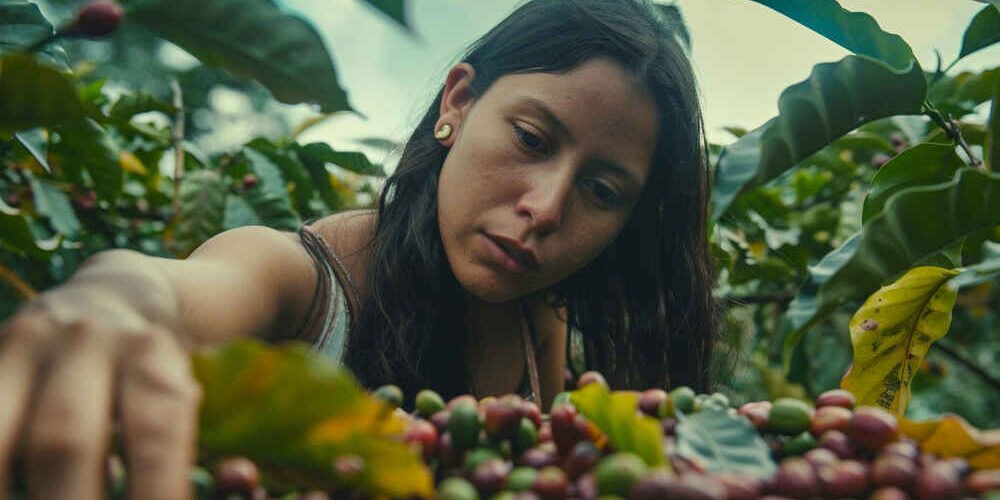
The Maragogype variety, known as the elephant bean, stands out for its size and unique flavor profile. This coffee, which comes from a natural mutation of the Typica variety, has found a home in various coffee-growing regions around the world. Throughout this article I explore its origin, physical characteristics, and flavor profile, as well as the challenges growers face. I also offer tips on how to brew this exceptional coffee and enjoy its richness in the cup. Let’s begin!
Origin and spread of Maragogype coffee
The history of Maragogype coffee dates back to 1870, when it was discovered in the municipality of Maragogipe, in the state of Bahia, Brazil. This coffee is a natural mutation of the Typica variety, considered one of the oldest in the Arabica family. The distinctive feature of Maragogype beans is their size, noticeably larger than that of other varieties, hence its nickname “elephant bean.” Over time, Maragogype has found a favorable environment for cultivation in several Central American countries. In Mexico, it has found a special place in Chiapas, where volcanic soils and the temperate climate create an optimal setting. In Guatemala it is grown in regions such as Antigua and Huehuetenango, with mineral-rich soils and diverse microclimates. In Nicaragua, volcanoes and high rainfall have created favorable conditions for its growth.
Physical characteristics of the elephant bean
Maragogype beans are considerably larger than those of other Arabica varieties. The bean’s more porous structure affects not only its size but also its brewing process, allowing greater flavor extraction during preparation, although it requires special attention during roasting and grinding. Its lower density presents several challenges: it requires more careful and controlled roasting to prevent it from burning or developing undesirable flavors. Compared with other varieties such as Typica or Bourbon, Maragogype stands out for its large size but also for its wide diversity of flavors, which can differ considerably, offering more complex fruity and floral nuances.
Cultivation and agricultural challenges of Maragogype
Farmers must be patient, as this coffee plant has a longer production cycle: a Maragogype plant takes around four years to produce its first harvest, longer than varieties such as Typica or Bourbon. Yields also tend to be lower. It shows some vulnerability to pests and diseases, with leaf rust being one of the most significant threats, which requires rigorous agricultural practices such as crop rotation and biological control. Many producers are adopting sustainable practices in Central America’s volcanic regions: the use of organic fertilizers and compost, the implementation of agroforestry systems that integrate coffee cultivation with forest conservation, and efficient water management to optimize irrigation.
Flavor profile and cup experience
Maragogype is characterized by fruity notes ranging from tropical fruits such as mango and pineapple to hints of molasses, floral notes with the fragrance of fresh flowers, and spicy notes in the finish that balance the sweetness. On the palate it stands out for its medium body, a balanced acidity that avoids unpleasant excesses, and a lingering finish that invites the next sip. Its smoothness is another wonderful quality: it stands out for its natural sweetness and the notable absence of bitterness, making the tasting experience extremely pleasant and accessible even for those who are not regular coffee drinkers.
Soil and climate conditions for high-quality coffee
Volcanic soils are highly valued in Maragogype cultivation, thanks to their richness in minerals such as phosphorus, potassium, and calcium, their loose texture that allows efficient drainage, and their good moisture-retention capacity. Climate is also crucial: moderate temperatures between 18°C and 24°C are ideal, high altitudes contribute to slower ripening that allows for more complex sugar development, and annual rainfall between 1,200 and 2,000 mm ensures the necessary water without causing disease problems.
Manual brewing to enhance its unique flavor
To brew a Maragogype coffee that captures its essence, manual methods such as the V60 and the French press are very effective. The V60 allows precise control over extraction, resulting in a clean and bright cup; the French press highlights the bean’s oils, providing a fuller body. Key parameters: water temperature at 93°C to extract the oils without burning the delicate notes, a fine grind of around 884 microns for the V60, and a 1:17 coffee-to-water ratio for a balanced brew. Roasting plays a fundamental role: a natural and controlled roast favors the preservation of its aromatic characteristics, while one that is too dark can hide the subtleties of its fruity and floral notes.
Presence and relevance of Maragogype in the world of specialty coffee
As the global specialty coffee market grows, Maragogype is gaining prominence, capturing the attention of coffee shops and roasters from different parts of the world. It has positioned itself in competitions and trade fairs, receiving recognition that elevates its status, with coffee lovers willing to pay premium prices for its uniqueness. Compared with other varieties such as Bourbon or Typica, its smoother texture and fruity and floral notes make it a popular choice among experienced cuppers. For the coffee lover, enjoying a cup of Maragogype is a ritual: each sip reveals subtleties that make this variety unique, from its enveloping aroma to its silky flavor, turning it into a moment of enjoyment and connection beyond a simple beverage.
Frequently asked questions about the Maragogype variety
Why is Maragogype called the “elephant bean”?
Because of the exceptionally large size of its beans compared with other Arabica coffee varieties. This natural mutation of the Typica variety, discovered in 1870 in Brazil, produces notably larger beans with a more porous structure.
What is the best brewing method for Maragogype?
The V60 is ideal for maintaining the clarity and brightness of its fruity and floral flavors. The French press, meanwhile, highlights the bean’s oils, giving it a fuller body. Both methods allow its delicate and complex profile to be appreciated.
Why is Maragogype more expensive than other coffees?
Because of its longer production cycle (around four years until the first harvest), its lower yield per plant, and the special care it requires during cultivation and roasting to preserve its delicate characteristics.
What roast is most recommended for this variety?
A natural and controlled roast, generally light to medium, since a roast that is too dark can hide the subtle fruity, floral, and spicy notes that make this variety unique.
In which countries is Maragogype mainly grown?
In addition to Brazil, its place of origin, it is grown in Mexico (especially in Chiapas), Guatemala (Antigua and Huehuetenango), and Nicaragua, where volcanic soil conditions and climate favor its development.
At Coffee Sapiens, we never stop researching to bring you the varieties that deserve a special place in your cup. Maragogype is one of those coffees that, once you discover it, reminds you why the world of coffee never stops surprising. Thank you for being there, Coffee Lover!
{ “@context”: “https://schema.org”, “@type”: “FAQPage”, “mainEntity”: [ { “@type”: “Question”, “name”: “Why is Maragogype called the elephant bean?”, “acceptedAnswer”: { “@type”: “Answer”, “text”: “Because of the exceptionally large size of its beans, a natural mutation of the Typica variety discovered in 1870 in Brazil, with a more porous structure than other varieties.” } }, { “@type”: “Question”, “name”: “What is the best brewing method for Maragogype?”, “acceptedAnswer”: { “@type”: “Answer”, “text”: “The V60 preserves the clarity of its fruity and floral flavors. The French press highlights the oils, giving it a fuller body. Both allow its delicate profile to be appreciated.” } }, { “@type”: “Question”, “name”: “Why is Maragogype more expensive than other coffees?”, “acceptedAnswer”: { “@type”: “Answer”, “text”: “Because of its longer production cycle (around four years), its lower yield per plant, and the special care it requires during cultivation and roasting.” } }, { “@type”: “Question”, “name”: “What roast is most recommended for this variety?”, “acceptedAnswer”: { “@type”: “Answer”, “text”: “A natural and controlled roast, generally light to medium, since one that is too dark can hide the subtle fruity, floral, and spicy notes.” } }, { “@type”: “Question”, “name”: “In which countries is Maragogype mainly grown?”, “acceptedAnswer”: { “@type”: “Answer”, “text”: “In addition to Brazil, where it originated, it is grown in Mexico (Chiapas), Guatemala (Antigua and Huehuetenango), and Nicaragua, thanks to favorable volcanic conditions.” } } ] }

Soy Javier Romero, especialista en Marketing Digital, Coffee Lover y redactor de Coffee Sapiens.
Bienvenidos a Coffee Sapiens. Somos un medio digital independiente dedicado a la divulgación, análisis y cultura del café.