
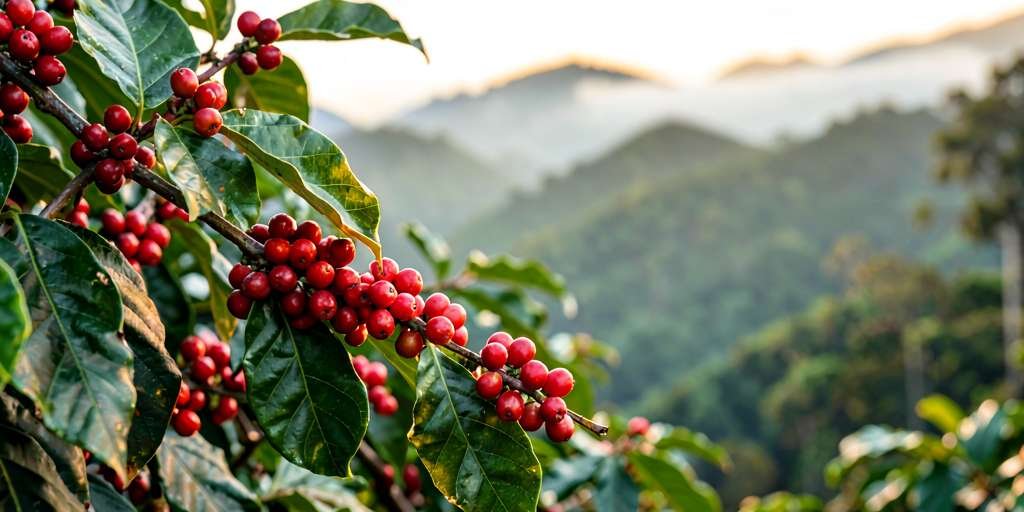
I love it when I discover coffee varieties with a story as local and authentic as that of Caturra Chiroso. A variety that was born in Urrao, Antioquia, that made it to the Cup of Excellence, and that today is being talked about by the best cuppers in the world. That, for a coffee enthusiast like me, is hard to ignore.
I have thoroughly researched its origin, botanical characteristics, sensory profile, and market potential so you can learn everything about this Colombian gem. I hope you enjoy this journey through the mountains of Antioquia as much as I did. Let’s begin!
Origin and geographic context of Caturra Chiroso
Caturra Chiroso coffee has its roots in the municipality of Urrao, located in the department of Antioquia, Colombia. This mountainous region is renowned for its ideal climatic conditions and biodiversity, which create an environment conducive to growing high-quality coffee. Thanks to the altitude, with crops located between 1,900 and 2,200 meters above sea level, Caturra Chiroso coffee farms avoid common diseases that affect other varieties.
The history of this variety is linked to traditional practices that coffee growers have maintained over the years. Careful crop selection has made it possible to preserve a unique genetic heritage, since Caturra Chiroso is, according to research carried out, an expression of an Ethiopian ‘landrace’.
- Location: Municipality of Urrao, Antioquia, Colombia
- Climatic conditions: Altitudes between 1,900 and 2,200 meters
- Traditional practices: Preservation of genetic heritage
- Botanical identification: Relationship with an Ethiopian ‘landrace’
Caturra Chiroso has begun to stand out on the global coffee scene. Since its first appearance in competitions such as the Cup of Excellence in 2014, it has been recognized for its quality and has captured the attention of coffee lovers around the world.
Botanical and agronomic characteristics of the variety
Caturra Chiroso stands out in the coffee world both for its botanical characteristics and its agricultural performance. The plant tends to be medium-sized with a fairly compact structure. Its leaves are a deep green, indicating healthy development. One of the most interesting characteristics of this variety is its elongated fruits, which give rise to the name «Chiroso» because of their shape, similar to a stretched T-shirt. The beans are harvested exclusively by hand, making it possible to select only those fruits at their optimal point of ripeness.
- It requires constant agronomic management, including multiple fertilizations per year.
- It is susceptible to various diseases, which requires careful cultivation practices.
- The fermentation and washing process is essential to highlight its sensory qualities.
Sensory profile and cup quality of Caturra Chiroso
Caturra Chiroso stands out for an exceptional sensory profile that sparks the interest of the most passionate coffee lovers. When tasting it, you can notice vibrant notes of freshness, especially mint, which makes it unique compared with other varieties. This freshness is accompanied by a round body and a balanced sweetness reminiscent of brown sugar.
- Aromatic Notes: Fresh mint, citronella, and chamomile.
- Body: Round and balanced.
- Sweetness: Balanced with a touch of brown sugar.
The attributes of this variety are no coincidence; they come from meticulous cultivation and the attention paid during processing. Fermentation practices, both anaerobic fermentation and oxidation, are crucial to bringing out its unique characteristics. This process, which includes up to 36 hours of oxidation and 80 hours of anaerobic fermentation, maximizes the nuances perceived in each cup.
Cultivation, harvest, and post-harvest processes
Growing Caturra Chiroso is an art that requires commitment and dedication from coffee growers. The harvesting process is essential to guarantee bean quality. The coffee cherries are harvested at their optimal point of ripeness, which requires careful manual work.
- Fermentation: The cherries undergo a fermentation process that lasts approximately 36 hours, during which a unique flavor profile develops.
- Anaerobic fermentation: After the initial fermentation, the cherries are placed in a controlled environment for 80 hours of anaerobic fermentation.
- Washing: After the fermentation processes, the cherries are washed with hot water to remove any residue and enhance clarity in the flavor.
Comparison with other Colombian coffee varieties
Caturra Chiroso stands as one of the most outstanding varieties within the broad spectrum of Colombian coffees. One of the most notable differences from traditional Caturra lies in its sensory profile: while Caturra Chiroso is characterized by its fresh mint notes and round body, traditional Caturra offers a more direct flavor with nuances that may be reminiscent of fruit. Geisha, for its part, shares with Caturra Chiroso a complexity in its aroma profile, although Geisha usually presents more intense floral and fruity notes.
- Caturra Chiroso stands out for its freshness and mint notes.
- Traditional Caturra offers a more direct and fruitier profile.
- Geisha is famous for being floral and fruity, although different from Chiroso.
- Caturra Chiroso requires more careful and specific cultivation practices.
Market potential and sustainability of Caturra Chiroso
Caturra Chiroso is positioned as a variety with notable potential in the global specialty coffee market. Coffee growers in Urrao have implemented agricultural practices that not only help preserve the region’s biodiversity, but also improve coffee quality.
- Use of responsible cultivation techniques that avoid the excessive use of chemicals.
- Selection of native varieties that are more resistant to disease.
- Proper management of water resources, ensuring efficient use of water.
- Training coffee growers in sustainable agriculture practices.
With the support of consumers who value fair and sustainable trade, recognition of Caturra Chiroso is expected to continue growing. Its inclusion in competitions such as the Cup of Excellence has boosted its international visibility, giving it added value that benefits both producers and the coffee industry as a whole.
Frequently asked questions about Caturra Chiroso
What makes Caturra Chiroso special compared with other Colombian coffees?
Its unique sensory profile is what most sets it apart: notes of fresh mint, citronella, and chamomile clearly distinguish it from traditional Caturra and other Colombian varieties. In addition, its origin as an Ethiopian ‘landrace’ on Antioquian soil gives it a genetic singularity that makes it one of a kind.
Is Caturra Chiroso easy to grow?
Not especially. It requires multiple fertilizations per year, is susceptible to disease, and demands very careful selective manual harvesting. That difficulty, however, is offset by the richness of its flavor and its growing value in the specialty coffee market.
Where is Caturra Chiroso mainly grown?
Mainly in the municipality of Urrao, in the department of Antioquia, Colombia, at altitudes between 1,900 and 2,200 meters above sea level. Those conditions of altitude, temperature, and soil are key to developing its distinctive sensory profile.
What sustainable practices are applied in its cultivation?
Coffee growers in Urrao implement responsible cultivation techniques that avoid the excessive use of agrochemicals, select resistant varieties, properly manage water, and receive ongoing training in sustainable agriculture. These practices protect both the local ecosystem and coffee quality.
How has its participation in the Cup of Excellence affected Caturra Chiroso?
Its first appearance in the Cup of Excellence in 2014 was a turning point: it boosted its international recognition and began to attract the attention of roasters and buyers from around the world. Since then, its visibility and demand have continued to grow.
What are the benefits of sustainable production for Chiroso coffee growers?
Sustainable production allows them to improve coffee quality — which directly affects price — optimize the use of natural resources, and secure their economic livelihood in the long term. It also opens the door to fair-trade certifications that expand their access to more demanding and profitable international markets.
I hope all this information about Caturra Chiroso can be useful to you, whether to look for this very special coffee the next time you visit a good specialty coffee shop or simply to better understand Colombia’s coffee richness. At Coffee Sapiens we never stop researching and learning about the wonderful world of coffee, so stay tuned because I’ll soon be posting more updates on the blog. Thanks for being there, Coffee Lover!
{ “@context”: “https://schema.org”, “@type”: “FAQPage”, “mainEntity”: [ { “@type”: “Question”, “name”: “What makes Caturra Chiroso special compared with other Colombian coffees?”, “acceptedAnswer”: { “@type”: “Answer”, “text”: “Its unique sensory profile: notes of fresh mint, citronella, and chamomile clearly set it apart from traditional Caturra. Its origin as an Ethiopian ‘landrace’ on Antioquian soil gives it a genetic singularity that makes it one of a kind.” } }, { “@type”: “Question”, “name”: “Is Caturra Chiroso easy to grow?”, “acceptedAnswer”: { “@type”: “Answer”, “text”: “No. It requires multiple fertilizations per year, is susceptible to disease, and demands very careful selective manual harvesting. This is offset by the richness of its flavor and its growing value in the specialty market.” } }, { “@type”: “Question”, “name”: “Where is Caturra Chiroso mainly grown?”, “acceptedAnswer”: { “@type”: “Answer”, “text”: “Mainly in the municipality of Urrao, Antioquia, Colombia, at altitudes between 1,900 and 2,200 meters above sea level.” } }, { “@type”: “Question”, “name”: “What sustainable practices are applied in its cultivation?”, “acceptedAnswer”: { “@type”: “Answer”, “text”: “Responsible cultivation techniques that avoid the excessive use of agrochemicals, selection of resistant varieties, proper water management, and ongoing training in sustainable agriculture.” } }, { “@type”: “Question”, “name”: “How has its participation in the Cup of Excellence affected Caturra Chiroso?”, “acceptedAnswer”: { “@type”: “Answer”, “text”: “Its first appearance in 2014 was a turning point: it boosted its international recognition and attracted the attention of roasters and buyers from around the world. Since then, its visibility and demand have continued to grow.” } }, { “@type”: “Question”, “name”: “What are the benefits of sustainable production for Chiroso coffee growers?”, “acceptedAnswer”: { “@type”: “Answer”, “text”: “Improving coffee quality and price, optimizing the use of natural resources, and ensuring long-term economic livelihood. It also opens the door to fair-trade certifications that expand access to international markets.” } } ] }

Soy Javier Romero, especialista en Marketing Digital, Coffee Lover y redactor de Coffee Sapiens.
Bienvenidos a Coffee Sapiens. Somos un medio digital independiente dedicado a la divulgación, análisis y cultura del café.