
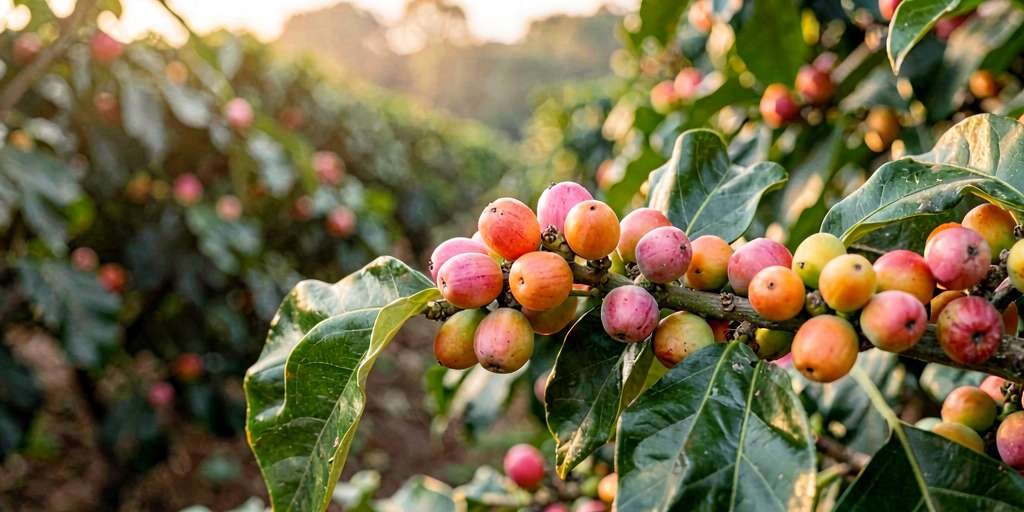
Few things spark as much curiosity in me as the natural mutations of the same coffee variety. Bourbon is one of those coffees I have been studying for some time, and discovering that pink, orange, and yellow Bourbon are not simple color variations, but that each one has its own character in the cup, seemed fascinating to me.
I have thoroughly researched their agronomic differences, flavor profiles, and the processing techniques that suit them best, and I have gathered everything in this article. I hope you find it as interesting as I do to explore this world of mutations within the same family. Let’s get started!
Origin and evolution of the Bourbon variety
The history of the Bourbon variety is fascinating and rich, deeply intertwined with the development of Arabica coffee as a species. This variety originated from a natural mutation, which makes it a genetic treasure in the coffee world. Its journey began in the highlands of Ethiopia, where the climatic conditions favored its growth. Over time, the plant grew wild and became established in various regions of the world.
In the 16th century, Bourbon was cultivated in Yemen, where coffee cultivation had a notable impact on local culture. During the age of exploration and trade, the French brought this variety to Île Bourbon, now known as Réunion Island. It was during this period that Bourbon began to gain recognition for its flavor and quality.
The expansion of Bourbon coffee into the Americas took place in the 19th century, thanks to French missionaries who ventured into new lands. This process of introduction caused the variety to flourish in ideal climates, giving rise to unique flavor profiles that baristas would appreciate centuries later. In the New World, Bourbon found favorable terrain in countries such as Brazil and Colombia, where it was successfully cultivated.
- The arrival of Bourbon in the Americas facilitated the development of cultivation techniques that improved its productivity.
- The characteristics of its bean began to be valued not only by producers, but also by consumers seeking quality coffee.
Over time, Bourbon gained popularity and became one of the most emblematic varieties on the global coffee scene. Today, coffee lovers value its complexity of flavor and aroma, which is often highlighted in barista competitions around the world. The legacy of this variety lives on, leaving a significant mark on the history of coffee.
Agronomic characteristics of Bourbon mutations
The Bourbon variety stands out not only for its flavor and aromas, but also for its agronomic particularities that affect its cultivation and management. These mutations, such as pink, orange, and yellow Bourbon, present some notable differences that are essential for coffee producers.
One of the most relevant characteristics of Bourbon mutations is their morphology. These plants tend to be taller than other varieties, which requires certain management strategies in the plantation. The height of the plants contributes to greater exposure to sunlight, a positive aspect as long as shade is managed correctly. Proper cultivation under a shade canopy can facilitate the optimal development of each cherry, benefiting both bean quality and ripening.
Cherry color is also an aspect to consider. Pink Bourbon, for example, displays a pink hue that can indicate optimal ripeness and a good amount of sugars. Orange Bourbon, meanwhile, produces cherries with a vibrant color that stand out for their bright acidity, while Yellow Bourbon, although similar to the traditional one, usually shows less acidity and more chocolate notes in its flavor profile.
Agronomic management is key to ensuring the health and productivity of the plants. The Bourbon variety is especially susceptible to diseases, which demands constant attention and comprehensive plant health management. Recommended practices include:
- Carry out regular monitoring to detect signs of pests or diseases.
- Implement crop rotation to maintain biodiversity.
- Use appropriate pruning techniques to encourage air circulation and light penetration.
Soil selection is also essential. Bourbon coffees require well-drained, nutrient-rich soils. This is essential for proper root development and obtaining high-quality beans. Proper fertilizer management and soil conservation will help optimize yield and final coffee quality.
Flavor profiles and cup quality of Bourbon and its mutations
The Bourbon variety, in its different mutations, is recognized for its complexity and richness of flavor profiles, which makes it a standout option in the world of specialty coffee. Its distinctive notes vary considerably among the variants, bringing a unique experience to every cup. Each mutation, whether Pink, Orange, or Yellow Bourbon, presents its own characteristics that delight coffee lovers.
Pink Bourbon, known for its vibrant color, offers fruity and floral flavors that are hard to forget. In the cup, notes of fruits such as cherry and raspberry are clearly identified, combined with floral nuances that bring freshness. A natural sweetness stands out in its profile, making each sip a celebration of nature. Its body is usually silky, which helps these notes shine even more.
On the other hand, Orange Bourbon presents a palette of flavors that includes hints of citrus and caramel. This mutation stands out for its bright acidity, which gives it a lively character. Nuances of orange and grapefruit can often be detected, bringing a refreshing sensation to the beverage.
Yellow Bourbon, although similar in some characteristics to traditional Bourbon, sets its own course thanks to its emphasis on chocolate and sweetness. This varietal tends to present a less acidic profile, favoring notes of cocoa and dulce de leche. Many baristas appreciate its ability to work perfectly with brewing methods that highlight its smoothness, creating a pleasant experience in the cup.
Processing and fermentation techniques for Bourbon
The processing and fermentation of Bourbon coffee are crucial to developing its distinctive sensory profile. One of the most common techniques is dry processing: the cherries are spread out in the sun on flat surfaces, allowing them to dry naturally and retain their sugars for longer. Wet processing removes the pulp immediately after harvest, resulting in a cleaner coffee with brighter acidity. Anaerobic fermentation has recently gained popularity, generating more intense flavor profiles and unique nuances.
- Dry processing: allows fruity notes to develop.
- Wet processing: highlights brighter acidity.
- Anaerobic fermentation: intensifies flavor profiles.
Sustainable management and agronomic challenges of Bourbon
Cultivating the Bourbon variety poses a series of agronomic challenges that require meticulous attention. The Bourbon variety is known for its vulnerability to various diseases and pests, such as coffee rust. To stand out in this challenging environment, producers must implement agronomic practices that prioritize soil and plant health.
- Crop rotation: Alternating coffee plantings with other crops can reduce pest and disease pressure.
- Use of shade: Growing Bourbon under a tree canopy helps maintain stable microclimatic conditions.
- Biological control: Encouraging biodiversity on farms through the introduction of beneficial insects can minimize the use of chemical pesticides.
- Organic fertilization: Using compost and green manures improves soil quality without negatively impacting the environment.
Preparation and brewing methods for Bourbon with a distinctive profile
Preparing Bourbon coffee offers a unique experience that can highlight its specific characteristics. For Pink Bourbon, using the pour-over method can emphasize floral and fruity notes. Orange Bourbon benefits from more filtered brews such as the Chemex, which highlights its fruity characteristics. Yellow Bourbon, with its chocolate notes and lower acidity, expresses itself best with the French press.
- French press: Ideal for Yellow Bourbon, accentuating its body and texture.
- V60: Highlights the floral and fruity notes of Pink Bourbon.
- Chemex: Perfect for enhancing the acidity and citrus nuances of Orange Bourbon.
Current trends and outlook in the Bourbon market
In the last decade, interest in specialty coffee varieties has been increasing, and Bourbon is no exception. Bourbon mutations are gaining popularity because of their uniqueness. Pink, orange, and yellow cherries not only provide visual variations, but also offer unique tasting experiences, making them especially attractive to roasters. As we move further into 2026, the outlook is promising thanks to the unprecedented interest they are generating among younger consumers.
Frequently asked questions about Bourbon and its mutations
What is the main difference between Pink, Orange, and Yellow Bourbon?
Each mutation presents a different cup profile. Pink stands out for its floral and red fruit notes with a silky body; Orange offers bright acidity with citrus and caramel nuances; and Yellow leans toward notes of chocolate and dulce de leche with lower acidity. The color of the cherry is not just aesthetic: it reflects differences in pigment synthesis that directly influence flavor.
Why is Bourbon so susceptible to diseases such as rust?
Bourbon has a relatively narrow genetic base, which makes it more vulnerable to pathogens such as the fungus Hemileia vastatrix. Unlike hybrid varieties developed specifically for resistance, Bourbon prioritizes sensory quality, which entails greater agronomic fragility that requires constant preventive management.
Which processing method best enhances Pink Bourbon?
Natural or honey processing works especially well with Pink Bourbon, as it allows the sugars in the pulp to permeate the bean during drying, intensifying the fruity notes and sweetness that characterize this mutation. Washed processing also yields good results if greater cleanliness and defined acidity are desired.
In which regions of the world is Bourbon best grown?
Bourbon thrives in medium-to-high altitude areas with well-drained soils rich in organic matter. Regions such as Colombia’s Coffee Axis, the highlands of El Salvador, Guatemala, and some areas of Brazil and Rwanda offer ideal conditions. Each terroir leaves its mark on the final cup profile.
Is it worth paying more for a specialty Bourbon coffee?
If you value sensory complexity and the story behind each cup, absolutely. Specialty Bourbon is usually grown on farms with careful agronomic management, selective hand harvesting, and controlled processing, all of which translates into a cup experience that is markedly superior to that of a commercial coffee.
I hope all this information about Bourbon and its mutations is useful to you, whether to better choose your next coffee or simply to broaden your knowledge about this very special variety. At Coffee Sapiens, we never stop researching and learning about the wonderful world of coffee, so stay tuned because I will keep posting new content to the blog soon. Thanks for being there, Coffee Lover!
{ “@context”: “https://schema.org”, “@type”: “FAQPage”, “mainEntity”: [ { “@type”: “Question”, “name”: “What is the main difference between Pink, Orange, and Yellow Bourbon?”, “acceptedAnswer”: { “@type”: “Answer”, “text”: “Each mutation presents a different cup profile. Pink stands out for its floral and red fruit notes with a silky body; Orange offers bright acidity with citrus and caramel nuances; and Yellow leans toward notes of chocolate and dulce de leche with lower acidity.” } }, { “@type”: “Question”, “name”: “Why is Bourbon so susceptible to diseases such as rust?”, “acceptedAnswer”: { “@type”: “Answer”, “text”: “Bourbon has a relatively narrow genetic base, which makes it more vulnerable to pathogens such as the fungus Hemileia vastatrix. It prioritizes sensory quality over resistance, which entails greater agronomic fragility that requires constant preventive management.” } }, { “@type”: “Question”, “name”: “Which processing method best enhances Pink Bourbon?”, “acceptedAnswer”: { “@type”: “Answer”, “text”: “Natural or honey processing works especially well with Pink Bourbon, intensifying fruity notes and sweetness. Washed processing also yields good results if greater cleanliness and defined acidity are desired.” } }, { “@type”: “Question”, “name”: “In which regions of the world is Bourbon best grown?”, “acceptedAnswer”: { “@type”: “Answer”, “text”: “Bourbon thrives in medium-to-high altitude areas with well-drained soils. Colombia’s Coffee Axis, the highlands of El Salvador, Guatemala, Brazil, and Rwanda offer ideal conditions.” } }, { “@type”: “Question”, “name”: “Is it worth paying more for a specialty Bourbon coffee?”, “acceptedAnswer”: { “@type”: “Answer”, “text”: “Yes. Specialty Bourbon is grown with careful agronomic management, selective hand harvesting, and controlled processing, which translates into a cup experience that is markedly superior to that of a commercial coffee.” } } ] }

Soy Javier Romero, especialista en Marketing Digital, Coffee Lover y redactor de Coffee Sapiens.
Bienvenidos a Coffee Sapiens. Somos un medio digital independiente dedicado a la divulgación, análisis y cultura del café.