

Limescale buildup in coffee makers is a common problem that affects both the taste of the coffee and the operation of the appliance. It is essential to descale the coffee maker regularly to ensure optimal performance. In this comprehensive Coffee Sapiens guide, we will cover the methods, frequency, and practical tips for keeping the coffee maker in perfect condition. Proper cleaning not only improves the coffee, but also extends the useful life of the appliance. Let’s get started!
Importance of descaling the coffee maker
Descaling is a key aspect of coffee maker maintenance, as it directly affects the quality of the coffee and the performance of the appliance. Understanding its importance is essential for any coffee lover.
How limescale affects the taste of coffee
Limescale deposits that build up inside the coffee maker can significantly alter the taste of the coffee. When hard water is heated, minerals such as calcium and magnesium adhere to the internal walls of the appliance. This can lead to improper extraction of the coffee’s aromatic compounds, resulting in a drink that lacks body and nuance. Coffee prepared with water contaminated by limescale can taste flat or even bitter, ruining the experience many people seek to enjoy.
Consequences for the machine’s operation
Limescale buildup not only affects flavor, but can also interfere with the operation of the coffee maker. As a dense layer of deposits forms, the ducts can become blocked, making it harder for water to flow. This can cause the machine to stop or face technical issues that, in some cases, require costly repairs. Keeping the coffee maker free of limescale is essential for efficient operation.
Impact on energy consumption and lifespan
The cumulative effect of limescale can also increase the coffee maker’s energy consumption. A machine that has to work harder to heat water obstructed by deposits uses more electricity, which in turn makes bills more expensive. In the long term, failing to descale can shorten the lifespan of the appliance, leading to additional expenses for repairs or for buying a new appliance. Therefore, regular descaling acts as an investment in the coffee maker’s energy efficiency and durability.
Recommended descaling frequency
How often a coffee maker should be descaled is essential to ensure its performance and the quality of the coffee. Below are the key factors that influence this essential maintenance.
Relationship with water hardness
Water hardness is a determining factor in limescale buildup inside the coffee maker. In areas where the water is hard, mineral deposits form more quickly. Therefore, it is recommended to descale every 1 to 3 months. In contrast, in areas with soft water, this process can be carried out every 4 to 6 months.
Influence of daily or occasional use
How the coffee maker is used also affects the descaling frequency. If it is used daily, it will likely require more frequent descaling. On the other hand, coffee makers that are used occasionally may need this maintenance less regularly. The recommendation is to observe the rate of use and adjust the maintenance schedule accordingly.
Indicators and signs of limescale buildup
There are certain signs that indicate it is time to descale the coffee maker. These include:
- Presence of visible white deposits inside or outside the appliance.
- Changes in the taste of the coffee, which may become bitter or flat.
- A reduction in the speed of water flow, which may indicate blockages in the ducts.
- Warning lights on more modern models, which alert you to the right time to descale.
Paying attention to these signs ensures proper maintenance and extends the useful life of the coffee maker.
Preparation for descaling the coffee maker
To descale the coffee maker properly, it is necessary to follow a few preliminary steps that will ensure a more efficient and effective process. Below are the key elements to keep in mind before starting the descaling process.
Empty the water reservoir
The first step is to empty the coffee maker’s water reservoir. This is essential, as it ensures there will be no residual water that could interfere with the descaling solution to be used. To do this, open the reservoir lid and pour any remaining water into the sink. It is best to do this when the coffee maker is cool.
Pre-cleaning the container and accessories
Pre-cleaning the container and the coffee maker’s accessories helps ensure that the descaling process is more effective. It is recommended to follow these steps:
- Remove the parts that can be detached, such as the filter and the carafe.
- Clean these parts with hot water and a little mild detergent. Rinse well to remove any soap residue.
- Carefully dry each part before reassembling.
Requirements according to the type of coffee maker (drip, capsule, Italian)
It is important to consider that each type of coffee maker has specific requirements that must be met for effective descaling:
- Drip coffee makers: Make sure the filters and the carafe are completely clean. It is advisable to check that the internal ducts are not blocked.
- Capsule coffee makers: It is essential to consult the manufacturer’s manual to follow the specific instructions, as these machines may have their own particularities in the descaling process.
- Italian coffee makers: Pay special attention to the gaskets and plates, which may require more careful cleaning to prevent limescale buildup.
Step-by-step process to descale a coffee maker
Descaling a coffee maker is an essential process that can be done easily by following a few simple steps. Below are the procedures needed to carry out this task effectively.
Fill the water reservoir with the descaling solution
The first step is to prepare the descaling solution. Depending on the method chosen, this may include the natural products mentioned above (I do not recommend them), or a descaler for coffee makers. The coffee maker’s water reservoir should be filled halfway with the chosen mixture, making sure the proportion is correct for effective descaling.
At Coffee Sapiens we recommend a product that works with any type of coffee maker and is of the highest quality: the Purivita coffee maker descaling liquid.
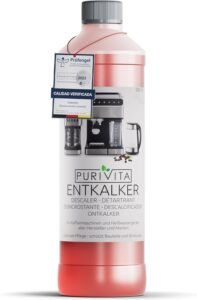
There are many other top-quality products that you can use with complete confidence. Here are the best-selling and highest-rated by users:

- GENTLE DESCALING SOLUTION: This universal eco-friendly solution is gentle on your coffee maker and on the environment.
- FOR THE BEST COFFEE RESULTS: Regular use extends the life of your machine, preserves energy efficiency, and maintains the flavor of the coffee.
- EFFECTIVE MACHINE CARE: EcoDecalk with plant-based lactic acid is faster and more effective than conventional citric-acid-based limescale removers.

- GENTLE DESCALING SOLUTION: This universal eco-friendly descaling solution is gentle on your coffee maker and on the environment.
- EFFECTIVE MACHINE CARE: EcoDecalk with plant-based lactic acid is faster and more effective than conventional citric-acid-based limescale removers.

- Descaler: This product removes limescale deposits from automatic and superautomatic coffee makers, drip or filter coffee makers, and electric kettles.
- Immediate results: Descalers remove limescale from tap water and help prevent oxidation in the coffee maker.
- IDEAL FOR LIMESCALE REMOVAL: Descaling liquid ideal for removing limescale from all types of coffee machines thanks to its acidic nature.
- EXTENDS THE LIFE OF YOUR COFFEE MAKER: Extends the useful life of the coffee maker and maintains the flavor of the coffee over time.

- FOR ALL BRANDS – Compatible with Delonghi, Siemens, Saeco, Senseo, Tassimo, Cafissimo, Melitta, AEG, Bosch, Dolce Gusto, Philips, Nespresso, Gaggia, Jura, Krups, Miele and many more.
- TEST WITH INDICATOR – The color indicator shows when the descaling effect runs out: the color changes from pink to yellow.
Turn on the coffee maker and pause during the process
Once the reservoir is full, it is time to turn on the coffee maker. During the brewing cycle, it is important to pause the process when half of the solution has passed through the machine. This pause allows the mixture to act on the limescale deposits, helping to break down the mineral buildup in the internal parts.
Complete the coffee brewing cycle
After letting the solution sit for the recommended time, the coffee maker should be restarted to complete the brewing cycle. This ensures that the rest of the mixture passes through the ducts, maximizing the descaling effect and thoroughly cleaning the inside of the coffee maker.
Empty the reservoir and repeat with clean water
At the end of the cycle, the coffee maker’s reservoir should be emptied, discarding the descaling solution. Then, it is advisable to fill the reservoir with clean water and repeat the brewing cycle at least once. This will help remove any residue from the mixture, ensuring that the next coffee does not have unwanted flavors.
Complementary cleaning and regular maintenance
Regular maintenance of the coffee maker is essential to extend its useful life and ensure that every cup of coffee is delicious. Complementary cleaning focuses not only on descaling, but also on the overall care of the appliance.
Cleaning accessories, carafe, and filter
Recommended materials for cleaning
To clean the coffee maker’s accessories effectively, it is important to use suitable materials that do not damage the surfaces. The use of soft sponges to avoid scratches, mild detergents that do not leave chemical residues, and hot water to facilitate the removal of grease and coffee residue is recommended.
Hand washing and dishwasher cleaning
Removable parts, such as the carafe and filter, can be washed by hand or in the dishwasher. Dishwasher-safe parts are usually indicated in the manual. If hand washing is chosen: wash with water and mild detergent, rinse well to remove any trace of soap, and let air dry to prevent mold from appearing.
Care of the exterior and visible parts
Suitable cloths and products
The exterior of the coffee maker also needs attention. For this, it is advisable to use soft cloths and cleaning products specifically designed for appliances. These prevent marks and protect the paint or surface finish.
Avoid corrosive products
It is essential not to use corrosive or abrasive cleaners, as they can damage the coffee maker. Always choose solutions that are safe and designed for use on appliances.
Checking specific parts: plates and ducts
In addition to general cleaning, it is advisable to inspect and clean the internal parts of the coffee maker, especially the plates and ducts. This guarantees optimal performance and prevents blockages.
Tips to prevent limescale buildup
To keep the coffee maker in optimal condition and prevent limescale buildup, a few simple and efficient practices can be followed. These recommendations ensure better performance and a longer useful life for the appliance.
Use filtered or distilled water in the coffee maker
The quality of the water used in the coffee maker is essential to minimize limescale buildup. Tap water, especially in areas with high hardness, contains minerals such as calcium and magnesium that form deposits when heated. Using filtered or distilled water not only reduces this buildup, but also improves the taste of the coffee.
Incorporate descaling into the cleaning routine
Establishing a regular descaling schedule is crucial. Making this task a routine part of maintenance allows the coffee maker to always operate at peak performance. Setting aside a specific day each month to carry out this process helps prevent bigger problems in the future.
Alternate coffee types and monitor daily volume
Varying the types of coffee you prepare can contribute to less limescale buildup. Some brewing methods require less hot water, which can result in fewer deposits. Likewise, monitoring the volume of coffee made daily helps avoid excessive use of the coffee maker, thereby extending its useful life.
Monitor the machine’s maintenance signals
Paying attention to any signs the coffee maker may show is essential. If strange odors appear or the coffee flow is affected, it could be a sign that it is time to descale. Keeping the coffee maker clean and functional prevents small problems from turning into more serious complications.
Troubleshooting common problems after descaling
After completing the descaling process, certain issues often arise that can affect the quality of the coffee and the operation of the coffee maker. Below are the most frequent problems and how to address them.
Improvements in coffee flow and output
After descaling, the coffee flow may not improve immediately. If the coffee maker has problems with liquid output, it may be necessary to perform a more thorough cleaning of the internal ducts: check for limescale or dirt in the filters and remove any blockage, make sure the reservoir is correctly positioned, and run a specific maintenance cycle if the coffee maker has this option.
Diagnosis of persistent blockages
If after following the descaling steps the coffee maker still has blockages, it is crucial to diagnose the problem properly: disassemble the removable parts and clean them thoroughly, check that there is no residue buildup in the tubes and the pump, and consult the manufacturer’s manual for specific maintenance recommendations.
Descaling according to the type of coffee maker
Descaling is a key process that varies depending on the coffee maker model and how it works. Each type requires a specific approach to guarantee its effectiveness and longevity.
Drip and countertop coffee makers
Particularities of the reservoir and brewing cycle
Drip coffee makers have a reservoir that can accumulate minerals on its walls. To descale them, it is advisable to fill the container with a solution of water and vinegar or lemon. Starting the brewing cycle as usual will help remove the deposits. It is important to let the solution sit halfway through the cycle for a more effective result.
Care of ducts and coffee outlet
The ducts through which the water circulates are prone to blockages. To keep them clean, it is advisable to use products specifically designed for coffee makers between each descaling process, thus guaranteeing optimal flow during coffee preparation.
Capsule coffee makers
Adapting the process to specific models
Most capsule coffee makers have automatic descaling programs. However, if manual methods are chosen, it is essential to follow the manufacturer’s recommendations, as each model may have different specifications that optimize the process.
Cleaning accessories and the water reservoir
The water reservoir and capsule holders should be cleaned regularly to prevent buildup. It is recommended to disassemble these components whenever possible and wash them with hot water and soap, making sure to rinse well to remove any residue.
Italian coffee makers
Recommendations for removing limescale deposits
For these coffee makers, a mixture of water and vinegar can be used. Filling the lower part with the solution and bringing it to a boil will help break down deposits on the internal walls. It is essential to rinse with clean water after the process.
Maintenance of plates and gaskets
Their plates and gaskets are sensitive and should therefore be cleaned carefully. Using a soft cloth and avoiding abrasive products is crucial to keep them in good condition and prevent damage that could affect the operation of the coffee maker.
Final recommendations from Coffee Sapiens for coffee lovers
Incorporate good cleaning practices
Establishing a proper cleaning routine is essential: regular descaling to prevent mineral buildup from ruining the flavor, frequent cleaning of removable parts, and using soft cloths to clean the exterior.
Keep the machine in optimal condition in the long term
Attention to detail ensures the longevity of the coffee maker: systematic maintenance, periodic deep cleaning, and avoiding excessive use of commercial descalers that can damage internal components.
Motivation to always enjoy the best coffee at home
The art of making coffee is not just a process, but an experience that deserves to be cared for: explore different types of coffee and brewing methods, integrate descaling into your weekly routine, and enjoy coffee with friends and family by turning each cup into a special moment.
Frequently asked questions about how to descale a coffee maker
How often should you descale a coffee maker?
It depends on water hardness and usage. With hard water and daily use, every 1-2 months. With soft water or moderate use, every 3-6 months. Signs such as reduced flow, altered taste, or warning lights indicate that it is time to act without waiting for the usual timeframe.
Can I use vinegar or lemon to descale my coffee maker?
Technically they work, but they are not recommended: they can damage the internal rubber parts and gaskets over time, and the manufacturer generally will not cover the warranty if unofficial methods are used. The ideal option is always a descaler specifically for coffee makers.
Why does coffee taste different after descaling?
If the coffee has an unusual taste after descaling, there is probably some product residue left in the ducts. The solution is to run two or three additional cycles with clean water until the taste returns to normal.
What type of descaler is best for my coffee maker?
The one recommended by your coffee maker’s manufacturer is always the safest option. For universal use, PURIVITA, De’Longhi EcoDecalk, and Durgol Swiss Espresso are high-quality, reliable options widely used by baristas and enthusiasts of all levels.
How do I know that my coffee maker has already been descaled correctly?
The water flow returns to its normal speed, the coffee returns to its usual extraction temperature, and the flavor improves noticeably. If the coffee maker had maintenance indicator lights, they will turn off once the descaling cycle has been completed correctly.
At Coffee Sapiens, we never stop researching to bring you practical guides that care for your equipment and guarantee coffee that is always at its best. Descaling regularly is one of those habits that, once adopted, transforms your daily coffee experience. Thank you for being there, Coffee Lover!
{ “@context”: “https://schema.org”, “@type”: “FAQPage”, “mainEntity”: [ { “@type”: “Question”, “name”: “How often should you descale a coffee maker?”, “acceptedAnswer”: { “@type”: “Answer”, “text”: “With hard water and daily use, every 1-2 months. With soft water or moderate use, every 3-6 months. Signs such as reduced flow, altered taste, or warning lights indicate that it is time to act.” } }, { “@type”: “Question”, “name”: “Can I use vinegar or lemon to descale my coffee maker?”, “acceptedAnswer”: { “@type”: “Answer”, “text”: “It is not recommended: they can damage the internal rubber parts and gaskets, and the manufacturer generally will not cover the warranty. The ideal option is to use a descaler specifically for coffee makers.” } }, { “@type”: “Question”, “name”: “Why does coffee taste different after descaling?”, “acceptedAnswer”: { “@type”: “Answer”, “text”: “There is probably some product residue left in the ducts. Run two or three additional cycles with clean water until the taste returns to normal.” } }, { “@type”: “Question”, “name”: “What type of descaler is best for my coffee maker?”, “acceptedAnswer”: { “@type”: “Answer”, “text”: “The one recommended by the manufacturer is always the safest option. For universal use, PURIVITA, De’Longhi EcoDecalk, and Durgol Swiss Espresso are high-quality, reliable options.” } }, { “@type”: “Question”, “name”: “How do I know that my coffee maker has already been descaled correctly?”, “acceptedAnswer”: { “@type”: “Answer”, “text”: “The water flow returns to its normal speed, the coffee returns to its usual temperature, and the flavor improves noticeably. The maintenance indicator lights will turn off once the cycle has been completed correctly.” } } ] }
Soy Javier Romero, especialista en Marketing Digital, Coffee Lover y redactor de Coffee Sapiens.
Bienvenidos a Coffee Sapiens. Somos un medio digital independiente dedicado a la divulgación, análisis y cultura del café.