
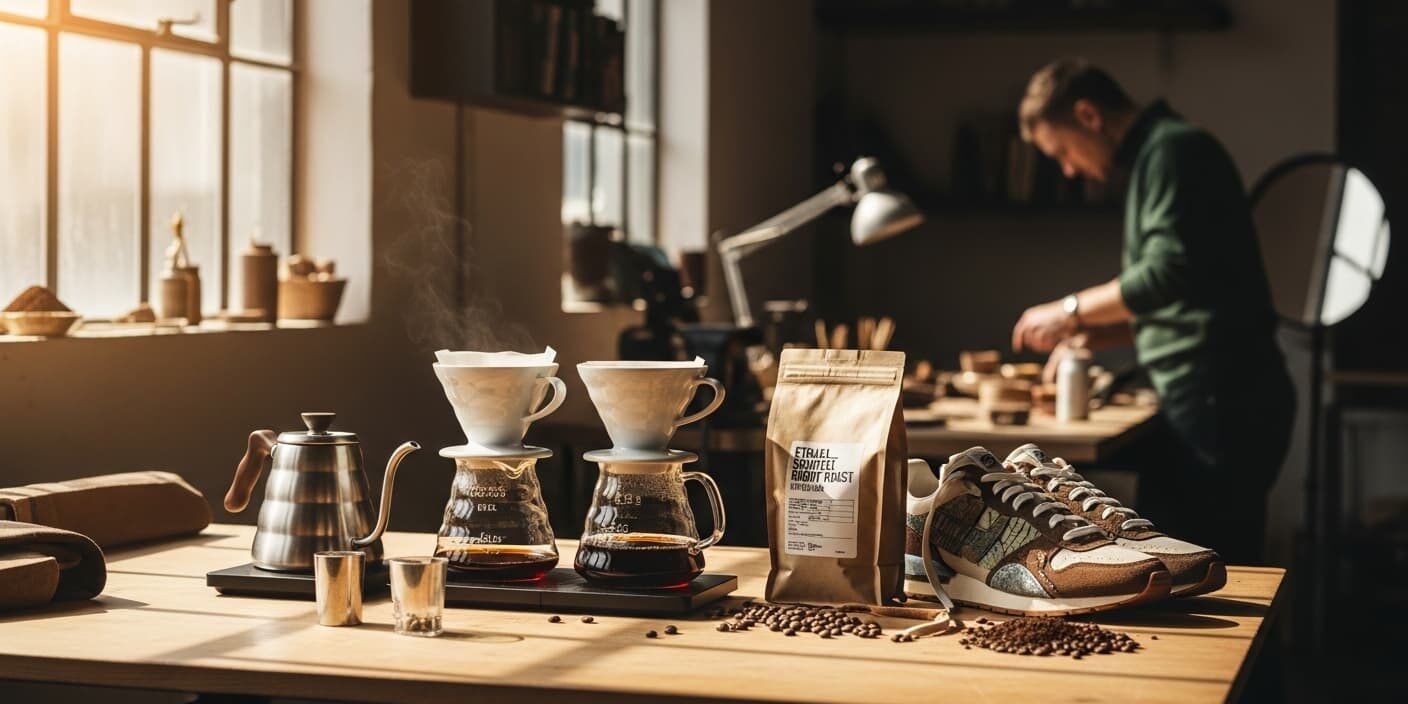
I was surprised the first time I saw a pair of sneakers at a sustainable fashion fair and the seller told me they were made with coffee grounds. My first thought was: “is this marketing or is it real?” I started researching seriously, and what I found left me fascinated. The waste from one of the world’s most consumed beverages is being transformed into functional footwear with antibacterial and quick-drying properties. In this article I’ll tell you how this technology works, which brands are leading the change, and why this trend has more future than it seems. Let’s begin!
The fashion industry and the waste problem
The fashion industry is one of the most polluting on the planet. Every year, millions of tons of textile waste are generated, and conventional production processes require large amounts of water, energy, and chemicals. In this context, the use of recycled materials — including coffee grounds — is a real step toward more responsible fashion. Coffee also generates approximately six million tons of grounds annually worldwide: an organic waste with useful properties that would otherwise end up in landfills emitting methane.
How sneakers are made with coffee grounds
The process combines dehydrated and processed coffee grounds with recycled polymers (usually from plastic bottles) to create functional textile fibers. These fibers are spun and woven to make the upper or top part of the sneaker, while in some models they are also integrated into the sole. The result is a lightweight, breathable material with natural antimicrobial properties derived from the chemistry of coffee.
Functional benefits of coffee material
Coffee fibers have properties that set them apart from conventional textile materials: they are antibacterial (they inhibit the growth of odor-causing bacteria), they dry up to four times faster than cotton, and they offer good temperature regulation. For active users, these features represent a real advantage in footwear comfort and durability.
Pioneering brands in recycled coffee sneakers
The Finnish brand Rens is the best known in this segment: its sneakers combine coffee grounds with recycled plastic from bottles, offering sustainable footwear with an attractive technical finish. Spain’s Zèta Shoes collaborated with Nespresso to create the Zèta Moka collection, which incorporates coffee grounds into the sole. Both brands show that innovation in recycled materials can generate products with aesthetics and performance competitive with conventional footwear.
Circular economy and the future of coffee-based fashion
The circular economy model applied to coffee grounds in fashion is a concrete example of how waste from one industry can become a resource for another. The trend is growing: more footwear and clothing brands are researching biocomposites made from organic materials such as coffee, hemp, or corn. The key will be scaling production without losing functional properties and maintaining competitive prices for consumers.
Frequently asked questions about recycled coffee sneakers
Do recycled coffee sneakers smell like coffee?
Not noticeably. The grounds go through dehydration and transformation processes that remove coffee’s characteristic smell. In fact, one of the material’s properties is precisely the opposite: coffee fibers inhibit bad odors thanks to their antibacterial properties, so the footwear stays fresh longer.
Are sneakers made from coffee grounds durable?
Yes, durability is comparable to that of conventional technical footwear. The fibers resulting from combining coffee grounds with recycled polymers have good wear resistance. Brands like Rens position them for urban use and moderate activities, with a lifespan similar to any sneaker of equivalent quality.
Where can I buy recycled coffee sneakers in Spain?
The most accessible option is Rens’s official website, which ships to Spain, and online stores specialized in sustainable fashion. Zèta Shoes’ Zèta Moka collection also has national distribution. As the trend grows, it is likely that more sustainable fashion retailers will add similar models to their catalogs.
How much do recycled coffee sneakers cost?
The price of these models generally ranges between 80 and 140 euros, placing them in the mid-to-high range of the market. The extra cost compared with similar conventional sneakers is explained by the material development process and still-small production volumes. Over time and with scale, prices should come down.
Is this type of footwear really sustainable?
Partially, yes. Reusing coffee grounds and recycled plastics reduces the impact compared with conventional footwear. However, sneaker production still involves industrial processes, transport, and packaging. Brands’ honesty in communicating their full life-cycle footprint is key to evaluating the real impact: the most transparent ones publish life cycle analyses (LCA) on their websites.
At Coffee Sapiens, we never stop researching to show you the most surprising ways in which coffee goes beyond the cup and becomes part of a more sustainable world. If this article has opened your eyes to the potential of coffee grounds, share it with anyone you think might be interested. Thanks for being there, Coffee Lover!
{ “@context”: “https://schema.org”, “@type”: “FAQPage”, “mainEntity”: [ { “@type”: “Question”, “name”: “Do recycled coffee sneakers smell like coffee?”, “acceptedAnswer”: { “@type”: “Answer”, “text”: “Not noticeably. The grounds go through dehydration and transformation processes that remove the smell. Coffee fibers have antibacterial properties that inhibit bad odors, keeping footwear fresh for longer.” } }, { “@type”: “Question”, “name”: “Are sneakers made from coffee grounds durable?”, “acceptedAnswer”: { “@type”: “Answer”, “text”: “Yes, durability is comparable to conventional technical footwear. Coffee-ground fibers combined with recycled polymers have good wear resistance, with a lifespan similar to any sneaker of equivalent quality.” } }, { “@type”: “Question”, “name”: “Where can I buy recycled coffee sneakers in Spain?”, “acceptedAnswer”: { “@type”: “Answer”, “text”: “The most accessible option is Rens’s official website, which ships to Spain. Zèta Moka by Zèta Shoes also has national distribution. Online stores specialized in sustainable fashion usually carry similar models.” } }, { “@type”: “Question”, “name”: “How much do recycled coffee sneakers cost?”, “acceptedAnswer”: { “@type”: “Answer”, “text”: “The price generally ranges between 80 and 140 euros, in the mid-to-high range of the market. The extra cost is explained by the material development process and still-small production volumes.” } }, { “@type”: “Question”, “name”: “Is this type of footwear really sustainable?”, “acceptedAnswer”: { “@type”: “Answer”, “text”: “Partially, yes. Reusing coffee grounds and recycled plastics reduces the impact compared with conventional footwear, but production still involves industrial processes. The most transparent brands publish full life cycle analyses on their websites.” } } ] }

Soy Javier Romero, especialista en Marketing Digital, Coffee Lover y redactor de Coffee Sapiens.
Bienvenidos a Coffee Sapiens. Somos un medio digital independiente dedicado a la divulgación, análisis y cultura del café.