
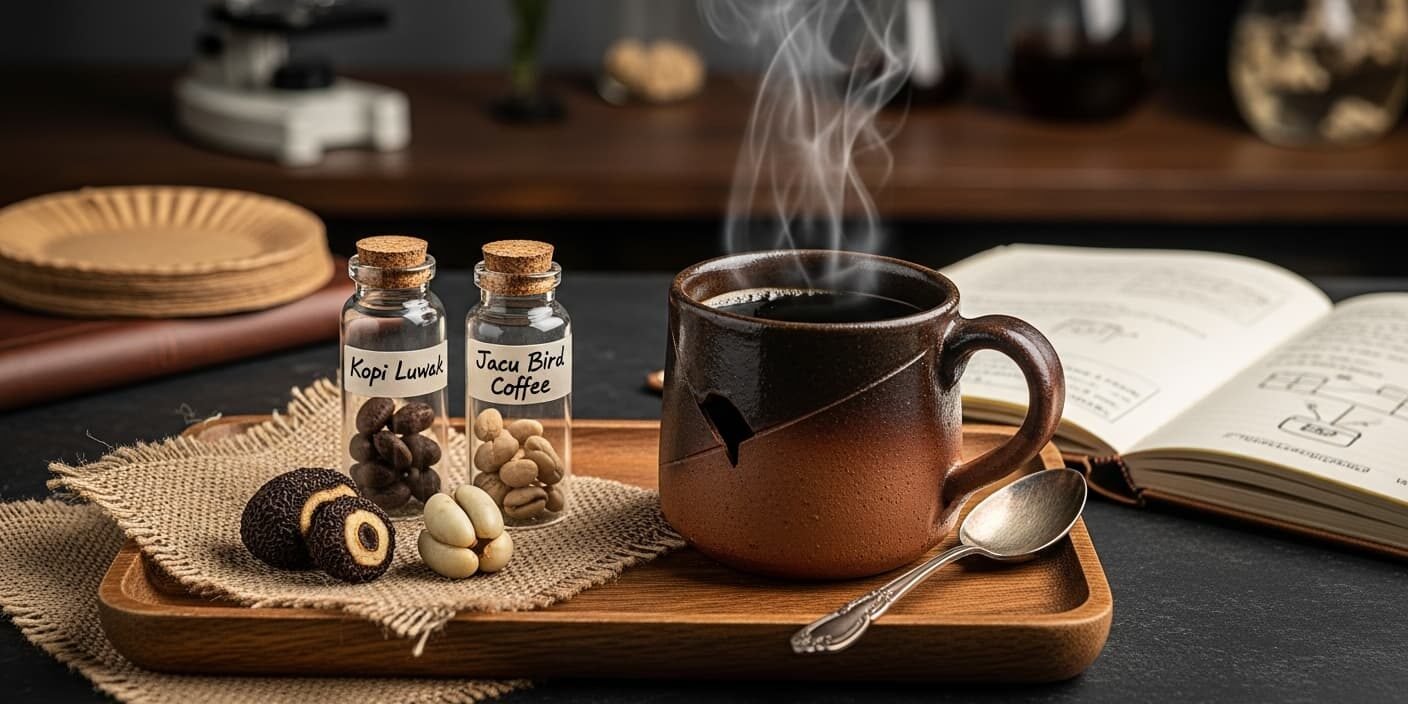
Kopi Luwak is probably the most famous coffee in the world for reasons that have little to do with its actual cup quality. The story of civets selecting the ripest cherries and fermenting them as they digest them sounds fascinating, and for years it served as a marketing argument to justify astronomical prices. But when I started researching the reality behind this coffee—and its relative, Jacu Bird—I found a much more uncomfortable picture: widespread fraud, compromised animal welfare, and cup quality that rarely justifies the price. Let me tell you the harsh truth. Let’s begin!
Historical and cultural origins of Kopi Luwak coffee
At the end of the 17th century, Dutch colonizers introduced coffee to Indonesia. Locals discovered that the civet—a small native mammal—selected the ripest cherries and excreted them intact after digestion. This observation gave rise to Kopi Luwak, which over time became a symbol of cultural status and a delicacy reserved for special occasions.
Unique production process of digested coffees
The animals naturally select the ripest cherries. In the digestive system of the civet or the Jacu Bird, the beans undergo fermentation that transforms their chemical composition and alters the flavor profile. After excretion, the beans are collected, thoroughly washed, processed, and roasted. Because the Jacu Bird feeds freely rather than in captivity, it offers an inherently more ethical process.
Ethical impact and current production practices
Growing demand has led many producers to keep civets in captivity under inadequate conditions, force-feeding them a monotonous diet of coffee cherries. This practice seriously harms animal welfare and compromises product quality. The Jacu Bird represents a more ethical alternative: the birds roam free on Brazilian coffee farms, without coercion or confinement.
Quality, flavor profile, and rarity in the market
Kopi Luwak is characterized by low acidity, chocolate notes, and a smooth body. Jacu Bird coffee tends to be fruitier and lighter. Its high price reflects limited production and the complexity of the process. However, blind tastings have questioned whether the flavor difference justifies the premium over other high-quality specialty coffees.
Health issues and regulations in today’s market
Improper handling of digested beans can create health risks due to the presence of bacteria. The lack of clear regulations in many countries allows frequent fraud: a significant portion of the Kopi Luwak sold on the global market is counterfeit or of questionable origin. To buy with confidence, it is essential to research the origin and demand traceability from the seller.
Sustainable alternatives and the future of specialty coffee
Enzymatic methods are being developed that simulate natural fermentation without involving animals. These processes replicate Kopi Luwak flavor profiles in an ethical and scalable way. The trend toward transparency and sustainability in the sector opens the door to options that balance quality, respect for animals, and commercial viability.
Frequently asked questions about Kopi Luwak and Jacu Bird coffee
Does Kopi Luwak really taste better than other specialty coffees?
Not necessarily. Blind tastings carried out by professional tasters have shown that Kopi Luwak does not always score higher than conventional high-quality specialty coffees. Much of its value lies in rarity and marketing. If what you are looking for is cup quality, a well-processed and well-roasted specialty coffee can offer a superior experience at a lower price.
Is it ethical to buy Kopi Luwak today?
It depends on the origin. Most Kopi Luwak on the market comes from civets kept in captivity under poor conditions, which creates serious animal welfare problems. There is Kopi Luwak from wild civets, but it is extremely difficult to verify and very scarce. As an ethical alternative, Jacu Bird coffee from certified farms is a much more transparent option.
How do I know if the Kopi Luwak I buy is authentic?
It is very difficult to know without laboratory analysis. It is estimated that a significant portion of the Kopi Luwak circulating on the market is adulterated or counterfeit. To minimize the risk, buy only from suppliers who offer full traceability, documentation of origin, and, if possible, production certification. An extremely low price is always a warning sign.
What is the flavor difference between Kopi Luwak and Jacu Bird coffee?
Kopi Luwak tends to be smooth, with low acidity and earthy, chocolatey notes. Jacu Bird, produced by birds that feed freely in Brazil, usually shows a fruitier, lighter profile, with berry notes and greater liveliness. Both share a more moderate acidity than most conventional washed coffees due to the fermentation process in the animal’s digestive tract.
Are there alternatives to Kopi Luwak that do not involve animals?
Yes. Researchers and companies in the sector have developed enzymatic fermentation processes that replicate the effect the civet’s digestion has on coffee beans, without involving animals. These ‘bio-fermented’ coffees are gaining a presence in the specialty market and represent an ethically responsible alternative for those who are curious about these flavor profiles.
At Coffee Sapiens, we believe that respect for animals and transparency in the production chain are just as important as cup quality. The coffee world has extraordinary options without the need to resort to questionable practices. Thanks for being there, Coffee Lover!
{ “@context”: “https://schema.org”, “@type”: “FAQPage”, “mainEntity”: [ { “@type”: “Question”, “name”: “Does Kopi Luwak really taste better than other specialty coffees?”, “acceptedAnswer”: { “@type”: “Answer”, “text”: “Not necessarily. Blind tastings have shown that Kopi Luwak does not always score higher than conventional specialty coffees. Much of its value lies in rarity and marketing.” } }, { “@type”: “Question”, “name”: “Is it ethical to buy Kopi Luwak today?”, “acceptedAnswer”: { “@type”: “Answer”, “text”: “Most of it comes from civets kept in captivity under poor conditions. Jacu Bird coffee from certified farms is a more transparent and ethical alternative.” } }, { “@type”: “Question”, “name”: “How do I know if the Kopi Luwak I buy is authentic?”, “acceptedAnswer”: { “@type”: “Answer”, “text”: “It is very difficult without laboratory analysis. It is estimated that much of the market is adulterated. Buy only from suppliers with full traceability and documentation of origin. An extremely low price is always a warning sign.” } }, { “@type”: “Question”, “name”: “What is the flavor difference between Kopi Luwak and Jacu Bird coffee?”, “acceptedAnswer”: { “@type”: “Answer”, “text”: “Kopi Luwak is smooth, with low acidity and earthy, chocolatey notes. Jacu Bird, from free-roaming birds in Brazil, is fruitier and lighter, with berry notes and greater liveliness.” } }, { “@type”: “Question”, “name”: “Are there alternatives to Kopi Luwak that do not involve animals?”, “acceptedAnswer”: { “@type”: “Answer”, “text”: “Yes. Enzymatic fermentation processes have been developed that replicate the effect of the civet’s digestion without involving animals. These ‘bio-fermented’ coffees are gaining a presence in the specialty market.” } } ] }
Soy Javier Romero, especialista en Marketing Digital, Coffee Lover y redactor de Coffee Sapiens.
Bienvenidos a Coffee Sapiens. Somos un medio digital independiente dedicado a la divulgación, análisis y cultura del café.