
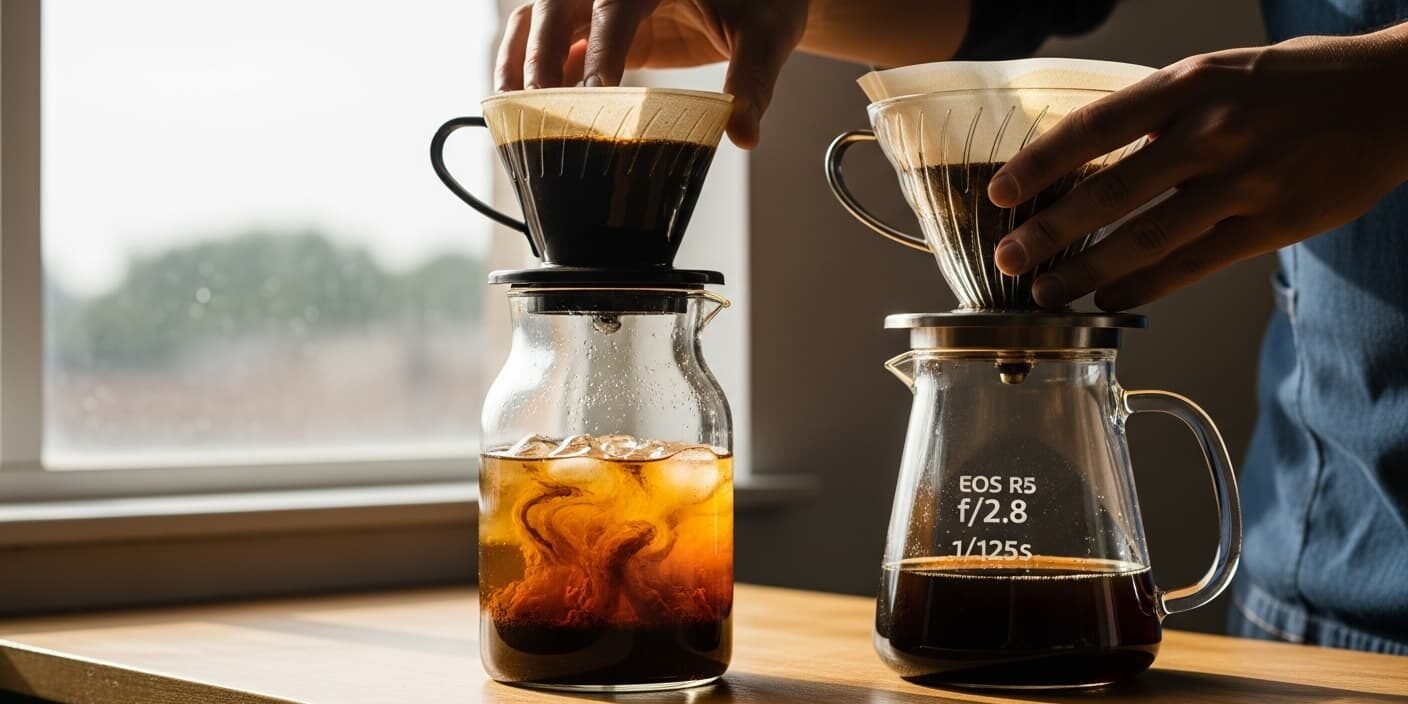
When I started making cold brew at home, I followed the most basic recipe: mix ground coffee with cold water, put it in the fridge for 12 hours, and filter it. The result was good, but something was missing: the coffee took a long time to saturate at the beginning, and sometimes the extraction was a bit uneven. It was when I learned about ‘cold bloom’ —a brief pre-hydration of the ground coffee before adding the rest of the water— that I began to notice a real difference in the clarity and uniformity of the result.
I’ve looked into what cold bloom exactly is, why it works, how to prepare cold brew step by step while incorporating this technique, and which parameters you need to control to achieve truly delicious cold infusions. I hope this article helps you take your cold brew to the next level. Let’s get started!
What cold bloom is and why it improves cold brew
Bloom is a concept that filter coffee lovers know well: that 30-45 second pre-infusion with a small amount of hot water before continuing the extraction, which helps the coffee release the CO₂ accumulated after roasting and lets the water penetrate more evenly. In cold brew, the principle is the same but adapted to cold brewing: before adding all the brewing water, the ground coffee is moistened with a small amount of water (cold or room temperature, roughly 10-15% of the total) and left to rest for 5 to 15 minutes. This prior bloom lets the ground coffee absorb the initial water, ‘open up,’ and release some of the retained CO₂, so that when the rest of the water is added the extraction is more even and complete from the start. The result is usually a cold brew with greater flavor clarity, less unnecessary bitterness, and more homogeneous extraction throughout the coffee bed.
What coffee to choose for quality cold brew
Cold brew amplifies coffee defects just as much as it amplifies its virtues: a low-quality bean doesn’t improve just because it’s infused cold, and its less pleasant notes can become more obvious. Coffees with fruity and floral profiles —natural or honey processed, from origins such as Ethiopia, Colombia, or Guatemala— work especially well cold, since the low temperature highlights their sweetness and more delicate notes without the bitter compounds that heat can extract. Medium roasts are the sweet spot: very light roasts can come across as too acidic or under-extracted when brewed cold (the solubility of compounds is lower without heat), while dark roasts can turn bitter. The grind should be medium-coarse, similar to a French press: finer than that makes filtration harder and can create astringency; coarser can cause under-extraction and a watery result.
Step-by-step process: bloom, grinding, and extraction
The full process when incorporating cold bloom is as follows. First, grind the coffee to a medium-coarse texture and weigh it: the base ratio is 1:4 (60 g of coffee per 240 ml of water for 300 ml of concentrated cold brew) or 1:8 (60 g per 480 ml for a ready-to-drink cold brew). Second, place the ground coffee in your container (pitcher, jar, cold brew bag) and add only 10-15% of the total water. Stir briefly to make sure all the coffee is wet and let it rest for 5 to 15 minutes —this is the cold bloom—. Third, add the rest of the water, stir gently once more to make sure there are no dry spots, and cover the container. Fourth, let it steep for 12 to 18 hours in the fridge (or 8-12 hours at room temperature if you have a cool place). Fifth, filter the cold brew through a paper filter or fine cloth to remove the coffee fines. The result is cold brew ready to drink or dilute.
Sensory profile and differences from hot coffee
Cold brew has a sensory profile very different from coffee prepared hot using the same bean. Because it is extracted without heat, bitter compounds and some acids are extracted to a lesser extent: the result is a smoother drink, less acidic and less bitter, where the coffee’s sweetness and subtler notes become more prominent. This makes it especially approachable for people with sensitive stomachs or who normally find coffee too acidic or bitter. The body is usually lighter than that of an espresso, but in a concentrated cold brew it can be surprisingly dense and textured. An important difference is the caffeine content: because it is a long extraction (12-18 hours), the amount of caffeine extracted can be high, especially in concentrated versions, which is something to keep in mind if you drink several servings.
Storage and ways to enjoy cold brew
Well-filtered cold brew keeps for up to 10-14 days in the fridge in an airtight container, although after the first week the profile can start to fade. To enjoy it, there are many options: on its own over ice, diluted to taste with water or sparkling water (which adds a very pleasant effervescence that highlights acidity and sweetness), with milk or oat milk (which pairs especially well), or as a base for cocktails (with rum, vodka, coffee liqueur) where its low acidity and clean profile make it very versatile. It also works very well as an ingredient in baking recipes or as a base for coffee slushies. If you’ve prepared it concentrated (1:4 ratio), remember to dilute it before serving, usually 1:1 with water or milk, although the exact proportion depends on the concentration and personal taste.
Frequently asked questions about cold bloom and cold brew
How long should you let the bloom rest before adding the rest of the water?
Between 5 and 15 minutes is usually enough for the ground coffee to absorb the small initial amount of water and release some of the CO₂. There’s no need to wait longer: cold bloom is a preparatory step, not an extraction phase in itself. After those minutes, you add the rest of the water and leave the full infusion in the fridge for the necessary time.
Why doesn’t cold brew produce crema?
Espresso crema forms thanks to high pressure and temperature, which emulsify the coffee’s oils and CO₂ into a stable foam. In cold brew, because there is neither pressure nor heat, that emulsion doesn’t happen: the result is a clear liquid coffee without crema, with a lighter, cleaner mouthfeel, which is a defining feature of this method, not a defect.
What types of beans work best for cold brew?
Coffees with fruity and floral profiles (natural or honey processed, from origins such as Ethiopia or Colombia) work especially well because cold extraction highlights their sweetness and more delicate notes. Medium roasts are the sweet spot: avoid both very light roasts (risk of under-extraction and excessive acidity) and very dark ones (risk of bitterness). Bean quality matters a lot: in cold brew there’s no temperature to ‘soften’ defects.
How long does cold brew keep at home?
Well filtered and stored in an airtight container in the fridge, 10 to 14 days. After the first week, the profile usually starts to fade progressively. If you make concentrated cold brew, the shelf life is similar, but remember to dilute it before drinking. Avoid leaving it out of the fridge once prepared.
What is the ideal coffee-to-water ratio?
It depends on whether you want a concentrated cold brew or one ready to drink. For concentrate (to dilute before serving): 1:4 (60 g of coffee per 240 ml of water). For ready to drink: 1:8 (60 g per 480 ml) or even 1:10. You can adjust based on your taste, but start with 1:6 if you don’t know which you prefer: it’s a middle ground that works well for most people.
Does cold brew have more caffeine than regular filter coffee?
It depends on the concentration and dose. Concentrated cold brew (1:4 ratio) can have significantly more caffeine per milliliter than regular filter coffee because it uses much more coffee for the same volume of water. Ready-to-drink cold brew (1:8 ratio or more diluted), however, can be comparable to or even contain less caffeine than an espresso. If you make concentrated cold brew, keep in mind that each serving can be quite a bit more caffeine-heavy than a standard filter coffee.
I hope this guide to cold bloom and cold brew inspires you to try this technique and get the most out of your specialty beans in a cold version. At Coffee Sapiens we never stop researching and learning about the wonderful world of coffee, so stay tuned because I’ll keep posting new content on the blog soon. Thanks for being there, Coffee Lover!
{ “@context”: “https://schema.org”, “@type”: “FAQPage”, “mainEntity”: [ { “@type”: “Question”, “name”: “How long should you let the bloom rest before adding the rest of the water?”, “acceptedAnswer”: { “@type”: “Answer”, “text”: “Between 5 and 15 minutes is enough for the ground coffee to absorb the small initial amount of water and release some of the CO₂. Then you add the rest of the water and leave the full infusion in the fridge.” } }, { “@type”: “Question”, “name”: “Why doesn’t cold brew produce crema?”, “acceptedAnswer”: { “@type”: “Answer”, “text”: “Espresso crema forms because pressure and temperature emulsify oils and CO₂. In cold brew, without pressure or heat, that emulsion doesn’t happen: the result is a clear liquid without crema, a defining feature of the method.” } }, { “@type”: “Question”, “name”: “What types of beans work best for cold brew?”, “acceptedAnswer”: { “@type”: “Answer”, “text”: “Coffees with fruity and floral profiles (natural or honey processed, from Ethiopia or Colombia) work especially well. Medium roasts are the sweet spot, avoiding very light or very dark roasts.” } }, { “@type”: “Question”, “name”: “How long does cold brew keep at home?”, “acceptedAnswer”: { “@type”: “Answer”, “text”: “Well filtered and stored in an airtight container in the fridge, between 10 and 14 days. After the first week, the profile usually starts to fade.” } }, { “@type”: “Question”, “name”: “What is the ideal coffee-to-water ratio?”, “acceptedAnswer”: { “@type”: “Answer”, “text”: “For concentrate: 1:4 (60 g per 240 ml). For ready to drink: 1:8 or more. If you don’t know which you prefer, start with 1:6, a good middle ground.” } }, { “@type”: “Question”, “name”: “Does cold brew have more caffeine than regular filter coffee?”, “acceptedAnswer”: { “@type”: “Answer”, “text”: “Concentrated cold brew (1:4) can have much more caffeine per milliliter than regular filter coffee. Ready-to-drink cold brew (1:8 or more diluted) can be comparable or even lower in caffeine.” } } ] }

Soy Javier Romero, especialista en Marketing Digital, Coffee Lover y redactor de Coffee Sapiens.
Bienvenidos a Coffee Sapiens. Somos un medio digital independiente dedicado a la divulgación, análisis y cultura del café.