
For a long time I used the kitchen scale I had at home to brew coffee, without thinking much about its accuracy. Until one day I compared its readings with a precision coffee scale and discovered a difference of more than one gram in an 18g espresso dose. That difference, which seems insignificant, can completely change the extraction ratio and, therefore, the final flavor.
I thoroughly researched why calibration matters so much in coffee preparation, what equipment you need to calibrate your scale properly, the exact steps to follow, and the most common mistakes even experienced baristas make. I hope that after this article you never again underestimate the importance of a few exact grams. Let us get started!
Importance of precision in the digital coffee scale
Scale calibration directly impacts coffee flavor: measuring accurately achieves the perfect proportion between coffee and water, avoiding unexpected results. When the scale is not correctly calibrated, the flavor can vary noticeably, making each cup a game of chance. This is particularly crucial in methods such as espresso, where even a small difference in grams can alter the flavor profile. Proper calibration allows you to reproduce recipes reliably and experiment with confidence, optimizing the entire brewing process.
Equipment needed to calibrate a coffee scale
Calibration weights are essential tools: the 200g weight is ideal for fine adjustments, and the 500g weight for larger calibrations and checking consistency. When choosing a digital scale, look for a capacity of at least 3 kg, 0.1g resolution for precise measurements, and a wide platform for different containers. The tare function is essential: it lets you subtract the weight of the container to measure only the contents. Other relevant features: a clear display, rechargeable batteries, and simple automatic calibration options.
Steps to calibrate a digital coffee scale correctly
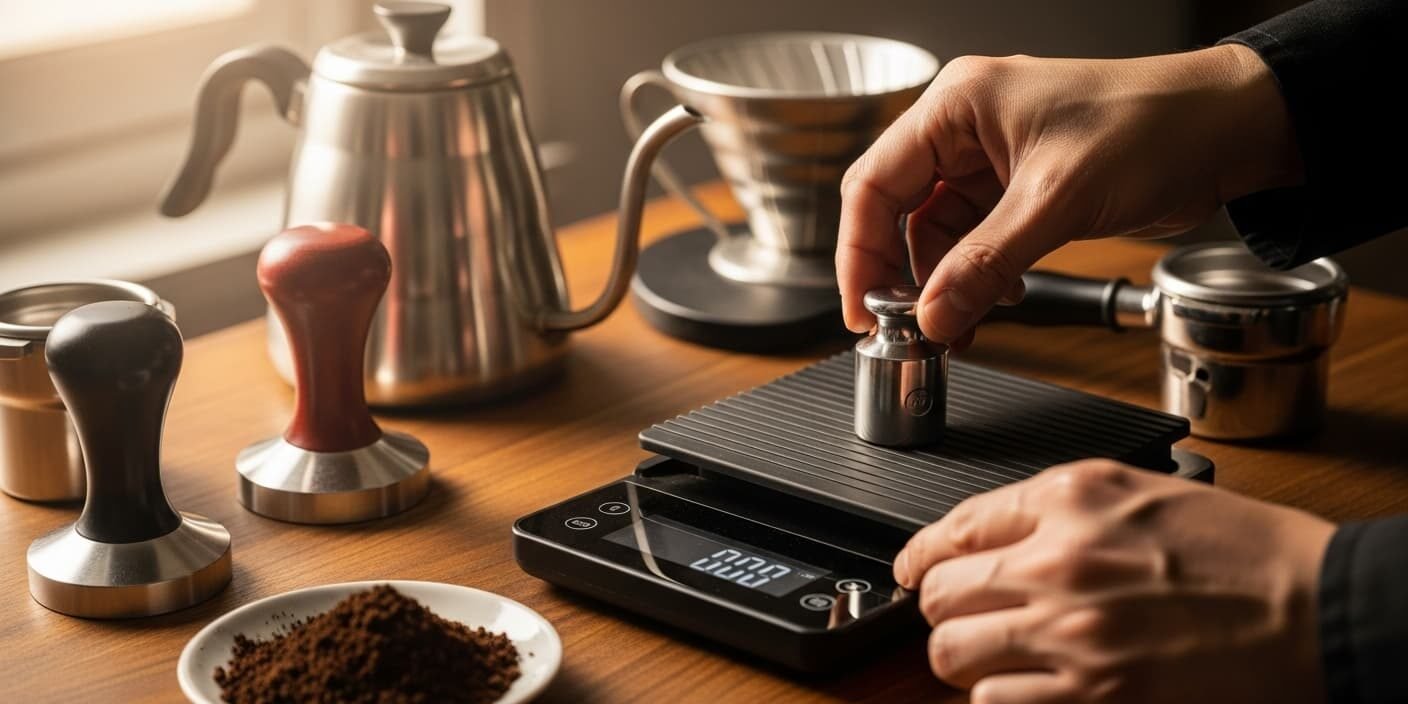
First, make sure the surface is flat and stable, clean off any residue, and place the scale in a well-lit area. Then, use a known reference weight: place it on the platform and check whether the reading matches; if there is a discrepancy, consult the manual to adjust it according to the manufacturer’s instructions. After calibrating, verify accuracy by weighing ground coffee in different amounts, starting with small measures and increasing gradually. Always follow the specific instructions from your model’s manufacturer, as each scale may have different requirements.
Common mistakes when calibrating and how to avoid them
Using inaccurate or improvised weights is one of the most common mistakes: it is essential to have known, high-quality calibration weights, avoiding improvised objects with imperceptible weight variations. Forgetting to tare the scale or measuring on unstable surfaces creates significant errors. Battery condition also affects accuracy: a low charge can compromise readings, just like sudden temperature changes or impacts. Finally, do not neglect regular maintenance: check calibration frequently, especially if the scale has been moved to a different environment or used intensively.
Tips to maintain the accuracy of your digital coffee scale
Clean the platform with a dry cloth after each use, avoiding abrasive cleaners or liquids that could damage the electronic components. Store the scale in a dry place at a stable temperature, away from direct sunlight, to prevent sudden changes from altering its calibration. Calibrate the scale every time you move it or if you notice variations in the readings. Familiarize yourself with the automatic and manual LCD display functions according to the manufacturer’s instructions to maximize performance.
How calibration makes a difference in the Coffee Lover experience
To achieve the ideal balance between coffee and water, each measurement must be precise. Common ratios are approximately 1:16 for filter methods (V60, Chemex), 1:2 for espresso (concentrated intensity), and 1:12 for French press coffee (full body). A calibrated scale allows you to adjust these proportions with confidence, achieving consistency in the result, precise recipe reproduction, and ease in experimenting with different coffees. Exact measurement also lets you discover hidden flavors and enjoy a better sensory experience in every sip, adapting to the particularities of each coffee variety.
Innovations and advanced features in digital coffee scales
Some models include a built-in timer, especially useful for following recipes that emphasize extraction time. Advances in sensors offer better accuracy, detecting even the slightest change in weight, and digital displays have improved in clarity and reading speed. Automation allows calibration with just the press of a button, although manual calibration is also available for those who prefer full control. Rechargeable batteries and a design resistant to everyday wear ensure long-lasting operation, ideal for a demanding kitchen environment.
Frequently asked questions about scale calibration
How often should I calibrate my digital coffee scale?
The frequency depends on use and circumstances. If it is used daily or transported regularly, it is advisable to calibrate it at least once a week. For those who use it less frequently, calibrating before each use is a good practice, especially if you are looking for consistent results for precision preparations such as espresso.
Can I calibrate the scale without professional weights?
It is possible, although with limitations. You can use objects of known weight, such as unopened packages of sugar or flour, as long as their weight is clearly labeled and verified. However, certified calibration weights provide greater accuracy and are recommended for obtaining better results, especially on professional-grade scales.
What should I do if the scale does not allow manual adjustment?
If the model does not allow manual adjustments, consult the user manual to learn about the available automatic calibration options. In some cases, you will need to focus on checking performance periodically with items of known weight to ensure reliable measurements, since you will not be able to correct deviations manually.
How can I tell if the scale is properly calibrated during brewing?
Run tests with several known weights before preparing your coffee. If the scale consistently shows the correct weight, it is properly calibrated. When measuring the coffee and the water, verify that the quantities stay in line with the standards you have established. If you notice significant variations, it is time to recalibrate.
Are regular kitchen scales suitable for preparing specialty coffee?
They can work for filter coffee where the margin of error is greater, but they have important limitations: their resolution is usually 1g (sometimes even 2g), which is insufficient for espresso, where every 0.1-0.2g of dose affects the ratio. In addition, many kitchen scales have a slow response time, which makes them difficult to use with a built-in timer to control extraction time. For casual filter coffee they may be sufficient, but for espresso or for anyone seeking consistency and repeatability, a dedicated coffee scale with 0.1g resolution is an investment you will notice immediately in the cup.
I hope this guide on calibrating digital scales helps you achieve the precision that makes the difference between a good coffee and an exceptional one. At Coffee Sapiens, we never stop researching and learning about the wonderful world of coffee, so stay tuned because I will keep posting new content on the blog soon. Thanks for being there, Coffee Lover!
{ “@context”: “https://schema.org”, “@type”: “FAQPage”, “mainEntity”: [ { “@type”: “Question”, “name”: “How often should I calibrate my digital coffee scale?”, “acceptedAnswer”: { “@type”: “Answer”, “text”: “If it is used daily or transported regularly, calibrate it at least once a week. For less frequent use, calibrating before each use is good practice, especially for precision preparations such as espresso.” } }, { “@type”: “Question”, “name”: “Can I calibrate the scale without professional weights?”, “acceptedAnswer”: { “@type”: “Answer”, “text”: “Yes, with limitations. You can use objects of known and verified weight, such as unopened packages of sugar. Certified weights provide greater accuracy, especially on professional-grade scales.” } }, { “@type”: “Question”, “name”: “What should I do if the scale does not allow manual adjustment?”, “acceptedAnswer”: { “@type”: “Answer”, “text”: “Consult the manual to learn about the available automatic calibration options. You will need to check performance periodically with known weights, since you will not be able to correct deviations manually.” } }, { “@type”: “Question”, “name”: “How can I tell if the scale is properly calibrated during brewing?”, “acceptedAnswer”: { “@type”: “Answer”, “text”: “Run tests with known weights before preparing coffee. If it consistently shows the correct weight, it is properly calibrated. If you notice significant variations, it is time to recalibrate.” } }, { “@type”: “Question”, “name”: “Are regular kitchen scales suitable for preparing specialty coffee?”, “acceptedAnswer”: { “@type”: “Answer”, “text”: “They can work for filter coffee, but their 1-2g resolution is insufficient for espresso, where every 0.1-0.2g affects the ratio. For espresso, a dedicated scale with 0.1g resolution is an investment you will notice in the cup.” } } ] }

Soy Javier Romero, especialista en Marketing Digital, Coffee Lover y redactor de Coffee Sapiens.
Bienvenidos a Coffee Sapiens. Somos un medio digital independiente dedicado a la divulgación, análisis y cultura del café.