
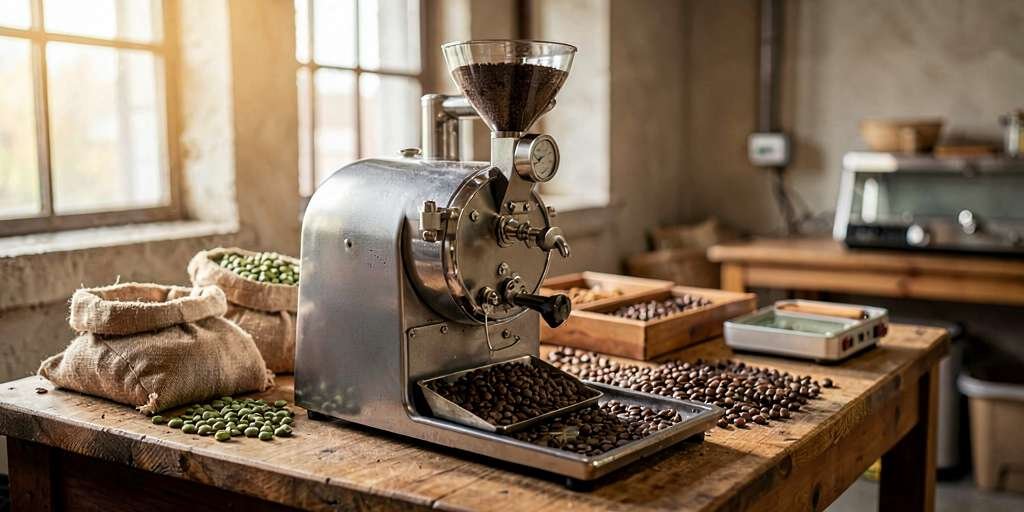
When I started becoming interested in the world of professional roasting, one of the first questions I asked myself was how much investment is really needed to get started the right way. The answer surprised me: with a well-chosen micro roaster, the numbers are more affordable than they seem, and the learning process is part of the value created from day one. I have thoroughly researched the key factors for choosing the right roaster, the most recommended models for different types of entrepreneurs, and the strategies that make the difference between a viable business and one that remains a hobby. I hope this article saves you time and money. Let’s begin!
Advantages of using micro roasters to start a business
Precise control of temperature, time, and airflow makes it possible to develop your own flavor profiles from the very first batch. The initial investment is significantly lower than with industrial roasters, reducing the risk of the venture. And perhaps most valuable of all: the learning curve with a micro roaster builds the technical knowledge that later allows you to scale the right way.
Key factors for choosing the right roaster
The initial budget should include not only the equipment but also installation, ventilation, and additional expenses. The size — 1 to 5 kg to start — should anticipate expected growth without being oversized. The key technical features are: intuitive roast controls, connectivity with profiling software, robust materials (stainless steel), and ease of cleaning. The brand’s technical support is a factor that is especially valued when the first problem arises.
Recommended types of micro roasters to get started
Drum roasters offer even roasting and complex profiles; they are the industry standard (Giesen W1, Probatone 5). Fluid-bed roasters use hot air for a faster process and are easier to clean, making them ideal for beginners (Behmor 1600, Hottop KN-8828B-2K). Electric micro roasters such as the Gene Café or the Diedrich IR-1 allow you to start experimenting with minimal investment. Profiling software (Artisan, RoasTime, Cropster) is as important as the machine: without data, improvement is impossible.
Control, storage, and growth strategies
Color meters (Agtron scale) and moisture meters guarantee consistency between batches. Green coffee storage requires controlled temperature and humidity conditions; roasted coffee needs bags with a one-way valve. Sustained growth depends on the constant selection of specialty lots, sensory monitoring of each roast, and continuous training: cupping courses, roasting workshops, and participation in roaster communities.
Frequently asked questions about coffee micro roasters
How much does it cost to start a coffee micro-roasting business?
The initial investment varies enormously depending on the equipment. A quality 1-3 kg micro roaster can cost between 5,000 and 20,000 euros; add installation (ventilation, smoke extraction), profiling software, a precision scale, a colorimeter, and initial green coffee stock. In Spain, many entrepreneurs start with 15,000-30,000 euros in total for a functional business. Some start in ‘ghost roaster’ mode — renting machine time on existing roasters — to validate the business before investing in their own equipment.
Do I need specific training to roast coffee professionally?
There is no mandatory qualification to roast coffee in Spain, but training makes an enormous difference in product quality and in how long it takes to develop your own judgment. SCA (Specialty Coffee Association) courses — especially the Roasting module — are the international benchmark. The experience accumulated through repeated cuppings is irreplaceable: keeping a record of each roast with its parameters and sensory outcome is the best school in the long run.
What licenses or permits do I need to sell roasted coffee in Spain?
To sell roasted coffee in Spain, you need to register as self-employed or set up a company, enroll in your autonomous community’s Health Register of Agri-Food Industries, and comply with EU labeling regulations. If you roast in a commercial premises, it must have the appropriate business license and an adequate smoke extraction system. It is advisable to consult a specialized advisor in hospitality or food businesses before opening.
Can I start roasting coffee at home profitably?
Roasting at home with domestic equipment is an excellent way to learn and develop good judgment, but it is rarely profitable on a commercial scale. Home roasters have very small capacities (100-250 g per batch), which makes the hourly cost very high. If the goal is commercial, the most efficient option is to start with a micro roaster of at least 1 kg, which already allows regular and consistent production.
How many kilos of coffee do you need to roast per month for a microbusiness to be viable?
It depends on the margins and the business model, but a common benchmark is that with 150-300 kg per month of roasted coffee sold at specialty prices (15-25 €/kg), a one-person business can be sustained. The channels that improve viability are direct online sales (higher margin), recurring subscriptions, and agreements with specialty coffee shops.
I hope this analysis of micro roasters and how to start a coffee business has given you a clear and realistic view of what this path entails. At Coffee Sapiens, we never stop researching and learning about the wonderful world of coffee, so stay tuned because I’ll keep posting updates to the blog soon. Thanks for being there, Coffee Lover!
{ “@context”: “https://schema.org”, “@type”: “FAQPage”, “mainEntity”: [ { “@type”: “Question”, “name”: “How much does it cost to start a coffee micro-roasting business?”, “acceptedAnswer”: { “@type”: “Answer”, “text”: “A 1-3 kg micro roaster costs between 5,000 and 20,000 euros. With installation, software, and initial stock, many entrepreneurs start with 15,000-30,000 euros in total. Some begin by renting machine time to validate the business before investing.” } }, { “@type”: “Question”, “name”: “Do I need specific training to roast coffee professionally?”, “acceptedAnswer”: { “@type”: “Answer”, “text”: “There is no mandatory qualification, but training makes an enormous difference. SCA courses (the Roasting module) are the international standard. Keeping a record of each roast with its parameters and sensory result is the best school in the long run.” } }, { “@type”: “Question”, “name”: “What licenses do I need to sell roasted coffee in Spain?”, “acceptedAnswer”: { “@type”: “Answer”, “text”: “Register as self-employed or as a company, enroll in the Health Register of Agri-Food Industries, and comply with EU labeling requirements. The premises require a business license and a smoke extraction system. Consult a specialized advisor.” } }, { “@type”: “Question”, “name”: “Can I start roasting coffee at home profitably?”, “acceptedAnswer”: { “@type”: “Answer”, “text”: “Excellent for learning but rarely profitable on a commercial scale: capacities are very small (100-250 g per batch). For a business, it is advisable to start with a micro roaster of at least 1 kg.” } }, { “@type”: “Question”, “name”: “How many kilos need to be roasted per month for a microbusiness to be viable?”, “acceptedAnswer”: { “@type”: “Answer”, “text”: “A common benchmark is 150-300 kg per month sold at specialty prices (15-25 €/kg) to sustain a one-person business. The most profitable channels are direct online sales, recurring subscriptions, and agreements with specialty coffee shops.” } } ] }
Soy Javier Romero, especialista en Marketing Digital, Coffee Lover y redactor de Coffee Sapiens.
Bienvenidos a Coffee Sapiens. Somos un medio digital independiente dedicado a la divulgación, análisis y cultura del café.