
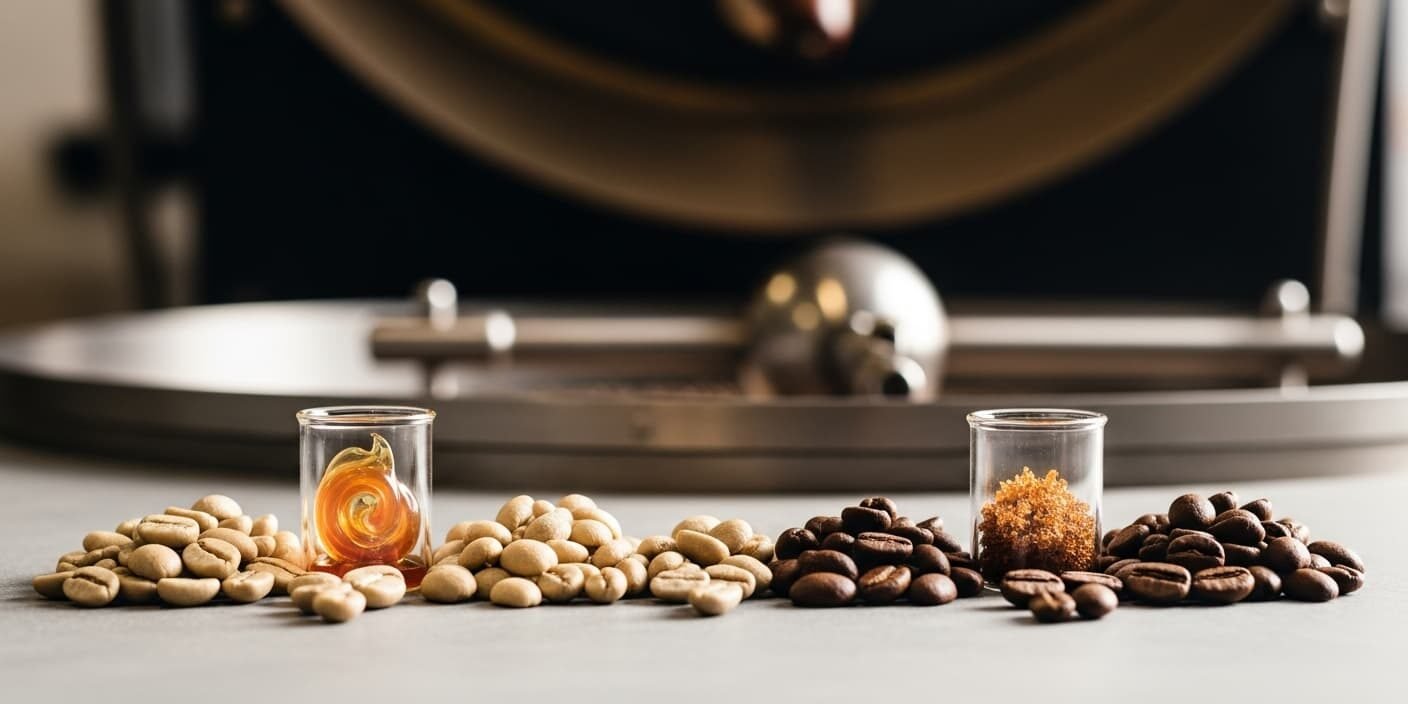
Every time I prepare an espresso and observe that change in color in the beans during roasting, I think about the chemistry that is taking place at the molecular level. The Maillard reaction and caramelization are the two processes that fascinate me most in all of coffee chemistry: they occur simultaneously, are often confused, but are different mechanisms with clearly distinguishable sensory results.
I have researched both reactions in depth, their activation temperatures, the compounds they generate, how they affect the flavor profile, and how professional roasters control them to obtain the result they are looking for. I hope this article helps you understand what happens in your roaster or in your oven when you roast coffee. Let’s get started!
Fundamentals of roasting chemistry
Basic concepts of the Maillard reaction
Louis Camille Maillard, a French chemist from the early 20th century, described how sugars and amino acids react to heat by transforming into more complex compounds. In the Maillard reaction, reducing sugars (glucose, fructose) combine with amino acids present in proteins, creating compounds that provide brown color and the characteristic nutty, roasted flavor profile. Amino acids, together with reducing sugars, generate melanoidins: compounds that affect the color, flavor, and aromas of coffee.
Principles of caramelization in foods
Caramelization is a process that occurs exclusively with sugars, without the need for proteins, at temperatures above 160°C. Sugars oxidize and transform, resulting in compounds that provide sweet, vanilla, toffee, and nutty notes. Unlike the Maillard reaction, which produces more complex and varied flavors (including umami and roasted notes), caramelization focuses on more uniform and sweet flavors. The natural sugars in coffee cherries play a leading role in this process.
The Maillard reaction step by step during roasting
Beginning and development of the reaction in the coffee bean
In the initial stages of roasting, the beans change from pale green to bright golden: a sign of the activation of sugars and amino acids. As the process advances, melanoidins are produced, the compounds responsible for the brown color and complex nuances in flavor. Roasting temperatures usually range between 190 and 240°C. Maintaining precise temperature control is crucial: excessive roasting generates unwanted bitter flavors, while insufficient roasting leaves the bean underdeveloped.
Impact on flavor profile and texture
The Maillard process generates roasted, nutty, and caramel notes that add depth to the taste profile. As new chemical interactions occur, volatile compounds are generated that capture the essence of roasted coffee. The ability to control time and temperature is key to achieving a balanced coffee: careful attention prevents the process from ending in an unsatisfactory result.
Caramelization in the roasting process
Chemical reactions and physical changes
Caramelization involves the transformation of sugars through heating, going from transparent to a deep brown color. This process generally occurs between 160 and 180°C. If the temperature is too low, the process will be slow and the proper flavors will not develop; if it exceeds recommended levels, scorching could occur and alter the flavor profile. The compounds generated include acidity, fruity notes, sweetness, and hints of bitterness: in coffee, this is fundamental for creating each roaster’s preferred profile.
Typical flavor notes generated by caramelization
The flavors that arise from caramelization include notes of vanilla, nut, and toffee, something that wins over many coffee enthusiasts. Coffee bean roasting focuses more on the formation of aromatic compounds than on pure caramelization; however, both processes can coexist, and the light caramelization of sugars can be crucial to achieving the desired flavor.
Comparison between the Maillard reaction and caramelization
Chemical and physical characteristics of each reaction
The Maillard reaction involves the interaction between amino acids and sugars, generating melanoidins and a variety of complex compounds (including diacetyl, pyrazines, furans) that contribute to the richness of flavor. Caramelization occurs exclusively with sugars and produces compounds such as diacetyl that provide more uniform and sweet notes. The temperature range for the Maillard reaction begins around 140°C; caramelization requires higher temperatures, generally above 160°C. Prolonged roasting can lead to the formation of unwanted compounds in both reactions.
Practical applications in coffee roasting
The Maillard reaction adds flavor complexity, while caramelization enhances sweetness. By balancing these effects, a more harmonious and attractive coffee is achieved. Altering the roasting time and temperature allows you to focus on one of the two processes, giving priority to the flavor you want to achieve. Constant monitoring of color and aroma can guide roasters in obtaining the desired profile.
Health aspects and effects of chemical reactions
The roasting process can produce antioxidant compounds that provide health benefits (polyphenols, melanoidins). However, substances such as acrylamide can also be generated, associated with potential risks if consumed in large quantities. To maximize benefits and minimize risks, it is crucial to control temperatures and roasting time: it is recommended to avoid an excessively dark roast that may increase the production of undesirable compounds. In nuts and protein-rich foods, roasting also generates significant changes in chemical composition, although many essential amino acids are preserved.
Techniques and control methods in professional roasting
Target temperatures usually range between 180 and 240°C. In the professional field, roasters with advanced technology are used that allow exact control of temperature and airflow, with real-time monitoring software. Constant observation of the color of the beans and the aroma are key indicators of the progress of the reactions. Every decision in the process affects the coffee’s flavor profile: keeping a record of each batch is essential to reproduce successful results.
Frequently asked questions about roasting chemistry
What causes the interaction between sugars and proteins?
The interaction between sugars and proteins occurs mainly because of the Maillard reaction, a process that happens when both components are heated together. This interaction generates a variety of compounds that influence the flavor and aroma of coffee. During roasting, the intermediate products of these reactions can lead to deeper and more pleasant flavors, enriching the sensory experience.
Why are melanoidins important in the final flavor?
Melanoidins are compounds formed during the Maillard reaction. Their presence in roasted coffee contributes significantly to the color, flavor, and aroma of the final product. They not only provide organoleptic characteristics, but they can also influence the perception of sweetness and flavor complexity. In addition, they have antioxidant properties that contribute positively to health.
At what temperatures does the Maillard reaction begin?
The Maillard reaction usually begins at temperatures around 140°C (284°F). From this threshold onward, the interaction between sugars and amino acids intensifies, generating a range of unique flavors and aromas. Different temperatures can offer very different results in the final flavor of coffee, which makes thermal control a fundamental skill in professional roasting.
How does prolonged exposure to heat affect aroma?
When coffee is exposed to heat for prolonged periods, it can cause the degradation of aromatic compounds. This results in a less desirable flavor profile: some delicate aromas are lost and bitter or burnt notes may appear. Therefore, controlling roasting time is essential to maximize the aromatic potential of coffee.
Is it possible to control both reactions for a balanced roast?
Yes, it is possible to control both the Maillard reaction and caramelization during the roasting process. By adjusting temperature and time, the development of each reaction can be influenced. A proper balance between both can result in a more harmonious flavor profile. Control of the rate of temperature increase (Rate of Rise or RoR) is the most powerful tool for managing the balance between both reactions during roasting.
I hope this analysis of the Maillard reaction and caramelization has given you a deeper and more scientific understanding of what happens in your roaster. At Coffee Sapiens we never stop researching and learning about the wonderful world of coffee, so stay tuned because I’ll soon keep posting new content on the blog. Thanks for being there, Coffee Lover!
{ “@context”: “https://schema.org”, “@type”: “FAQPage”, “mainEntity”: [ { “@type”: “Question”, “name”: “What causes the interaction between sugars and proteins?”, “acceptedAnswer”: { “@type”: “Answer”, “text”: “The interaction occurs mainly because of the Maillard reaction, which happens when both components are heated together. The intermediate products generate deeper and more pleasant flavors, enriching the sensory experience of coffee.” } }, { “@type”: “Question”, “name”: “Why are melanoidins important in the final flavor?”, “acceptedAnswer”: { “@type”: “Answer”, “text”: “Melanoidins formed during the Maillard reaction contribute to the color, flavor, and aroma of roasted coffee. They influence the perception of sweetness and flavor complexity, and they have beneficial antioxidant properties.” } }, { “@type”: “Question”, “name”: “At what temperatures does the Maillard reaction begin?”, “acceptedAnswer”: { “@type”: “Answer”, “text”: “It usually begins at temperatures around 140°C. From this threshold onward, the interaction between sugars and amino acids intensifies, generating a range of unique flavors and aromas.” } }, { “@type”: “Question”, “name”: “How does prolonged exposure to heat affect aroma?”, “acceptedAnswer”: { “@type”: “Answer”, “text”: “It causes the degradation of aromatic compounds, making some delicate aromas disappear and allowing bitter or burnt notes to appear. Controlling roasting time is essential to maximize aromatic potential.” } }, { “@type”: “Question”, “name”: “Is it possible to control both reactions for a balanced roast?”, “acceptedAnswer”: { “@type”: “Answer”, “text”: “Yes. By adjusting temperature and time, each reaction can be influenced. Control of the rate of temperature increase (Rate of Rise or RoR) is the most powerful tool for managing the balance between both during roasting.” } } ] }

Soy Javier Romero, especialista en Marketing Digital, Coffee Lover y redactor de Coffee Sapiens.
Bienvenidos a Coffee Sapiens. Somos un medio digital independiente dedicado a la divulgación, análisis y cultura del café.