
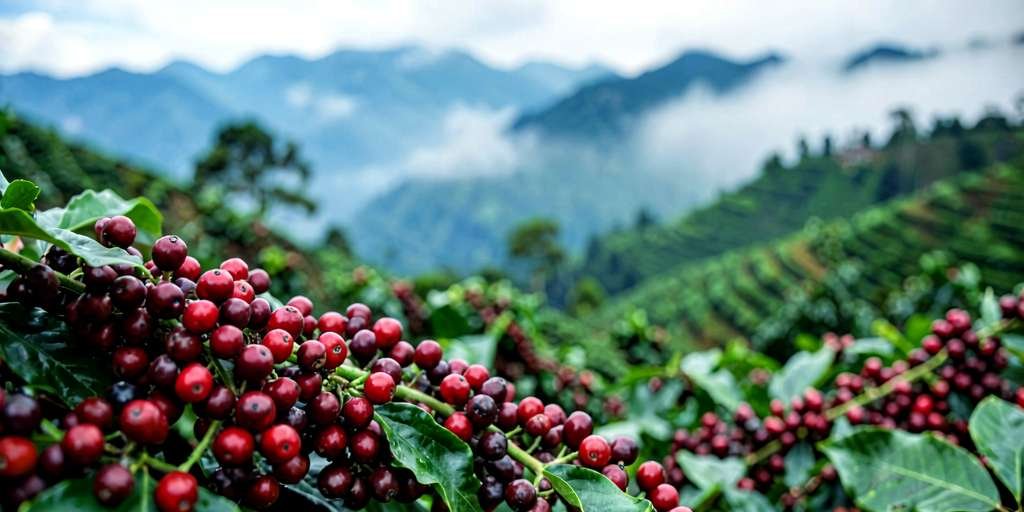
For some time now, I’ve had the habit of checking the altitude on the packaging when I buy specialty coffee. What started as a curious detail turned into a serious obsession: I began to notice that higher-altitude coffees had more complex, more vibrant profiles, and I wanted to understand why. I thoroughly researched the relationship between altitude, bean density, and cup quality, spoke with roasters, and read agricultural studies. In this article I’ll tell you everything I’ve learned about how elevation above sea level transforms coffee from the ground up. Let’s get started!
Climatic and geographical factors that affect coffee cultivation
The lower temperature at high altitudes slows the ripening of coffee cherries, allowing a greater accumulation of sugars and aromatic compounds. The volcanic soils typical of mountainous areas are rich in nutrients and well drained, enhancing bean quality. The combination of altitude, temperature, rainfall, and soil composition creates unique microclimates that explain why two farms in the same country can produce very different coffees.
Bean ripening and its relationship with altitude
Slower ripening at higher altitudes allows the bean to concentrate more sugars and organic acids, generating a more complex sensory profile. Coffees below 900 masl ripen quickly and have simple profiles; between 900 and 1,200 masl, a balance between body and flavor is achieved; above 1,200 masl, coffee develops the most vibrant profiles, with fruity, floral, and spicy notes that are the signature of specialty coffee.
Bean density: a key indicator of coffee quality
The higher the altitude, the denser the beans are because they develop more slowly and accumulate more compounds. Dense beans withstand heat better during roasting—they release their aromatic compounds in a more controlled way—and offer richer, more balanced extractions. Arabica varieties grown above 1,200 masl are the benchmark for optimal density in specialty coffee.
Coffee complexity and sensory profile according to altitude
High-altitude coffees are characterized by bright acidity (not aggressive), clearly defined fruity and floral notes, a lighter body but clean texture, and intense, complex aromas. This “lively” acidity is different from “aggressive” acidity: the former brings elegance and freshness, while the latter feels unbalanced. Learning to tell them apart is key to appreciating high-altitude coffees.
Altitude ranges and distinctive characteristics of cultivated coffee
Low (below 900 masl): simple profile, used in commercial blends, low acidity. Medium (900-1,200 masl): balance between flavor and body, chocolatey and nutty notes. High (above 1,200 masl): the benchmark for specialty coffee, vibrant acidity, complex fruity and floral notes. Colombia, Ethiopia, and Central America are the most renowned regions in the high range.
Challenges and benefits of cultivation at high altitudes
The logistical difficulties and higher production costs in mountainous areas are real, but they are offset by lower pest incidence (cooler temperatures make it harder for them to proliferate), higher bean quality, and access to premium prices in the specialty market. The work of coffee growers in these areas deserves recognition and fair compensation.
Frequently asked questions about altitude and coffee
Above what altitude does a coffee start to be considered specialty coffee?
There is no single threshold, since altitude interacts with latitude and microclimate: in Ecuador, which lies on the equator, 1,500 masl corresponds to conditions similar to 1,200 masl in Colombia or Guatemala. As a general reference, coffees grown above 1,200-1,500 masl in the intertropical zone have the most favorable conditions for developing the complex sensory profiles associated with specialty coffee. The SCA does not set a minimum altitude, but a minimum score (80+ cupping points).
Does altitude always appear on specialty coffee packaging?
In well-labeled specialty coffee, yes. Many third-wave roasters include the growing altitude along with the country, region, variety, process, and roast profile. This is information that adds context and helps the consumer anticipate the flavor profile. If a coffee is presented as specialty but includes none of this information, it is a sign that transparency is limited.
Does higher-altitude coffee always taste better?
Not necessarily “better,” but different: more complex and with greater aromatic potential. Preference is subjective. Some consumers enjoy the smooth, chocolatey profiles of medium-altitude coffees more than the vibrant acidity of very high-altitude coffees. Altitude is one of the factors that influence quality, but processing, roasting, and preparation also carry enormous weight in the final result in the cup.
How does altitude affect coffee roasting?
High-altitude beans are denser and require adjustments to the roast profile: they usually need more energy at the beginning (to penetrate the dense bean) and more controlled development at the end so as not to over-roast their sugars. An experienced roaster adjusts the roast curve according to bean density, which is a direct reflection of growing altitude. Roasting a very high-altitude coffee exactly the same as a low-altitude one usually results in an underdeveloped or unbalanced product.
Is high-altitude coffee grown in Spain?
Yes, in Gran Canaria and to a lesser extent on other Canary Islands and in Málaga (in the Axarquía region), there is coffee production. The altitude and microclimate conditions in these areas make it possible to grow quality Arabica coffee, although the volumes are very small and production is aimed mainly at high-end niches and gastronomic tourism. Coffee from the Canary Islands is gaining recognition in the national specialty market.
At Coffee Sapiens, we never stop researching to offer you the most complete and rigorous information about the world of coffee. Altitude is one of those factors that, once you understand it, changes forever the way you choose and enjoy coffee. Thanks for being there, Coffee Lover!
{ “@context”: “https://schema.org”, “@type”: “FAQPage”, “mainEntity”: [ { “@type”: “Question”, “name”: “Above what altitude does a coffee start to be considered specialty coffee?”, “acceptedAnswer”: { “@type”: “Answer”, “text”: “There is no single threshold because altitude interacts with latitude and microclimate. As a reference, coffees above 1,200-1,500 masl in the intertropical zone have the most favorable conditions. The SCA does not set a minimum altitude, but a minimum cupping score.” } }, { “@type”: “Question”, “name”: “Does altitude always appear on specialty coffee packaging?”, “acceptedAnswer”: { “@type”: “Answer”, “text”: “In well-labeled specialty coffee, yes. Many third-wave roasters include altitude along with the country, region, variety, process, and roast profile. Its absence is a sign of limited transparency.” } }, { “@type”: “Question”, “name”: “Does higher-altitude coffee always taste better?”, “acceptedAnswer”: { “@type”: “Answer”, “text”: “Not necessarily ‘better,’ but different: more complex and with greater aromatic potential. Preference is subjective. Processing, roasting, and preparation also carry enormous weight in the final result.” } }, { “@type”: “Question”, “name”: “How does altitude affect coffee roasting?”, “acceptedAnswer”: { “@type”: “Answer”, “text”: “High-altitude beans are denser and require more energy at the beginning of roasting and more controlled development at the end. An experienced roaster adjusts the curve according to bean density.” } }, { “@type”: “Question”, “name”: “Is high-altitude coffee grown in Spain?”, “acceptedAnswer”: { “@type”: “Answer”, “text”: “Yes, in Gran Canaria and the other Canary Islands, and to a lesser extent in the Axarquía region of Málaga. Volumes are small and production is aimed at high-end niches and gastronomic tourism.” } } ] }

Soy Javier Romero, especialista en Marketing Digital, Coffee Lover y redactor de Coffee Sapiens.
Bienvenidos a Coffee Sapiens. Somos un medio digital independiente dedicado a la divulgación, análisis y cultura del café.