
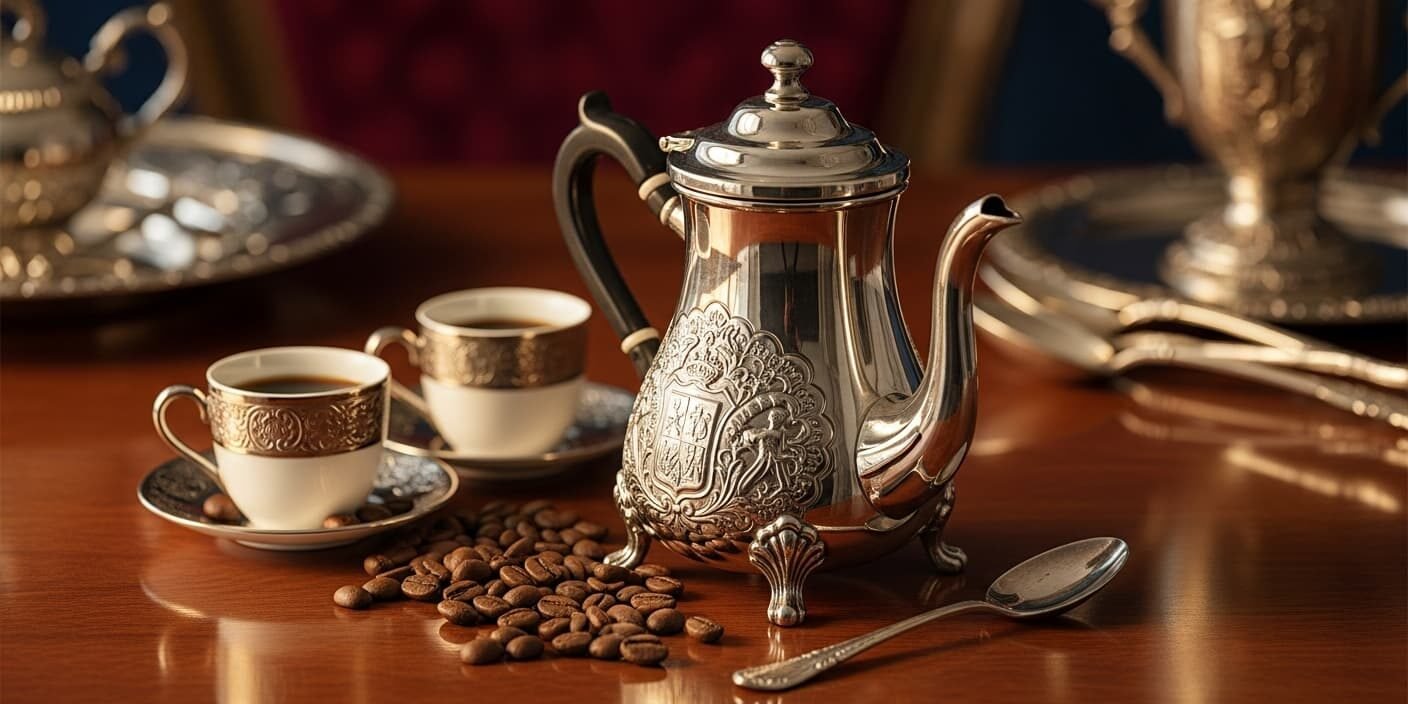
I have always been fascinated by objects that tell stories. While researching an article on the history of coffee in Eastern Europe, I came across images of the silver coffee sets used by the Russian nobility under the Tsars, and I was captivated for quite a while. They were not simple utensils: they were works of silversmithing that reflected all the grandeur of an era. I delved into their history, their manufacturing techniques, their current value, and what makes these pieces so coveted by collectors around the world. In this article, I’ll tell you everything I discovered. Let’s begin!
Origin and evolution of silver coffee pots
Silver coffee pots have a rich history in which tradition, art, and functionality intertwine. Below, their evolution is explored from the earliest uses of silver in object-making to their development during the time of the Tsars.
History of silver in the making of objects
Silver in 19th-century Russian culture
During the 19th century, silver became a symbol of status and sophistication in aristocratic Russia. Its value lay not only in the amount of precious metal the objects contained, but also in their cultural meaning. Noble families used silver pieces to highlight their wealth and refinement, creating a strong link between silver and the customs of Russian high society.
Craft techniques in antique silver
The techniques for making silver objects evolved over the years. Craftsmen used meticulous methods to work this precious metal. From casting to chasing, each piece was painstakingly crafted, ensuring not only its quality but also its aesthetic value. The tradition of silverwork was passed down from generation to generation, teaching the importance of detail and creativity.
Development of silver coffee pots in the time of the Tsars
Influence of Russian art on design
The influence of Russian art was fundamental in the design of silver coffee pots. The aesthetics of the Tsarist era were characterized by an opulent and ornate style, where Baroque and Neoclassical elements were blended. This fusion gave rise to coffee pots that were not only functional, but also served as works of art. Influences from folklore and nature were reflected in the decorative motifs, thus creating masterpieces that captured the essence of Russian culture.
Innovations in the use of silver for coffee and tea sets
With the rise in popularity of coffee and tea in Russian society, silver coffee pots began to incorporate technical and functional innovations. As new methods were developed, designs were improved to make them easier to use. This included everything from more efficient pouring systems to heat-retention methods. These innovations made coffee pots not only serving tools, but also objects of desire among lovers of hot drinks.
Characteristics of antique silver coffee pots
Antique silver coffee pots are true works of art that reflect the skill of silversmiths and the refined taste of past eras.
Materials and manufacturing processes
Types of silver used and quality
- Sterling silver: With 92.5% pure silver, it is the standard in the manufacture of luxury objects and antiques.
- 800 silver: Frequently used in the past, it contains 80% silver, offering good durability and shine.
Silverworking, set design, and decoration techniques
Traditional manufacturing techniques ranged from repoussé to casting, each contributing a unique character. Decorative details were achieved through engravings, filigree, and enameling techniques, which enriched the aesthetics of the piece.
Artistic styles and motifs
Decorative elements typical of the 19th century
- Floral motifs: Frequently used, they represented nature and abundance.
- Geometric designs: These lent a modern feel and structure to the pieces.
Iconography and symbols on silver coffee pots
The symbols used were often associated with Russian culture. Religious icons, images of the aristocracy, and motifs related to national history were common, endowing each coffee pot with a special meaning.
Composition of the coffee and tea set
Pieces that make up a classic set
- Coffee pot: The central piece designed to brew and serve coffee.
- Creamer: For serving cream or milk.
- Sugar bowl: Intended to hold sugar, often decorated with ornamental elements.
Functionality and traditional use
These coffee pots were not only for presentation, but also played an essential role in coffee rituals. They were used during social gatherings and ceremonies, highlighting the cultural importance of coffee in the society of the time.
Appraisal and preservation of antiques
The appraisal and preservation of antique silver coffee pots is essential for collectors and lovers of these works of art.
How to identify an authentic silver coffee pot
Distinctive marks and hallmarks
Authentic coffee pots usually bear marks engraved on the base or on less visible parts of the object. These marks may indicate the quality of the silver, the maker, and sometimes the date of production. Some hallmarks are specific to the era of the Tsars and add extra value to the piece.
Techniques for verifying antique silver
Authenticity can be checked using various techniques. One of the most effective is an acid test, which determines the purity of the silver. However, it is advisable to consult an antiques expert to carry out this verification without damaging the piece.
Condition and restoration
Care to keep silver in perfect condition
- Regular cleaning with soft cloths and products specifically for silver.
- Avoid contact with chemical substances that may damage the finish.
- Store the pieces in a dry place away from direct light to prevent oxidation.
Professional restoration of antique objects
If a coffee pot needs restoration, you should always turn to a specialized professional. Poorly executed restoration can reduce the value of the piece. It is important that the restorer use methods and materials that respect the integrity of the original object.
Current market for the Tsars’ silver coffee pots
Price and valuation at auctions
The prices of silver coffee pots can vary significantly depending on their condition, authenticity, and demand. Specialized auctions are often a good place to obtain information about the value of these pieces. Sometimes, prices reach high figures if the piece is of high quality and has rare characteristics.
Tips for buying and selling antiques
- Research the history of the piece and consult experts.
- Compare prices across different platforms and auction events.
- Verify the authenticity and condition of the object before purchasing.
Art and culture around coffee and silver
The connection between coffee and silver in Russian history conveys a profound cultural weight. In this context, silver coffee pots become a symbol of prestige and elegance, reflecting not only the art of their making, but also the social practices of the time.
The cultural importance of coffee in Tsarist Russia
Coffee as a social and artistic symbol
Serving coffee in an elegant silver coffee pot was a valued ritual among the nobility and upper class. Family and social gatherings revolved around the coffee table, where presentation came to life. It was a way of displaying culinary art and, at the same time, the host’s social status.
Traditions and rituals associated with the coffee set
Customs surrounding coffee were rich and varied. Among Russian traditions, the meticulous preparation of coffee and the ceremonial presentation of silver coffee pots stood out, adorning opulent tables. The act of offering coffee not only satisfied the palate, but also strengthened social bonds.
Spanish and European influence on designs
Artistic exchanges in silver and antique objects
Trade and diplomacy between Russia and other European countries facilitated the exchange of aesthetics and techniques in silvermaking. Stylizations that blended Russian tradition with Baroque or Neoclassical ornaments made each piece unique. The coffee pots became a canvas on which these artistic currents were reflected.
The evolution of art in coffee and tea sets
Over time, coffee and tea sets evolved, adopting international and regional influences. The complexity and detail in the decorations of silver coffee pots became a form of artistic expression. Silversmiths sought not only functionality, but also the beauty and visual narrative that each set conveyed.
Frequently asked questions about antique silver coffee pots
How is an antique coffee pot different from a modern one?
Identifying an antique coffee pot can be a challenge. The most notable characteristics are: the materials (antique ones are usually made of solid silver, while modern ones often use lighter metals or coatings), the design (antique coffee pots feature handcrafted details that reflect the style of the period, such as engravings and elaborate shapes, unlike the simpler lines of modern ones), and the marks (antique coffee pots may have maker’s marks and hallmarks that can be researched to determine their origin and authenticity).
What care does a silver coffee pot need to be preserved?
Maintaining a silver coffee pot is essential to preserve its beauty and functionality: cleaning with a soft cloth and products specific to silver is essential, while avoiding scouring pads that could scratch the surface; storing the coffee pot in a dry place at an appropriate temperature helps prevent oxidation; periodically checking for signs of wear ensures that repairs can be made in time.
Is it profitable to invest in an antique silver coffee set?
Investors and collectors place a high value on antique silver coffee pots. This type of item can appreciate over time, depending on its authenticity (authenticated sets and recognized brands usually have a higher value), condition (pieces in excellent condition or properly restored are more attractive), and market trends, which affect prices and can translate into good investment opportunities.
How can a silver coffee pot be used today?
Antique silver coffee pots can be used as decorative elements or for authentic coffee experiences on special occasions. Serving coffee in these pieces allows the coffee culture that has endured over time to be appreciated. It is recommended to handle them carefully to avoid accidents that may damage the coffee pot, and not to expose them to sudden temperature changes.
Where can authentic Tsarist antiques be acquired?
The search for antique silver coffee pots can be carried out at specialized auctions (many auction houses offer lots of antiques, including silver coffee pots), antique shops that focus on historical items, and antique fairs, where events dedicated to buying and selling antiques can be an excellent opportunity to find rare pieces.
At Coffee Sapiens, we never stop researching to bring you the most fascinating aspects of coffee culture, including its historical and artistic dimension. The silver coffee pots of the Tsars are a unique window into a time when coffee was a state ritual. Thanks for being there, Coffee Lover!
{ “@context”: “https://schema.org”, “@type”: “FAQPage”, “mainEntity”: [ { “@type”: “Question”, “name”: “How is an antique coffee pot different from a modern one?”, “acceptedAnswer”: { “@type”: “Answer”, “text”: “Antique pieces are usually made of solid silver, feature unique handcrafted details (engravings, elaborate shapes), and bear maker’s marks or hallmarks that make it possible to determine their origin and authenticity. Modern ones use lighter metals or coatings and have simpler lines.” } }, { “@type”: “Question”, “name”: “What care does a silver coffee pot need to be preserved?”, “acceptedAnswer”: { “@type”: “Answer”, “text”: “Clean with a soft cloth and products specific to silver, avoiding scouring pads that could scratch. Store in a dry place at an appropriate temperature to prevent oxidation. Check periodically for signs of wear and act in time.” } }, { “@type”: “Question”, “name”: “Is it profitable to invest in an antique silver coffee set?”, “acceptedAnswer”: { “@type”: “Answer”, “text”: “It can be profitable. The value depends on authenticity (recognized marks are worth more), condition (pieces in excellent condition are more attractive), and market trends. Well-documented pieces from the Tsarist era are especially sought after.” } }, { “@type”: “Question”, “name”: “How can a silver coffee pot be used today?”, “acceptedAnswer”: { “@type”: “Answer”, “text”: “As a decorative element or for special coffee experiences on specific occasions. It is recommended to handle them carefully, not expose them to sudden temperature changes, and use them to celebrate the coffee ritual at special moments.” } }, { “@type”: “Question”, “name”: “Where can authentic Tsarist antiques be acquired?”, “acceptedAnswer”: { “@type”: “Answer”, “text”: “At specialized auctions (auction houses with lots of antiques), antique dealers focused on historical items, and antique fairs. Always verify authenticity with experts before buying.” } } ] }

Soy Javier Romero, especialista en Marketing Digital, Coffee Lover y redactor de Coffee Sapiens.
Bienvenidos a Coffee Sapiens. Somos un medio digital independiente dedicado a la divulgación, análisis y cultura del café.