
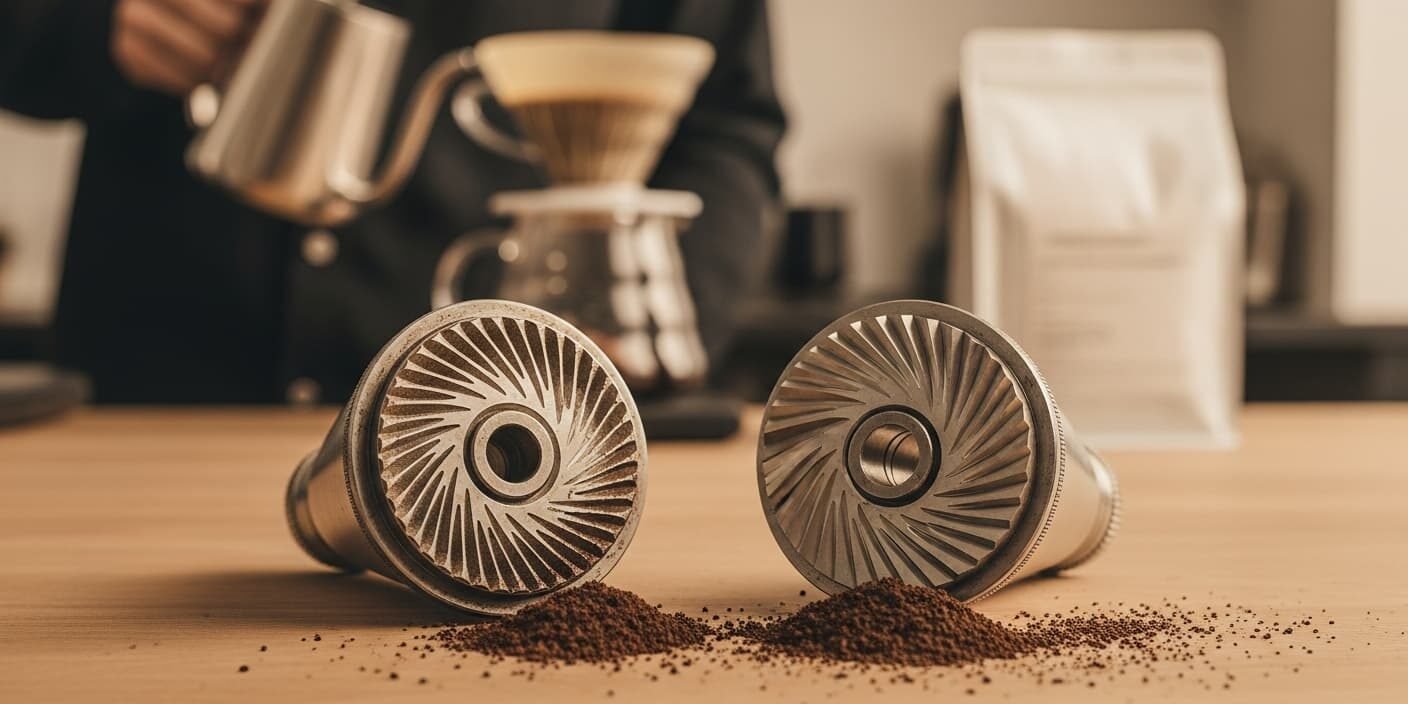
Grinder burrs are one of those parts that wear down so gradually that the deterioration goes unnoticed until one day you realize the coffee no longer tastes the same and you’ve spent weeks adjusting and readjusting the grind setting without success. The problem isn’t the coffee or the machine: it’s the burrs. I looked into when and how to detect that they’ve lost their edge, how long they really last, and what needs to be done to replace them correctly. Let’s get started!
Function and types of burrs in coffee grinders
Burrs in coffee grinders are fundamental components that determine grind quality and, consequently, the flavor experience in every cup. Conical burrs produce a more even grind with less heat generation, which better preserves aromatic oils. Flat burrs offer a more uniform and precise particle-size distribution, especially valued for espresso. The most durable materials are hardened steel and chrome-plated steel; ceramic is more wear-resistant but more expensive. Compatibility with the specific grinder model is essential when making the replacement.
Factors that influence burr lifespan
The material and the manufacturer’s quality are the most important factors: harder steel keeps its edge longer. The amount and type of coffee processed also matter: robusta varieties or high-density beans wear burrs down faster than arabica. Beans with impurities or small pebbles can cause localized damage. Frequent heavy use shortens lifespan, while regular maintenance (periodic cleaning, avoiding excessively tight settings) extends it considerably.
Signs for identifying burr wear
The visual signs of wear include color changes (a duller tone), visible loss of sharpness on the edges of the burrs, and cracks or worn areas on the surface. In performance terms, wear shows up as an uneven grind with particles of very different sizes, a constant need to recalibrate the grind setting, loss of aromatic profile in the cup, an increase in fines that generate astringency, and in grinders «on-demand», the need to adjust more frequently to maintain the same extraction time.
Process for changing grinder burrs
Keeping a record of grinding volume makes it easier to anticipate replacement before wear affects quality. When selecting new burrs, prioritize the most durable material compatible with the model. Thoroughly clean the grinder before installation, removing accumulated oils and residue with specific products. After the change, new burrs require a break-in period: grind and discard the first 200-500 grams while calibrating the setting. Check performance with cupping and adjust according to the result.
Frequently asked questions about replacing burrs in grinders
How often is it necessary to replace the burrs?
It depends on usage, but as a general reference, hardened steel burrs should be replaced after grinding between 650 and 750 lb of coffee. For a barista who works daily, the practical approach is to keep a record of grinding volume. At home, with moderate use, they can last for years in perfect condition.
How does the type of coffee affect burr wear?
Harder beans or very dark roasts wear burrs down more quickly. If you regularly grind high-density coffee or robusta, the burrs will need replacing more often than if you work only with lightly roasted arabica.
What is the difference between steel burrs and other materials?
Hardened steel burrs are more common and offer good durability. Ceramic burrs are more wear-resistant but also more expensive. For moderate home use, steel is usually enough. In busy coffee bars, it may be worth investing in ceramic.
Is it possible to extend burr life with maintenance?
Yes. Cleaning the grinder regularly to remove coffee residue, avoiding grinding beans with impurities or small pebbles, and keeping a record of use are the practices that most affect burr longevity. Proper maintenance can add months of service life.
How do you know if the problem is the burr or the coffee?
The most direct test is to use a coffee you know and have already dialed in beforehand. If, with that reference coffee, the extraction no longer works with the same grind setting that worked before, the most likely cause is burr wear. Another diagnostic sign is to look at the grounds: with worn burrs there are more visible fines and the ground coffee has less cohesion and a dustier texture rather than a uniform one.
At Coffee Sapiens we never stop researching to bring you the technical details that make the difference in your grinder and in your cup. Burrs are the heart of the grinder: keeping them in good condition is just as important as the quality of the coffee you put into it. Thanks for being there, Coffee Lover!
{ “@context”: “https://schema.org”, “@type”: “FAQPage”, “mainEntity”: [ { “@type”: “Question”, “name”: “How often is it necessary to replace the grinder burrs?”, “acceptedAnswer”: { “@type”: “Answer”, “text”: “Hardened steel burrs should be replaced after grinding between 650 and 750 lb of coffee. For a barista who works daily, the practical approach is to keep a record of grinding volume. At home, with moderate use, they can last for years in perfect condition.” } }, { “@type”: “Question”, “name”: “How does the type of coffee affect burr wear?”, “acceptedAnswer”: { “@type”: “Answer”, “text”: “Harder beans or very dark roasts wear burrs down more quickly. If you regularly grind high-density coffee or robusta, they will need replacing more often than if you work only with lightly roasted arabica.” } }, { “@type”: “Question”, “name”: “What is the difference between steel burrs and other materials?”, “acceptedAnswer”: { “@type”: “Answer”, “text”: “Hardened steel burrs are more common and offer good durability. Ceramic burrs are more resistant but more expensive. For moderate home use, steel is usually sufficient; in busy coffee bars it may be worth investing in ceramic.” } }, { “@type”: “Question”, “name”: “Is it possible to extend burr life with maintenance?”, “acceptedAnswer”: { “@type”: “Answer”, “text”: “Yes. Cleaning the grinder regularly, avoiding grinding beans with impurities, and keeping a record of use are the practices that most influence longevity. Proper maintenance can add months of service life.” } }, { “@type”: “Question”, “name”: “How do you know if the problem is the burr or the coffee?”, “acceptedAnswer”: { “@type”: “Answer”, “text”: “Use a coffee you know and have already dialed in. If the extraction no longer works with the same grind setting that worked before, the most likely cause is burr wear. With worn burrs there are more visible fines and the grounds have a dustier rather than more uniform texture.” } } ] }
Soy Javier Romero, especialista en Marketing Digital, Coffee Lover y redactor de Coffee Sapiens.
Bienvenidos a Coffee Sapiens. Somos un medio digital independiente dedicado a la divulgación, análisis y cultura del café.