
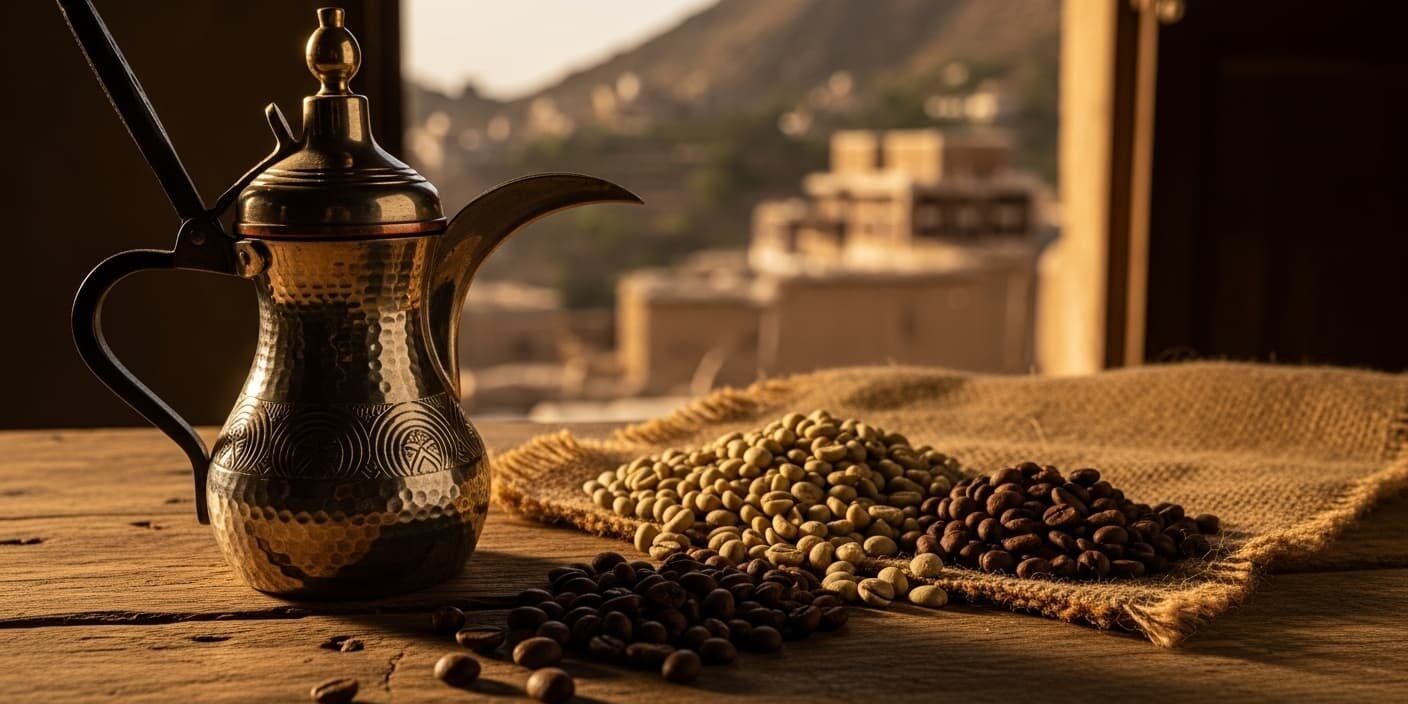
Few origins in the coffee world carry as much historical weight as Yemen. When we talk about “Moka coffee” or the legacy of Al-Mokha, we are talking about the country that for two centuries was practically the world’s only coffee exporter, the one that spread this beverage from Arabia to Europe, and the one that still preserves some of the oldest genetic varieties of Coffea arabica on the planet. And at the same time, we are talking about a country in the midst of one of the worst humanitarian crises of the 21st century. To understand Yemeni coffee is to understand that tension between an extraordinary legacy and a devastating reality.
I have researched the history of coffee in Yemen and the central role of Moka, the characteristics of local varieties and their unique sensory profile, the impact of the civil war on production, and the initiatives that are trying to keep this coffee heritage alive under almost impossible conditions. Let’s begin!
Yemen, cradle of coffee and the legacy of Al-Mokha
Yemen is the first country to cultivate coffee in a documented and organized way, and the city of Al-Mokha was during the 15th–17th centuries the most important port in the world for the coffee trade. It was from here that coffee was exported throughout Arabia, Persia, the Ottoman Empire, and finally Europe, where consumption of this beverage transformed society, giving rise to the first coffeehouses in cities such as London, Venice, Vienna, and Paris. The name “mocha,” which today we usually associate with the Moka pot or with chocolate drinks, comes directly from this Yemeni port. For almost two centuries, the Ottomans who controlled Yemen protected their coffee monopoly with enormous zeal, prohibiting the export of germinable seeds. It was only through smugglers—mainly the Dutch and later the French and Portuguese—that the plants reached Indonesia, the Antilles, and Latin America, diversifying world production and stripping Yemen of its dominant position.
Characteristics and varieties of Yemeni coffee
Yemeni coffee is grown on mountain terraces in the Haraz, Bani Matar, Jabal Sabr, and other highland areas of the west and southwest, between 1,500 and 2,500 meters above sea level. The varieties grown are mostly old local ones—some of the genetically oldest Coffea arabica varieties—with local names such as Udaini, Dawairi, Harazi, Jaadi, or Tufahi. Many have very different flavor profiles from one another, which means that “Yemeni coffee” is actually a set of microlots with very diverse profiles. In general, washed Yemeni coffee has pronounced acidity with notes of dried fruit, spices (cinnamon, cardamom), cacao, and at times a wine-like touch; natural processing—very common, since drying the whole cherry is the traditional method—produces coffees that are more intense, sweeter, and fuller-bodied. Low production, logistical difficulty, and the exclusivity of the varieties make quality Yemeni coffee one of the most expensive in the specialty market.
The humanitarian crisis and its impact on production
Since 2014-2015, Yemen has been suffering a devastating civil war that the UN has described as one of the world’s greatest humanitarian crises. The impact on coffee production has been enormous: destroyed roads that make transport from the mountain areas to the ports difficult; fuel shortages that drive up the cost of the entire process; coffee farmers displaced from their land; shortages of foreign currency and inflation that make it impossible to import inputs or maintain equipment; and severely restricted access to international markets. Yemeni coffee farmers—who before the conflict were already living on incomes of $1–3 a day—are now in an even more precarious situation. Coffee cultivation also competes with qat, a shrub whose leaves have stimulant properties and which generates quicker income for farmers, reducing the land area devoted to coffee.
Initiatives to revitalize Yemeni coffee
Despite the devastating context, there are initiatives working to keep Yemeni coffee alive. Qima Coffee is the best-known organization: it works directly with producer groups in different regions of Yemen, facilitating access to international specialty markets and guaranteeing prices far above those of the commodity market—in some exceptional lots, the price paid has been among the highest recorded in the global market. This direct trade model is essential in the Yemeni context because it eliminates intermediaries who would keep a large share of the value. There are also international cooperation projects seeking to preserve local varieties (at risk of genetic erosion), train new generations of coffee farmers, and improve processing facilities in hard-to-reach areas.
Coffee as a cultural symbol and current opportunities
In Yemen, coffee has a cultural meaning that goes far beyond the drink itself. Qishr (a traditional infusion made from the skin of the coffee cherry mixed with ginger and spices) is the quintessential hospitality drink in many Yemeni households, and it is deeply part of the country’s cultural identity. The clearest opportunity for the future of Yemeni coffee lies in the high-end specialty market: international buyers who value the unique origin, extraordinary history, and unrepeatable flavor profiles are willing to pay prices that allow for a fair value chain even under very difficult logistical conditions. For the final consumer, buying Yemeni coffee from roasters with a direct and transparent relationship is the most effective way to contribute to a sector that matters so much both to coffee history and to the survival of communities in an extreme humanitarian situation.
Frequently asked questions about Yemeni coffee and the legacy of Moka
Why is coffee from Yemen so valued in the international market?
Because of the combination of ancient and unique genetic varieties, traditional cultivation methods on high-altitude terraces, and very complex flavor profiles (spicy notes, dried fruit, cacao, and a wine-like touch) that are not found in any other origin. Production scarcity and logistical difficulties make it one of the most exclusive coffees in the specialty market.
How has the crisis affected coffee farmers?
In a devastating way: displacement from their land, destroyed roads, shortages of fuel and inputs, extreme inflation, difficulty accessing international markets, and competition from qat, which brings quicker income. Many coffee farmers were already living in extreme poverty before the conflict, and the war has seriously worsened their situation.
What initiatives support Yemeni producers?
Qima Coffee is the best-known: it works with producer groups by facilitating access to specialty markets and prices far above the commodity market through direct trade. There are also projects to preserve local varieties, train new generations, and improve processing facilities in remote areas.
What is the role of cooperatives in Yemeni coffee?
They are essential in the Yemeni context: they make it possible to access markets that an individual producer could not reach, improve bargaining power, reduce dependence on intermediaries who keep a large share of the value, and facilitate access to training and technical resources.
What makes Yemeni coffee unique?
The age of its genetic varieties, cultivation methods on terraces with hardly any chemical intervention, the traditional natural processing of the whole cherry, and flavor profiles that include notes found in no other origin: spices, dried fruit, cacao, and that wine-like touch characteristic of Moka.
How can coffee lovers contribute?
By buying Yemeni coffee from roasters that work with direct trade and origin transparency, especially those working with Qima Coffee. Paying the fair price—higher than for other origins—is the most direct way to support producers. Sharing knowledge about the origin also helps generate informed demand.
I hope this article about Yemeni coffee and the legacy of Moka has given you a complete perspective on one of the most fascinating and important origins in the history of coffee. At Coffee Sapiens, we never stop researching and learning about the wonderful world of coffee, so stay tuned because I’ll continue posting updates on the blog soon. Thanks for being there, Coffee Lover!
{ “@context”: “https://schema.org”, “@type”: “FAQPage”, “mainEntity”: [ { “@type”: “Question”, “name”: “Why is coffee from Yemen so valued in the international market?”, “acceptedAnswer”: { “@type”: “Answer”, “text”: “Because of the combination of ancient genetic varieties, traditional cultivation methods on high-altitude terraces, and very complex flavor profiles that are not found in any other origin.” } }, { “@type”: “Question”, “name”: “How has the humanitarian crisis affected local coffee farmers?”, “acceptedAnswer”: { “@type”: “Answer”, “text”: “In a devastating way: displacement from their land, destroyed roads, fuel shortages, extreme inflation, and competition from qat. Many coffee farmers were already living in extreme poverty before the conflict.” } }, { “@type”: “Question”, “name”: “What initiatives exist to support Yemeni producers?”, “acceptedAnswer”: { “@type”: “Answer”, “text”: “Qima Coffee is the best-known: it works with producer groups by facilitating access to specialty markets and prices far above the commodity market through direct trade.” } }, { “@type”: “Question”, “name”: “What is the role of cooperatives in the marketing of Yemeni coffee?”, “acceptedAnswer”: { “@type”: “Answer”, “text”: “They make it possible to access markets that an individual producer could not reach, improve bargaining power, and reduce dependence on intermediaries.” } }, { “@type”: “Question”, “name”: “What makes Yemeni specialty coffee unique compared with others?”, “acceptedAnswer”: { “@type”: “Answer”, “text”: “The age of its genetic varieties, terrace cultivation with hardly any chemical intervention, traditional natural processing, and unique profiles with notes of spices, dried fruit, and a wine-like touch.” } }, { “@type”: “Question”, “name”: “How can coffee lovers contribute to the development of coffee in Yemen?”, “acceptedAnswer”: { “@type”: “Answer”, “text”: “By buying Yemeni coffee from roasters with direct trade and origin transparency, especially those working with Qima Coffee. Paying the fair price is the most direct way to support producers.” } } ] }

Soy Javier Romero, especialista en Marketing Digital, Coffee Lover y redactor de Coffee Sapiens.
Bienvenidos a Coffee Sapiens. Somos un medio digital independiente dedicado a la divulgación, análisis y cultura del café.