
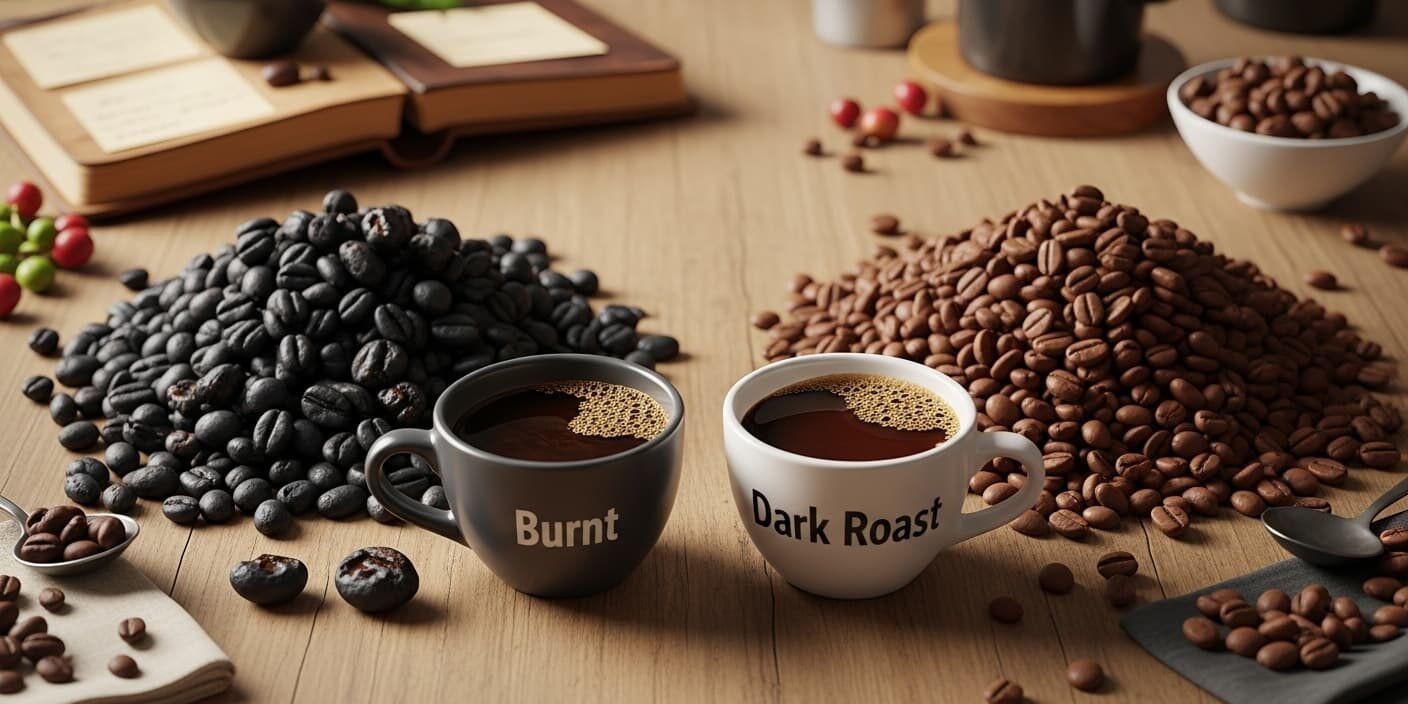
One of the most common mistakes I see among coffee enthusiasts who are starting to take an interest in roasting is confusing «dark roast» with «burnt roast». They are not the same, even though they can sometimes look superficially similar. The distinction matters because one is a deliberate stylistic decision by the roaster —with its advantages and drawbacks— and the other is a process defect that produces unpleasant flavors. Learning to tell them apart visually and in the cup is a practical skill that improves both the way you buy coffee and the way you roast it.
I have analyzed the visual differences in the bean, the differences in the cup, the indicators that help identify each one, and what to do with each type when it lands in your hands. I hope that after this article the distinction feels clear and practical. Let’s begin!
What dark roast is and how it is defined
Dark roast is a deliberate roast level in which the roaster takes the coffee beyond first crack and often up to the vicinity of second crack (between 225°C and 240°C approximately, depending on the roasting machine). The beans show a very dark brown or brown-black color, with a visible oily surface because the internal oils have migrated to the surface of the bean at these temperatures. It is a conscious aesthetic and technical decision: the roaster seeks to reduce acidity, enhance body, develop notes of dark chocolate, dark caramel, or even smoky notes, and create a coffee with an intense and recognizable profile. Traditional Italian espressos, heavily roasted supermarket blends, or the «French Roast» style are examples of intentional dark roast. The result can be tasty and have its own audience, although in the specialty coffee world very dark roasts are criticized because they tend to hide the character of the origin beneath roast notes.
What burnt roast is and why it happens
Burnt roast is not a roast level: it is a defect. It happens when the bean has gone past the desired roast point in an uncontrolled way, or when the temperature was too high for the type of bean and the surface was «scorched» before the interior developed properly. It can also be caused by a «flick» (a sharp spike in RoR at the end of the roast), by entering second crack accidentally, or by continuing the roast beyond second crack. Burnt beans show a very dark black or outright charred color, an excessively shiny surface because oils have been released in excess, and sometimes cracks or irregularities that do not correspond to a controlled second crack. Burnt roast is not a matter of preference: it is a defect that degrades the quality of the coffee regardless of the profile the roaster was aiming for.
Visual differences in the bean
The most important visual difference between dark and burnt is color and uniformity. A well-executed dark roast bean has a very dark brown to intense black uniform color, with an oily surface that is homogeneous across all the beans in the batch. A burnt bean has a duller, more «carbonized» black, with irregularities: darker areas, carbonized spots at the ends, a rougher and more brittle texture. The oils in burnt roast are excessive or poorly distributed, and the bean may split easily. When smelling the beans before grinding, dark roast smells like dark chocolate, toasted caramel, or pleasant smoke; burnt roast smells like ash, charcoal, or «burnt plastic»: a smell that does not make your mouth water.
Differences in the cup: flavor, aroma, and texture
A well-executed dark roast produces a coffee with robust body, notes of dark chocolate, caramel, or toasted nuts, low acidity, and a bitterness that is present but balanced and integrated into the whole. The mouthfeel is dense and rounded, with a long aftertaste, though not necessarily a complex one. Burnt roast produces an aggressive and unpleasant bitterness (different from the «deep» bitterness of dark roast), an ash or charcoal aftertaste that lingers for a long time, astringency (a rough drying sensation in the mouth), lack of sweetness, and an aroma in the cup that is more reminiscent of chimney water than coffee. The difference is quite obvious in cupping: dark roast may or may not appeal to you, but it is not bothersome; burnt roast is unpleasant even for those who prefer intense coffee.
Brewing methods and how to handle each type
A well-executed dark roast works best with methods that enhance body and intensity: espresso, French press, or Moka pot. In filter brewing, a slightly lower water temperature (88-90°C) helps avoid adding more bitterness than necessary. Burnt roast is difficult to «rescue» through the brewing method: the defect is in the bean and there is no way to eliminate the compounds responsible for the ashy flavor. Most commonly, burnt coffee is masked with milk, sugar, or other ingredients that cover up the taste, which explains why cheap or questionable-quality coffees are often roasted very dark: excess roasting hides defects in the bean, and consumers usually add sweeteners or milk that conceal them.
Frequently asked questions about dark roast and burnt roast
How can you spot a burnt bean at a glance?
Burnt beans have a deeper, duller black with surface irregularities (carbonized areas, a rougher and more brittle texture). The oils are excessive or poorly distributed. When smelled before grinding, burnt roast smells like ash; well-executed dark roast smells like dark chocolate or toasted caramel.
What effects does a burnt roast have on flavor and health?
In flavor: aggressive bitterness, a persistent ashy aftertaste, astringency, and lack of sweetness. In health terms: it may contain somewhat more acrylamide, but still far below EFSA’s thresholds for concern. The main problem with burnt roast is sensory, not health-related.
How much darker should the roast be for espresso?
Modern specialty espresso uses medium or medium-dark roasts (Agtron 55-65). Traditional Italian espresso tends to be darker (Agtron 45-55). The level of darkness is a matter of preference; burnt roast is a defect that no quality espresso should have.
Can a burnt coffee be rescued?
Not to any significant degree. The defect lies in the compounds formed in the bean and they are not removed by the brewing method. Adding milk or sugar can partially mask the ashy aftertaste, but the coffee will still be defective.
Which brewing methods best bring out a dark-roasted coffee?
Espresso and French press are the most suitable: espresso concentrates its compounds efficiently; French press retains the oils that give it a dense character. Filter brewing with a lower temperature (88-90°C) can also work, though with less expressiveness.
Why does dark color vary so much between roasters?
Because color depends on the final temperature but also on the duration and speed of the roast: a fast roast and a slow roast at the same drop temperature can result in similar colors but very different flavor profiles. That is why color is a useful but insufficient indicator: you always have to taste it.
I hope this analysis has helped you clearly distinguish the difference between dark roast and burnt roast. At Coffee Sapiens we never stop researching and learning about the wonderful world of coffee, so stay tuned because I’ll keep posting new content on the blog soon. Thanks for being there, Coffee Lover!
{ “@context”: “https://schema.org”, “@type”: “FAQPage”, “mainEntity”: [ { “@type”: “Question”, “name”: “How can you spot a burnt bean at a glance?”, “acceptedAnswer”: { “@type”: “Answer”, “text”: “Burnt beans have a deeper, duller black with surface irregularities. The oils are excessive or poorly distributed. When smelled, burnt roast smells like ash; well-executed dark roast smells like dark chocolate.” } }, { “@type”: “Question”, “name”: “What effects does a burnt roast have on flavor and health?”, “acceptedAnswer”: { “@type”: “Answer”, “text”: “In flavor: aggressive bitterness, a persistent ashy aftertaste, and astringency. In health terms: it may contain somewhat more acrylamide, far below EFSA’s thresholds for concern. The problem is mainly sensory.” } }, { “@type”: “Question”, “name”: “How much darker should the roast be for an ideal espresso?”, “acceptedAnswer”: { “@type”: “Answer”, “text”: “Specialty espresso uses medium or medium-dark roasts (Agtron 55-65). Traditional Italian espresso is darker (Agtron 45-55). The level of darkness is a preference; burnt roast is always a defect.” } }, { “@type”: “Question”, “name”: “Can a coffee with a burnt roast be rescued?”, “acceptedAnswer”: { “@type”: “Answer”, “text”: “Not to any significant degree. The defect lies in the compounds formed in the bean and they are not removed by the brewing method. Milk or sugar can partially mask it.” } }, { “@type”: “Question”, “name”: “Which brewing methods best bring out a dark coffee?”, “acceptedAnswer”: { “@type”: “Answer”, “text”: “Espresso and French press are the most suitable, since they concentrate or retain its dense compounds. Filter brewing with a slightly lower temperature (88-90°C) can also work.” } }, { “@type”: “Question”, “name”: “Why does dark color vary so much between roasters?”, “acceptedAnswer”: { “@type”: “Answer”, “text”: “Because color depends on the final temperature but also on the duration and speed of the roast. That is why color is a useful but insufficient indicator: you always have to taste it.” } } ] }

Soy Javier Romero, especialista en Marketing Digital, Coffee Lover y redactor de Coffee Sapiens.
Bienvenidos a Coffee Sapiens. Somos un medio digital independiente dedicado a la divulgación, análisis y cultura del café.