
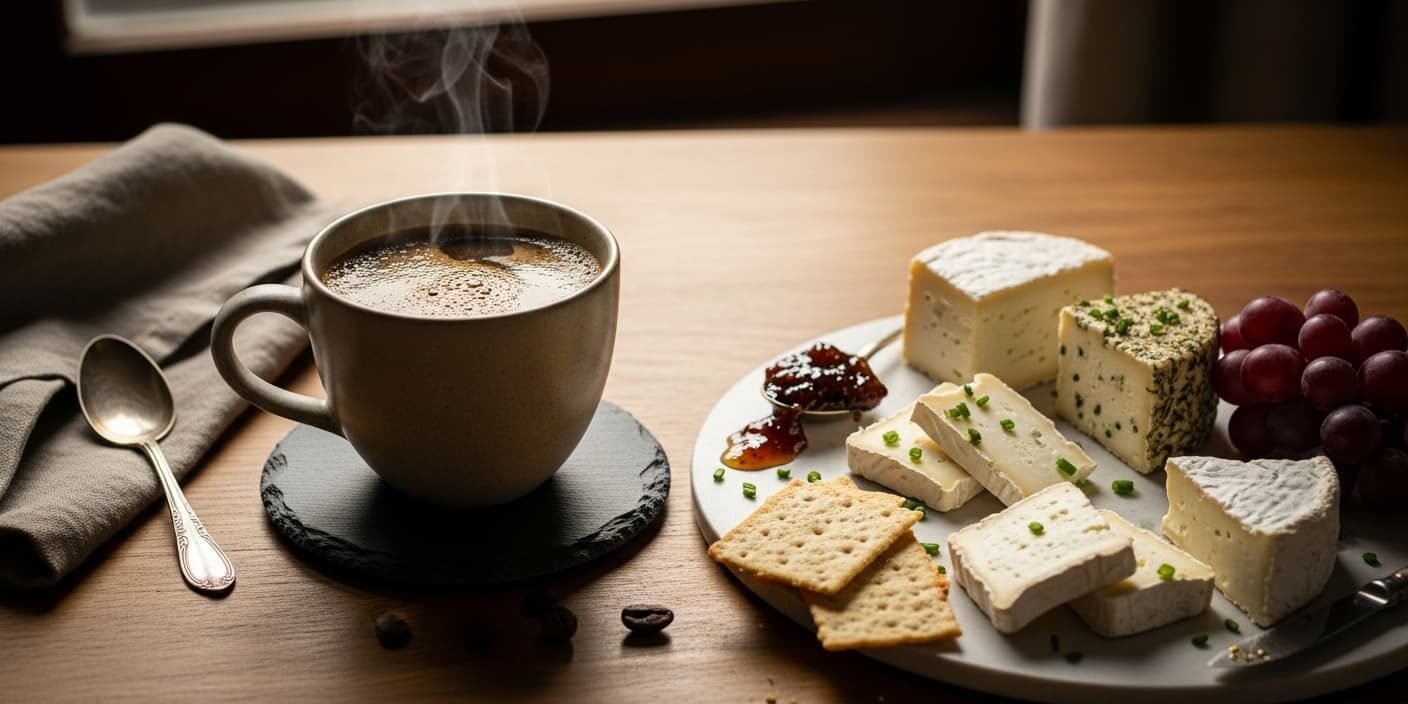
At home we have the habit of having our morning coffee with a bit of cheese, and one day I tried a washed Ethiopian with a fresh goat cheese log and it stopped me in my tracks. The floral intensity of the Yirgacheffe collided with the lactic acidity of the cheese and, instead of cancelling each other out, they amplified one another. From that point on, I started seriously researching Ethiopian coffee and goat cheese pairing: why it works, which combinations are best, and how to get the most out of it. In this article I’ll tell you everything I’ve discovered. Let’s get started!
Why Ethiopian coffee and goat cheese pairing works
Ethiopian coffee, especially from areas such as Yirgacheffe, Guji or Sidama, is characterized by bright citrus acidity and floral (jasmine, bergamot) and fruity (cherry, peach) notes. Fresh goat cheese brings lactic acidity, creaminess, and a slight animal note. The key to the pairing is that both share acidity as a common thread: instead of clashing, they complement and elevate each other. The fat in the cheese also smooths out the coffee on the palate and rounds off its acidity, lengthening the aftertaste.
Goat cheese and its types for pairing
Not all goat cheeses work the same way. Fresh chèvre (goat cheese log, goat curd) is the most versatile: its creamy texture and mild flavor let you appreciate all the nuances of the coffee. Semi-aged goat cheeses have a more pronounced flavor and pair better with fuller-bodied natural Ethiopian coffees. Aged cheeses with intense flavor can overpower the coffee and are not the best choice for this specific pairing.
The most suitable Ethiopian coffees and origins
Washed Yirgacheffe coffees are the most recommended for this pairing: their clean acidity and floral and citrus notes create the most interesting contrast with goat cheese. Natural Guji or Harrar coffees bring more body and notes of red fruit and chocolate, which works well with semi-aged goat cheeses. The ideal brewing temperature is between 70-80 °C—not so hot that it burns you—as slightly cooled coffee expresses its aromatic notes better alongside the cheese.
Specific combinations to try
The most accessible combination: a washed Yirgacheffe as filter coffee (V60, Chemex or AeroPress) with a fresh goat cheese log at room temperature. For a more gastronomic experience: a natural Guji brewed as filter coffee paired with semi-aged goat cheese with herbs (thyme, rosemary). If you want something more sophisticated, try the pairing with an Ethiopian cold brew and whipped goat cheese on an oat cracker—the chill of the cold brew and the richness of the cheese create a surprising texture.
Practical tips for enjoying the pairing
Take the cheese out of the fridge at least 20-30 minutes before the tasting: at room temperature it expresses its aromas and texture much better. Start by tasting the coffee on its own to fix its profile on the palate, then the cheese on its own, and finally alternate bite and sip. A mild palate cleanser (water or unsalted bread) between combinations will help you perceive the nuances better. And most importantly: there are no rigid rules—the pairing is all about exploration, so experiment with different types of cheese and coffee origins.
Frequently asked questions about Ethiopian coffee and goat cheese pairing
Coffee with milk or without milk in this pairing?
Without milk, definitely. Milk hides the floral and fruity notes of Ethiopian coffee, which are precisely what create the synergy with goat cheese. To appreciate this pairing in its full dimension you need black coffee—filter or a mild espresso, not a long americano.
Does this pairing work with any coffee or only with Ethiopian?
Ethiopian is the most suitable because of its floral and citrus profile, but other washed coffees with bright acidity (Kenya, Colombia, Panama) can also work well. Brazilian coffees or dark roasts, with more chocolatey profiles and low acidity, do not create the same interesting contrast with goat cheese.
What time of day is this pairing best?
Mid-morning is ideal: the palate is awake but not saturated by lunch. It also works very well as an after-meal experience following a light meal. I don’t recommend it for breakfast right after you wake up—the palate needs a moment to activate.
What else can I include on this pairing board?
Fresh acidic fruit (grapes, plum, raspberry) complements the whole beautifully. A not-too-sweet red berry jam also works well. Avoid very fatty or highly spiced foods that overpower the whole—the goal is for the coffee and cheese to be the stars.
Is there a difference between pairing Ethiopian coffee as espresso or as filter coffee?
Yes, quite a bit. Ethiopian espresso has more concentration, more body, and more bitterness, which can overpower fresh goat cheese. Filter coffee—in a V60 or AeroPress—produces a lighter, cleaner, more aromatic cup that lets you appreciate the nuances of the pairing better. If you only have espresso, add a little hot water to make a light americano.
At Coffee Sapiens we never stop researching to bring you the most unexpected and fascinating pairings in the world of coffee. Ethiopian coffee and goat cheese is one of those pairings that, once you’ve tried it, you never look at it the same way again. Thanks for being there, Coffee Lover!
{ “@context”: “https://schema.org”, “@type”: “FAQPage”, “mainEntity”: [ { “@type”: “Question”, “name”: “Coffee with milk or without milk in this pairing?”, “acceptedAnswer”: { “@type”: “Answer”, “text”: “Without milk. Milk hides the floral and fruity notes of Ethiopian coffee, which are what create the synergy with goat cheese. To appreciate this pairing you need black coffee, ideally as filter coffee.” } }, { “@type”: “Question”, “name”: “Does this pairing work with any coffee or only with Ethiopian?”, “acceptedAnswer”: { “@type”: “Answer”, “text”: “Ethiopian is the most suitable because of its floral and citrus profile, but washed coffees with bright acidity such as Kenya or Colombia also work well. Brazilian coffees or dark roasts do not create the same interesting contrast with goat cheese.” } }, { “@type”: “Question”, “name”: “What time of day is this pairing best?”, “acceptedAnswer”: { “@type”: “Answer”, “text”: “Mid-morning is ideal: the palate is awake but not saturated. It also works as an after-meal experience following a light meal. It is not recommended right after getting up, when the palate is still not fully active.” } }, { “@type”: “Question”, “name”: “What else can I include on this pairing board?”, “acceptedAnswer”: { “@type”: “Answer”, “text”: “Fresh acidic fruit (grapes, plum, raspberry) or a not-too-sweet red berry jam complement the whole well. Avoid very fatty or highly spiced foods that overpower the coffee and cheese.” } }, { “@type”: “Question”, “name”: “Is there a difference between pairing Ethiopian coffee as espresso or as filter coffee?”, “acceptedAnswer”: { “@type”: “Answer”, “text”: “Yes. Espresso has more concentration and can overpower fresh goat cheese. Filter coffee produces a lighter, more aromatic cup that lets you appreciate the nuances of the pairing better. If you only have espresso, dilute it with a little hot water.” } } ] }

Soy Javier Romero, especialista en Marketing Digital, Coffee Lover y redactor de Coffee Sapiens.
Bienvenidos a Coffee Sapiens. Somos un medio digital independiente dedicado a la divulgación, análisis y cultura del café.