
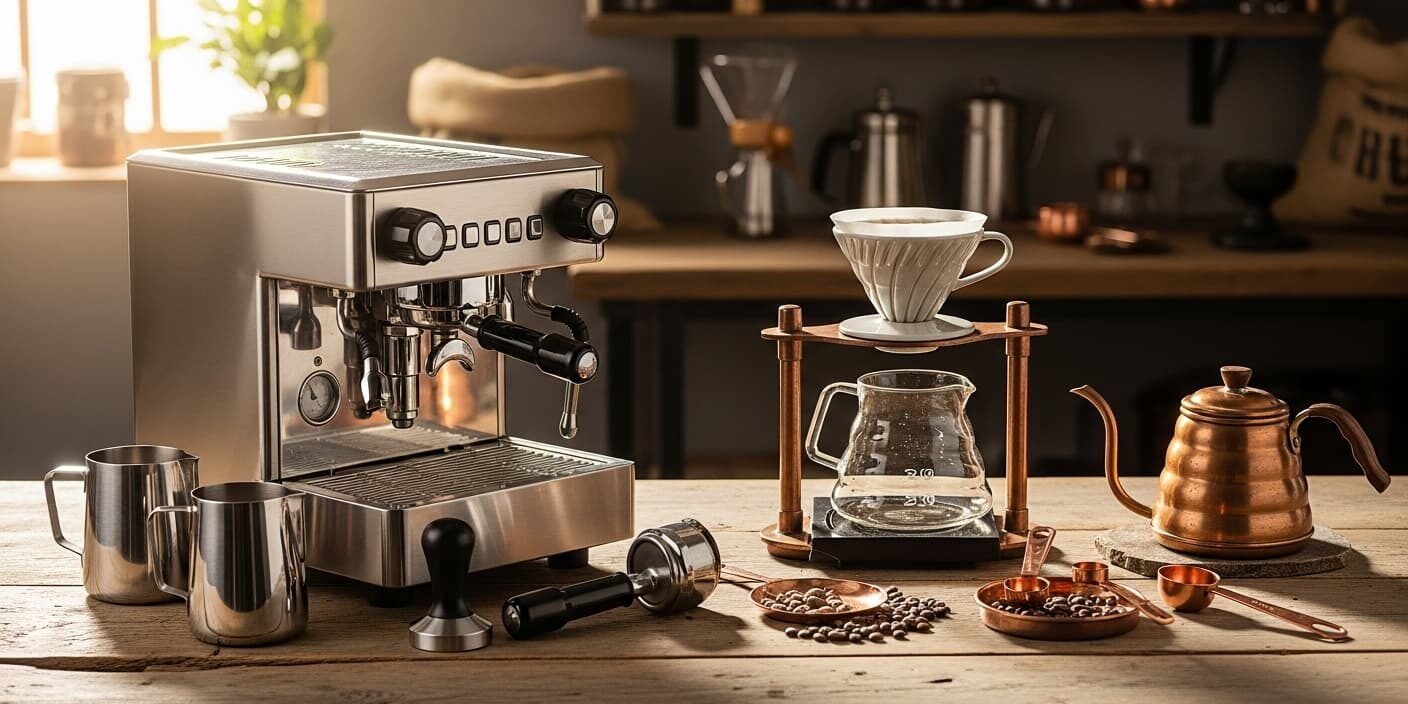
When I bought my first semi-professional espresso machine, the salesperson asked me whether I preferred a copper or stainless steel boiler as if it were something obvious. It wasn’t for me. I went home and started seriously researching the real differences between both materials—not the marketing, but the physics and chemistry behind each choice. What I found surprised me quite a bit, and in this article I’ll tell you everything so you can choose based on real criteria. Let’s get started!
Key properties of stainless steel and copper
Since ancient times, stainless steel and copper have been used in various applications thanks to their resistance and unique characteristics. For coffee lovers, it is essential to know the key properties of these materials, since they can influence the flavor and quality of the beverage.
Stainless steel is known for its exceptional corrosion resistance. This property is due to the presence of chromium in its composition, which forms a protective layer that prevents damage from moisture and chemicals. That quality makes it an ideal material for equipment that comes into contact with hot water, as it prevents the transfer of unwanted flavors.
On the other hand, copper stands out for its excellent thermal conductivity. This metal allows fast and even heat transfer, which is invaluable in coffee preparation. Efficient heating ensures that the water reaches the optimal temperature to extract the best flavors from the beans.
- Corrosion resistance of stainless steel: Ideal for environments where oxidation can be a critical problem.
- Thermal conductivity of copper: Speeds up the heating process and improves temperature control.
- Durability of stainless steel: Equipment made from this material tends to have a longer service life.
- Antimicrobial properties of copper: Properties that inhibit bacterial growth, promoting hygiene in the water used to make coffee.
- Malleability of copper: Allows easy adaptation and the design of more complex and efficient boilers.
Performance and durability in water and steam systems
When it comes to coffee, boiler performance and durability are crucial factors. The choice between stainless steel and copper can significantly influence beverage quality.
Stainless steel is known for its corrosion resistance and durability, which makes it an ideal choice for the demanding conditions of hot water and steam systems. This material can withstand high temperatures and pressures, characteristics necessary for preparing quality coffee.
On the other hand, copper stands out for its exceptional thermal conductivity, which enables rapid water heating. This results in more precise temperature control, something many baristas value when preparing coffee. However, it can be susceptible to corrosion under certain conditions, which could shorten its service life.
Most common applications and sectors
Stainless steel boilers are highly valued in the food industry, industrial facilities, and commercial heating, where hygiene, corrosion resistance, and durability are essential. Copper boilers, for their part, stand out in residential heating systems, solar thermal heating, and applications where efficiency in heat transfer is a priority. In specialty coffee, both materials coexist: steel dominates in high-production machines, while copper continues to be appreciated in certain artisanal and high-end models.
Manufacturing, welding, and boiler design
The boiler manufacturing process presents significant differences depending on the material. Stainless steel is worked using TIG welding, which makes it possible to create clean and strong joints while keeping the material’s properties intact. Copper is commonly worked using brazing, a simpler technique thanks to its malleability, although it requires precise temperature control so as not to compromise the metal. Both materials allow complex designs, although copper offers greater ease for shapes that optimize thermal distribution.
Costs, maintenance, and lifecycle economics
Stainless steel boilers usually have a higher purchase cost, but their superior durability and lower maintenance needs make them more economical in the long run. Copper boilers may have a more affordable initial price, but they are more susceptible to corrosion in certain environments, which can translate into higher accumulated maintenance and repair costs. For a home or semi-professional setup with moderate use, both options are valid; for intensive and continuous use, steel has a clear economic advantage over the total lifecycle.
Environmental impact of materials and processes
Stainless steel can be manufactured using recycled material, which reduces the extraction of new resources. Copper is 100% recyclable and retains its properties intact after recycling, which gives it an environmental advantage at the end of its useful life. However, copper mining has a significant environmental impact (habitat destruction, water pollution). The greater durability of stainless steel also contributes positively: fewer replacements mean less waste generated over time.
Practical comparison for Coffee Lovers: boiler performance and efficiency
For home use with quality espresso machines, both materials produce excellent coffee if the machine is well designed. Copper heats up faster and can offer a more agile thermal response in single-boiler machines. Stainless steel is more flavor-neutral, more durable, and easier to maintain. Modern dual-boiler machines (one for brewing espresso, the other for steam) usually use steel in both. For intensive professional use, stainless steel is today the de facto standard for its reliability and low maintenance.
Frequently asked questions about stainless steel vs copper boilers
Does the boiler material affect the flavor of the coffee?
In well-designed machines, the difference in flavor attributable to the boiler material is minimal or imperceptible in practice. Stainless steel is more neutral—it does not transfer any flavor to the water. Copper can, in cases of poor maintenance or very acidic water, release traces that affect the flavor, although this is rare in well-maintained equipment. What clearly affects flavor is temperature stability, and in that respect both materials can be excellent if the machine’s design is correct.
Why did old machines have copper boilers?
Copper was the historical standard for several reasons: it is easy to work and shape, it has excellent thermal conductivity, and it was more accessible before the development of modern stainless steel. The first 20th-century espresso machines used copper almost universally. With the advancement of stainless steel manufacturing techniques and the reduction of its cost, it gradually displaced copper during the 1970s–1990s.
Which is better for a home espresso machine?
For moderate home use (1-5 coffees a day), both materials are perfectly valid, and the quality of the coffee will depend much more on the machine’s overall design than on the boiler material. If you have to choose based on long-term economic criteria, stainless steel requires less maintenance. If you’re looking for an artisanal machine with historical or vintage character, copper has its own charm.
Does a copper boiler require more maintenance?
Yes, generally. Copper can develop green oxidation (copper carbonate patina) under conditions of humidity and hard water, which requires more frequent descaling and inspections of the inside of the boiler. Stainless steel is more resistant to scale and corrosion, reducing the frequency and cost of preventive maintenance.
Is there any health risk with copper boilers?
In well-maintained equipment and with normal-quality water, no. The traces of copper that may pass into the water are well below the limits established by the WHO for drinking water. The risk increases if the boiler is damaged, has excessive patina, or if very acidic water is used without maintenance. In any case, manufacturers of espresso machines with copper boilers design them in compliance with current food safety regulations.
At Coffee Sapiens, we never stop researching to help you make the best decisions about your coffee equipment. The choice of boiler matters, but always less than you think if the machine overall is well designed. Thanks for being there, Coffee Lover!
{ “@context”: “https://schema.org”, “@type”: “FAQPage”, “mainEntity”: [ { “@type”: “Question”, “name”: “Does the boiler material affect the flavor of the coffee?”, “acceptedAnswer”: { “@type”: “Answer”, “text”: “In well-designed machines, the difference in flavor attributable to the material is minimal. Stainless steel is more neutral. Copper can release traces in cases of poor maintenance, although this is rare. What affects flavor the most is temperature stability, not the material itself.” } }, { “@type”: “Question”, “name”: “Why did old machines have copper boilers?”, “acceptedAnswer”: { “@type”: “Answer”, “text”: “Copper was the historical standard because of how easy it is to work with, its excellent thermal conductivity, and its greater accessibility before the development of modern stainless steel. The first 20th-century espresso machines used copper almost universally.” } }, { “@type”: “Question”, “name”: “Which is better for a home espresso machine?”, “acceptedAnswer”: { “@type”: “Answer”, “text”: “For moderate home use, both are valid. Quality will depend more on the machine’s overall design than on the material. From a long-term economic standpoint, stainless steel requires less maintenance. Copper has historical and artisanal charm.” } }, { “@type”: “Question”, “name”: “Does a copper boiler require more maintenance?”, “acceptedAnswer”: { “@type”: “Answer”, “text”: “Yes, generally. Copper can develop patina and requires more frequent descaling. Stainless steel is more resistant to scale and corrosion, reducing the frequency and cost of preventive maintenance.” } }, { “@type”: “Question”, “name”: “Is there any health risk with copper boilers?”, “acceptedAnswer”: { “@type”: “Answer”, “text”: “In well-maintained equipment with normal-quality water, no. Copper traces are well below the WHO limits for drinking water. The risk only increases if the boiler is damaged or has excessive patina without maintenance.” } } ] }

Soy Javier Romero, especialista en Marketing Digital, Coffee Lover y redactor de Coffee Sapiens.
Bienvenidos a Coffee Sapiens. Somos un medio digital independiente dedicado a la divulgación, análisis y cultura del café.