
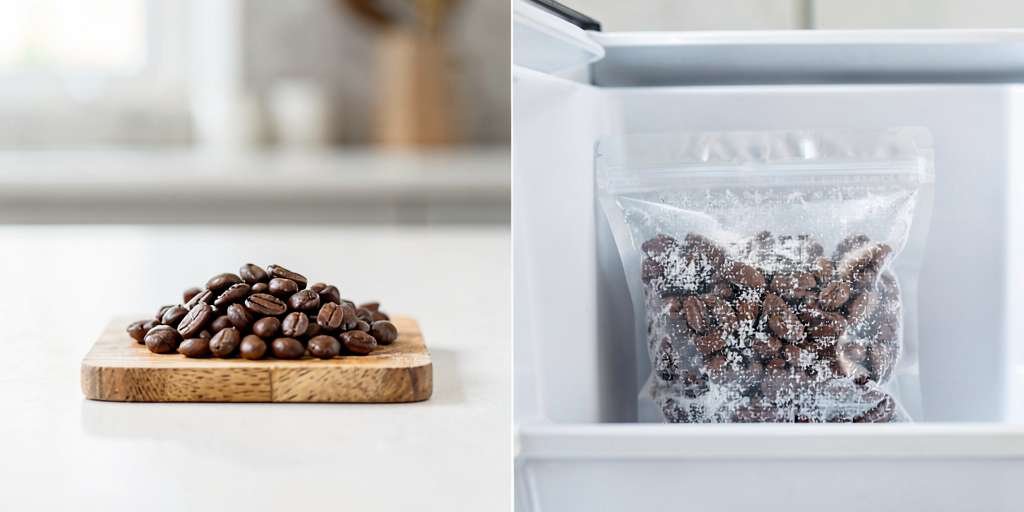
I admit that for a long time I was skeptical about this whole idea of freezing roasted coffee. It seemed to me like one of those extreme enthusiast practices that perhaps didn’t have much basis. But when I started researching it seriously —including studies— I changed my mind quite a bit.
I have reviewed the available scientific evidence, from George Howell’s pioneering work to more recent research on aromatic composition, and I have gathered everything you need to know to decide whether this practice makes sense for you. I hope it helps you settle this question once and for all. Let’s get started!
Foundations of freshness in roasted coffee
The freshness of roasted coffee is an essential element in enjoying a satisfying coffee experience. Understanding the chemical processes that occur in roasted beans is crucial to maintaining their quality.
Chemical changes in roasted beans
When coffee is subjected to the roasting process, a series of chemical changes occur that affect its freshness and flavor. Oxidation is one of the main enemies of coffee beans: it occurs when the beans come into contact with oxygen, resulting in the degradation of oils and aromatic compounds. Degassing is another important process: as the beans cool, they release carbon dioxide, which can influence flavor extraction when brewing coffee.
Factors that affect coffee freshness
Coffee freshness depends not only on chemical changes, but also on various external factors that can influence the final quality:
- Exposure to light: Direct light can degrade the essential oils present in the beans.
- Temperature: Heat can accelerate oxidation and degassing processes.
- Humidity: The presence of moisture can cause mold to form and affect the coffee’s flavors.
- Storage time: The longer the beans are stored, the less fresh they will be.
Origin and evolution of the practice of freezing coffee
The practice of freezing roasted coffee has gone from being an innovative concept to becoming a recurring strategy among coffee lovers. One of the most influential figures in this field is George Howell, who experimented with freezing coffee starting in 2001. Howell became an advocate of this technique after finding that cold could “stop the clock” on coffee aging. His contributions were crucial at coffee symposia, such as the Re:co Symposium in 2017.
Following Howell’s influence, the practice quickly became popular. By the late 2010s, many professionals in the sector began adopting this technique to extend coffee’s shelf life without compromising its quality. Today, freezing is considered a valuable tool for preserving freshness, especially in the context of specialty coffee.
Science and technology behind freezing roasted coffee
Freezing at temperatures of -25°C or lower has been shown to be more effective than conventional refrigeration, as it significantly reduces the rate of oxidation and degassing. The degassing process slows under freezing conditions, helping preserve the aromatic compounds essential to coffee’s flavor. The most effective methods include vacuum sealing, rapid freezing to prevent large ice crystals, storage in airtight containers, and the use of liquid nitrogen for specialty beans.
Impact of freezing on the quality and flavor of roasted coffee
Freezing roasted coffee can have a significant effect on its sensory qualities. Research carried out by experts such as Christopher Hendon and Maxwell Colonna Dashwood has shown that freezing helps preserve many of the aromatic compounds that are lost over time.
- Freezing preserves the essential oils and aromas that are fundamental to a rich flavor experience.
- Degassing is slower in frozen beans, allowing for better flavor retention.
- The volatile compounds responsible for aroma remain intact for longer.
When brewing coffee from beans that have been frozen, baristas have observed that coffee ground from frozen beans offers more even extraction, resulting in a more balanced flavor. It is important to note that whole frozen beans preserve quality better than coffee that has already been ground.
Recommended practices for freezing roasted coffee at home
To maximize the quality of roasted coffee frozen at home, it is essential to follow certain practices. Dividing it into smaller portions is very practical, as it minimizes exposure to air each time the container is opened. The use of airtight containers or vacuum-sealed bags is crucial to avoid contamination. Moisture is an enemy of frozen coffee: before placing the coffee in the freezer, make sure it is completely dry. To thaw it, leaving the coffee in its sealed container at room temperature for 1 to 2 hours prevents condensation from forming.
Considerations for consumers and baristas about freezing
The decision to freeze coffee beans should be made with freshness in mind. It is always advisable to do so immediately after purchase if you do not plan to consume the coffee within a reasonable time. The ideal duration for keeping coffee frozen is up to six months; beyond this point, it may lead to a loss of quality in flavor and aroma. Proper implementation of the technique can be the key to delivering an optimal experience.
Frequently asked questions about freezing roasted coffee
Does freezing coffee improve its freshness?
The answer depends on the technique used and the subsequent handling. Freezing coffee can help maintain freshness by limiting oxidation and the loss of aromatic compounds. However, it is essential to do it correctly —with airtight sealing and rapid freezing— to obtain the best results.
How long can coffee be kept frozen without losing quality?
In general, coffee can be kept frozen for up to six months. After this time, although it may still be safe to consume, it may begin to lose some of its flavor and aroma characteristics. It is advisable to label the bags with the freezing date to keep track of storage time.
Can you freeze ground coffee or only roasted beans?
Both options are viable, but freezing whole beans is preferable. Keeping coffee as whole beans until the time of preparation helps preserve its essential oils and flavor compounds. If you choose to grind the coffee before freezing it, it is recommended to do so in small portions to avoid prolonged exposure to air.
Which home methods are most effective for freezing coffee?
Vacuum sealing minimizes contact with oxygen and is highly effective at maintaining freshness. The use of airtight containers prevents the absorption of odors from the freezer. Rapid freezing helps prevent the formation of large ice crystals that can damage the beans.
Are there risks of damaging the flavor when freezing specialty coffee?
Although freezing can be beneficial, improper handling can cause damage. Factors such as exposure to moisture during thawing or poor sealing can result in a loss of quality. The key is to thaw the coffee without opening the container until it has reached room temperature.
Is it better to freeze coffee as whole beans or already ground for brewing?
As a general rule, it is preferable to freeze coffee as whole beans. Whole beans retain their properties better over time. Grinding the coffee just before brewing, rather than freezing it already ground, will help maximize aromas at the moment of extraction.
I hope all this information about freezing roasted coffee can be useful to you when deciding whether this practice fits into your coffee routine. At Coffee Sapiens, we never stop researching and learning about the wonderful world of coffee, so stay tuned because I’ll keep posting new content on the blog soon. Thanks for being there, Coffee Lover!
{ “@context”: “https://schema.org”, “@type”: “FAQPage”, “mainEntity”: [ { “@type”: “Question”, “name”: “Does freezing coffee improve its freshness?”, “acceptedAnswer”: { “@type”: “Answer”, “text”: “It can help maintain freshness by limiting oxidation and the loss of aromatic compounds. It is essential to do it correctly —with airtight sealing and rapid freezing— to achieve the best results.” } }, { “@type”: “Question”, “name”: “How long can coffee be kept frozen without losing quality?”, “acceptedAnswer”: { “@type”: “Answer”, “text”: “Up to six months. After that, it may begin to lose flavor and aroma characteristics. It is recommended to label the bags with the freezing date.” } }, { “@type”: “Question”, “name”: “Can you freeze ground coffee or only roasted beans?”, “acceptedAnswer”: { “@type”: “Answer”, “text”: “Both options are viable, but freezing whole beans is preferable. Keeping coffee as whole beans until the time of preparation helps preserve its essential oils and flavor compounds.” } }, { “@type”: “Question”, “name”: “Which home methods are most effective for freezing coffee?”, “acceptedAnswer”: { “@type”: “Answer”, “text”: “Vacuum sealing is the most effective. Airtight containers prevent odor absorption. Rapid freezing prevents the formation of large ice crystals that can damage the beans.” } }, { “@type”: “Question”, “name”: “Are there risks of damaging the flavor when freezing specialty coffee?”, “acceptedAnswer”: { “@type”: “Answer”, “text”: “Yes, if it is handled incorrectly. Exposure to moisture during thawing or poor sealing can result in a loss of quality. The key is to thaw it without opening the container until it reaches room temperature.” } }, { “@type”: “Question”, “name”: “Is it better to freeze coffee as whole beans or already ground?”, “acceptedAnswer”: { “@type”: “Answer”, “text”: “As whole beans. Whole beans retain their properties better. Grinding the coffee just before brewing will help maximize aromas at the moment of extraction.” } } ] }

Soy Javier Romero, especialista en Marketing Digital, Coffee Lover y redactor de Coffee Sapiens.
Bienvenidos a Coffee Sapiens. Somos un medio digital independiente dedicado a la divulgación, análisis y cultura del café.