
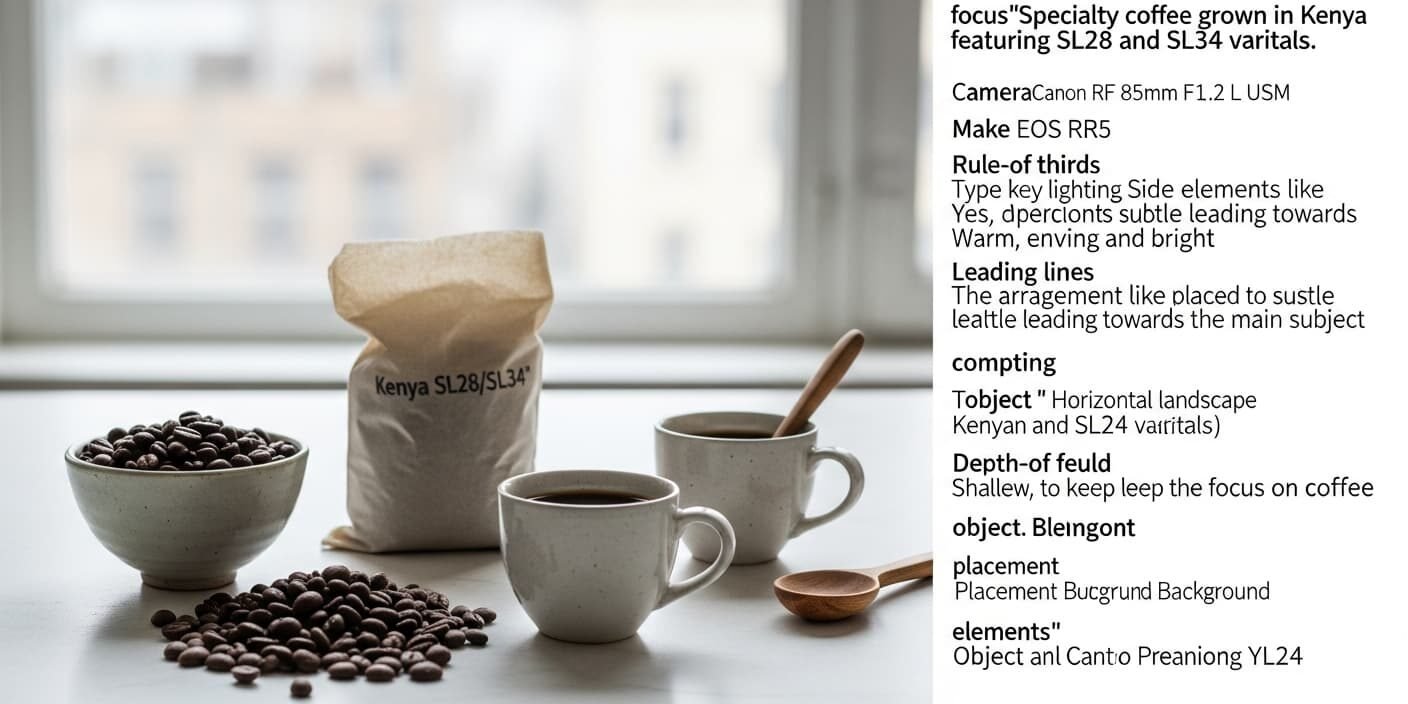
When I discovered Kenyan coffee for the first time at a cupping, I was speechless. I was used to the softer profiles of Brazil or the floral ones of Ethiopia, but that Kenya AA with SL28 varieties had something different: an acidity so vibrant and clean that it almost tasted like blackcurrant juice, with a depth I had not found in any other coffee up to that point. Since then, Kenyan coffee has held a special place in my coffee-loving heart, and I wanted to write about it in a complete and honest way.
I have researched the history of coffee in Kenya, the characteristics of its two star varieties (SL28 and SL34), the fascinating centralized auction system that sets this market apart from the rest of the world, and the current challenges facing the sector. I hope that after this article you will have a complete view of why Kenyan coffee is a global benchmark. Let’s begin!
History of coffee in Kenya and its origins
Coffee arrived in Kenya at the end of the 19th century, brought by British settlers and Scottish missionaries, with the first plantations established in the fertile lands around Mount Kenya and the Kiambu region. It was during the first half of the 20th century—especially in the 1930s—when Scott Agricultural Laboratories (SAL), the colonial agricultural research center, began a systematic variety selection program to identify the plants with the best quality and adaptation to the Kenyan environment. From that program came the SL28 and SL34 varieties, which carry the ‘SL’ prefix from Scott Laboratories. The Nairobi Coffee Exchange (NCX) was established as the centralized trading mechanism, and its auction system—which is still operating today—is one of the most distinctive features of the Kenyan coffee market globally. After independence in 1963, the sector was restructured to include small producers, who today represent most of the production through wet-processing cooperatives known as ‘factories’.
SL28 and SL34 varieties: profile and differences
The SL28 is considered by many cuppers to be the best coffee variety in Kenya and one of the most exceptional in the world. It is believed to descend from varieties of Sudanese or Ethiopian origin and is grown mainly in Machakos and areas around Mount Kenya. Its sensory profile is unmistakable: bright and very pronounced acidity with notes of blackcurrant, blackberry, and other berries; tropical fruit sweetness; floral touches; and a medium-high body that gives the whole cup roundness. It is more sensitive to drought and coffee leaf rust than SL34. The SL34 is believed to descend from Bourbon varieties and is more resistant to heavy rains, which makes it predominant in areas with higher rainfall such as Murang’a and Nyeri. Its cup profile is also very complex, with notes of tropical fruits, caramel, and spices, although with somewhat less extreme acidity and more body than SL28. Many coffees labeled as ‘Kenya AA’ are a blend of both varieties.
The production process: altitude, washing, and grading
Kenya produces coffee between 1,400 and 2,200 meters above sea level, with the best coffees coming from the highest areas around Mount Kenya and the districts of Nyeri, Kirinyaga, Murang’a, and Embu. Mineral-rich volcanic soils and the climate of two annual rainy seasons are determining factors. The almost universal processing method is double washed: the cherries are depulped, fermented in water for 24-36 hours, washed, soaked again in clean water for an additional 12-24 hours, and finally dried in the sun on raised beds. This meticulous process produces a cup of extraordinary cleanliness and clarity. The beans are graded by size: Kenya AA (screen 17-18), Kenya AB (screen 15-16), Kenya PB (peaberry). Although size is not a direct indicator of quality, high-altitude AAs from specific cooperatives consistently show the best cupping profiles.
The centralized auction system in Nairobi
The Nairobi Coffee Exchange (NCX) is one of the most transparent and structured coffee trading systems in the world. Cooperatives or estates bring their coffee to certified marketing agents, who classify the lots by variety, size, and quality. Samples of each lot are prepared and sent to international buyers for pre-auction cupping. On auction day, buyers from all over the world bid on the lots at the NCX, with prices that can far exceed those of the commodities market depending on quality. This direct competition among buyers is what has historically allowed high-quality Kenyan coffee to reach prices far above those of other origins. The system, however, has its critics: marketing agents take a percentage, small producers do not always receive the full price obtained, and the process can be opaque for smaller coffee farmers.
How to brew Kenyan coffee and what to expect in the cup
High-quality Kenyan coffee shines especially in filter methods that allow its aromatic complexity and clean acidity to take center stage: V60, Chemex, AeroPress with a longer recipe, or any drip method with a paper filter. The water temperature can be a bit higher (93-95°C) since high-altitude beans are dense and need sufficient temperature to extract well. What you should expect in the cup is a bright, clean acidity that recalls red fruit (blackcurrant, blackberry, blueberry), with a sweetness that balances it and develops as the coffee cools. In espresso, longer ratios (1:2.5 or even up to 1:3) at high temperature can produce spectacular results, although they require practice to keep the acidity from becoming too aggressive. The ideal roast for filter is light to light-medium; for espresso, medium or light-medium.
Frequently asked questions about Kenya coffee
What makes Kenyan coffee special in the world?
The combination of exceptional genetic varieties (SL28 and SL34), a high-altitude environment with volcanic soils and ideal climate, and very meticulous double-washed processing. The result is a coffee with bright, complex acidity, a very recognizable fruity profile, and a consistency of quality that is hard to match.
How does the centralized auction system influence the price?
The NCX creates a competitive environment where buyers from all over the world bid on the best lots, allowing the highest-quality coffee to reach prices far above the commodities market. Historically it has benefited the producers of the best lots, although smaller producers have received less of that benefit than would be desirable.
What are the key differences between SL28 and SL34?
SL28 has more extreme acidity (very pronounced blackcurrant notes) and greater aromatic complexity, but it is more sensitive to drought and disease. SL34 is more agronomically robust, with a rounder profile, more body, and more caramelized and tropical notes, with equally high acidity but somewhat less extreme.
What is the best way to brew Kenya coffee at home?
Filter methods (V60, Chemex, AeroPress with a longer recipe) allow the clean acidity and aromatic complexity to take center stage. Use water at 93-95°C and a light or light-medium roast. As the coffee cools in the cup, the fruity profiles become even more expressive.
What challenges do small Kenyan producers face?
Climate change (droughts and irregular rainfall), aging plants, international price fluctuations, opacity in the marketing system that limits direct returns to the producer, and generational challenges with young people who prefer to migrate to cities instead of continuing with coffee farming.
How to buy Kenya coffee in Spain?
Specialty roasters with origin transparency usually include Kenya periodically. Look for labels that specify the variety (SL28, SL34), region (Nyeri, Kirinyaga, Murang’a), and the cooperative or factory. Roasters with direct access to the Nairobi auction or direct relationships with Kenyan cooperatives usually offer the best lots.
I hope this journey through the world of Kenyan coffee has given you a complete picture of why this origin remains one of the most admired in the specialty coffee sector. At Coffee Sapiens we never stop researching and learning about the wonderful world of coffee, so stay tuned because I will keep posting updates to the blog soon. Thanks for being there, Coffee Lover!
{ “@context”: “https://schema.org”, “@type”: “FAQPage”, “mainEntity”: [ { “@type”: “Question”, “name”: “What makes Kenyan coffee special in the world?”, “acceptedAnswer”: { “@type”: “Answer”, “text”: “The combination of exceptional genetic varieties (SL28 and SL34), a high-altitude environment with volcanic soils, and very meticulous double-washed processing. The result is a coffee with bright acidity and a very recognizable fruity profile.” } }, { “@type”: “Question”, “name”: “How does the centralized auction system influence the price?”, “acceptedAnswer”: { “@type”: “Answer”, “text”: “The NCX creates a competitive environment where buyers from all over the world bid on the best lots, allowing prices far above the commodities market. Small producers have received less of that benefit than would be desirable.” } }, { “@type”: “Question”, “name”: “What are the key differences between SL28 and SL34?”, “acceptedAnswer”: { “@type”: “Answer”, “text”: “SL28 has more extreme acidity (blackcurrant) and greater complexity, but it is more sensitive to drought and disease. SL34 is more agronomically robust, with a rounder profile and caramelized and tropical notes.” } }, { “@type”: “Question”, “name”: “What is the best way to brew Kenya coffee at home?”, “acceptedAnswer”: { “@type”: “Answer”, “text”: “Filter methods allow the clean acidity and aromatic complexity to take center stage. Use water at 93-95°C and a light or light-medium roast.” } }, { “@type”: “Question”, “name”: “What challenges do small Kenyan producers currently face?”, “acceptedAnswer”: { “@type”: “Answer”, “text”: “Climate change, aging plants, price fluctuations, opacity in the marketing system, and generational challenges with young people who prefer to migrate to cities.” } }, { “@type”: “Question”, “name”: “How can I buy Kenyan specialty coffee in Spain?”, “acceptedAnswer”: { “@type”: “Answer”, “text”: “Specialty roasters with origin transparency usually include Kenya periodically. Look for labels that specify the variety, region, and cooperative or factory.” } } ] }

Soy Javier Romero, especialista en Marketing Digital, Coffee Lover y redactor de Coffee Sapiens.
Bienvenidos a Coffee Sapiens. Somos un medio digital independiente dedicado a la divulgación, análisis y cultura del café.