
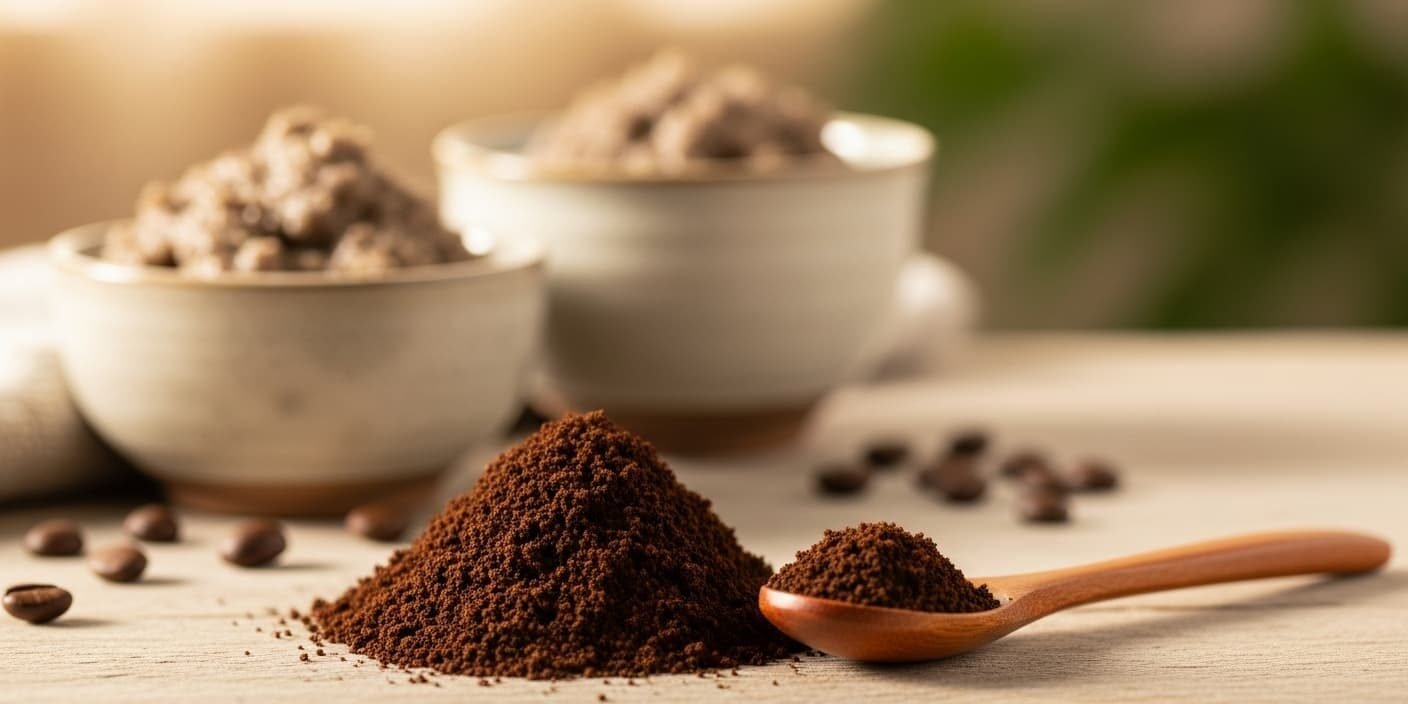
The first time I used the grounds from my Aeropress as an exfoliant, it was more out of curiosity than conviction—I was not expecting much. But after rubbing for a minute, my skin had a different texture: softer and more radiant. From then on, I started seriously researching the chemistry behind it, its real limitations, and the best ways to apply it. I will tell you everything I have learned so you can make the most of it without making the mistakes I made at the beginning. Let us get started!
Beneficial properties of coffee grounds for the skin
Coffee grounds act as a physical exfoliant thanks to their granular texture, which removes dead skin cells and stimulates blood circulation. But their value goes beyond mechanical abrasion: they contain antioxidants (chlorogenic acids) that fight free radicals and premature aging, anti-inflammatory properties that reduce puffiness and redness, and caffeine that, when applied topically, can improve lymphatic drainage and help visibly reduce cellulite by stimulating local microcirculation. The scientific evidence on this last point is moderate, but the immediate effect of skin stimulation is real.
Homemade coffee exfoliant recipes
Basic recipe for the body: 3 tablespoons of coffee grounds + 2 tablespoons of olive or coconut oil. Mix until you get a smooth paste. For the face (normal to oily skin): 1 tablespoon of grounds + 1 tablespoon of honey. Honey adds hydration and antibacterial properties. For dry skin: 2 tablespoons of grounds + 1 tablespoon of sweet almond oil + a few drops of rosehip oil. The ideal consistency is that of a thick paste that does not drip but spreads easily.
How to apply the coffee exfoliant depending on the area
Face: Apply to slightly damp skin. Very gentle circular motions, without pressing—the skin on the face is thinner and more sensitive. Avoid the eye area. 1-2 minutes maximum. Body (elbows, knees, heels): You can be more vigorous on these thicker-skinned areas. Horsehair gloves combined with the exfoliant enhance the effect. Upward technique: On legs and abdomen, always apply toward the heart to encourage venous return and lymphatic drainage.
Frequency and care before and after
The recommended frequency is 1-2 times a week for the body and once a week for the face. Excessive exfoliation damages the skin barrier. Before: cleanse the skin well with a gentle gel cleanser. After: moisturize immediately with cream or oil—the freshly exfoliated skin absorbs hydrating ingredients better. If you are going to be exposed to the sun, apply SPF: exfoliated skin is more photosensitive. Store the prepared exfoliant in an airtight jar in the fridge and use it within a maximum of 1 week to prevent the grounds from developing mold.
Sustainability: grounds vs commercial exfoliants
Conventional commercial exfoliants often contain microplastics (polyethylene microbeads) that pollute aquatic ecosystems. Coffee grounds are 100% biodegradable, free (they are a waste product you already have at home), and customizable according to your skin type. The only precaution is the drain: do not pour large amounts of grounds down the sink or bathtub drain, as they can clog the pipes. Put them in the compost or organic waste bin.
Frequently asked questions about coffee grounds as an exfoliant
How often can you exfoliate your skin with coffee grounds?
The recommended frequency is 1-2 times a week for the body and once a week for the face. Facial skin is more sensitive and gets irritated more easily. If you notice persistent redness or dryness after exfoliation, reduce the frequency or try a gentler mixture (fewer grounds, more oil).
Can it be used on sensitive skin or skin with blemishes?
With caution. For sensitive skin, mix the grounds with plenty of oil to reduce abrasion, apply with very little pressure, and limit use to once every 10 days. For skin with active blemishes or inflamed acne, avoid exfoliating the affected areas: rubbing can spread the infection. Consult a dermatologist if you have doubts about your skin type.
What is the difference between natural grounds and other commercial exfoliants?
Coffee grounds are a 100% natural and biodegradable physical exfoliant, without microplastics or artificial preservatives. Commercial exfoliants have more controlled formulations (adjusted pH, preservatives that extend the product’s shelf life, more uniform textures). Grounds win on sustainability and zero cost; commercial ones win on product consistency and durability.
Do grounds from any type of coffee work?
Yes, although with nuances. Grounds from filter coffee makers or Aeropress have a medium particle size ideal for exfoliating. Espresso grounds are finer and less abrasive—good for the face. Grounds from an Italian coffee maker (moka) are similar in size to filter grounds. Avoid instant coffee, which does not produce real grounds but rather powder that dissolves in water.
Do coffee grounds stain surfaces?
Yes, they can leave temporary stains in the bathtub or on the shower floor—it is one of the practical drawbacks. To minimize this, rinse the area well with cold water immediately after using the exfoliant. On very fair skin, the grounds can also leave a slight temporary brown tint that disappears with normal rinsing.
At Coffee Sapiens we never stop researching to uncover all the surprising uses of coffee beyond the cup. Coffee grounds are one of those resources you have at home every day and that are worth making the most of. Thanks for being there, Coffee Lover!
{ “@context”: “https://schema.org”, “@type”: “FAQPage”, “mainEntity”: [ { “@type”: “Question”, “name”: “How often can you exfoliate your skin with coffee grounds?”, “acceptedAnswer”: { “@type”: “Answer”, “text”: “1-2 times a week for the body and once a week for the face. If you notice persistent redness, reduce the frequency or use a gentler mixture.” } }, { “@type”: “Question”, “name”: “Can it be used on sensitive skin or skin with blemishes?”, “acceptedAnswer”: { “@type”: “Answer”, “text”: “With caution. Mix the grounds with plenty of oil and apply with light pressure. Avoid areas with inflamed acne. Consult a dermatologist if you have any doubts.” } }, { “@type”: “Question”, “name”: “What is the difference between natural grounds and other commercial exfoliants?”, “acceptedAnswer”: { “@type”: “Answer”, “text”: “Grounds are 100% natural and biodegradable, with no microplastics. Commercial exfoliants have more controlled and consistent formulations. Grounds come out ahead in sustainability and zero cost.” } }, { “@type”: “Question”, “name”: “Do grounds from any type of coffee work?”, “acceptedAnswer”: { “@type”: “Answer”, “text”: “Yes. Filter coffee or Aeropress grounds are ideal for the body; finer espresso grounds are good for the face. Avoid instant coffee, which does not produce real grounds.” } }, { “@type”: “Question”, “name”: “Do coffee grounds stain surfaces?”, “acceptedAnswer”: { “@type”: “Answer”, “text”: “Yes, they can leave temporary stains in the bathtub or shower. Rinse well with cold water immediately after using the exfoliant.” } } ] }

Soy Javier Romero, especialista en Marketing Digital, Coffee Lover y redactor de Coffee Sapiens.
Bienvenidos a Coffee Sapiens. Somos un medio digital independiente dedicado a la divulgación, análisis y cultura del café.