
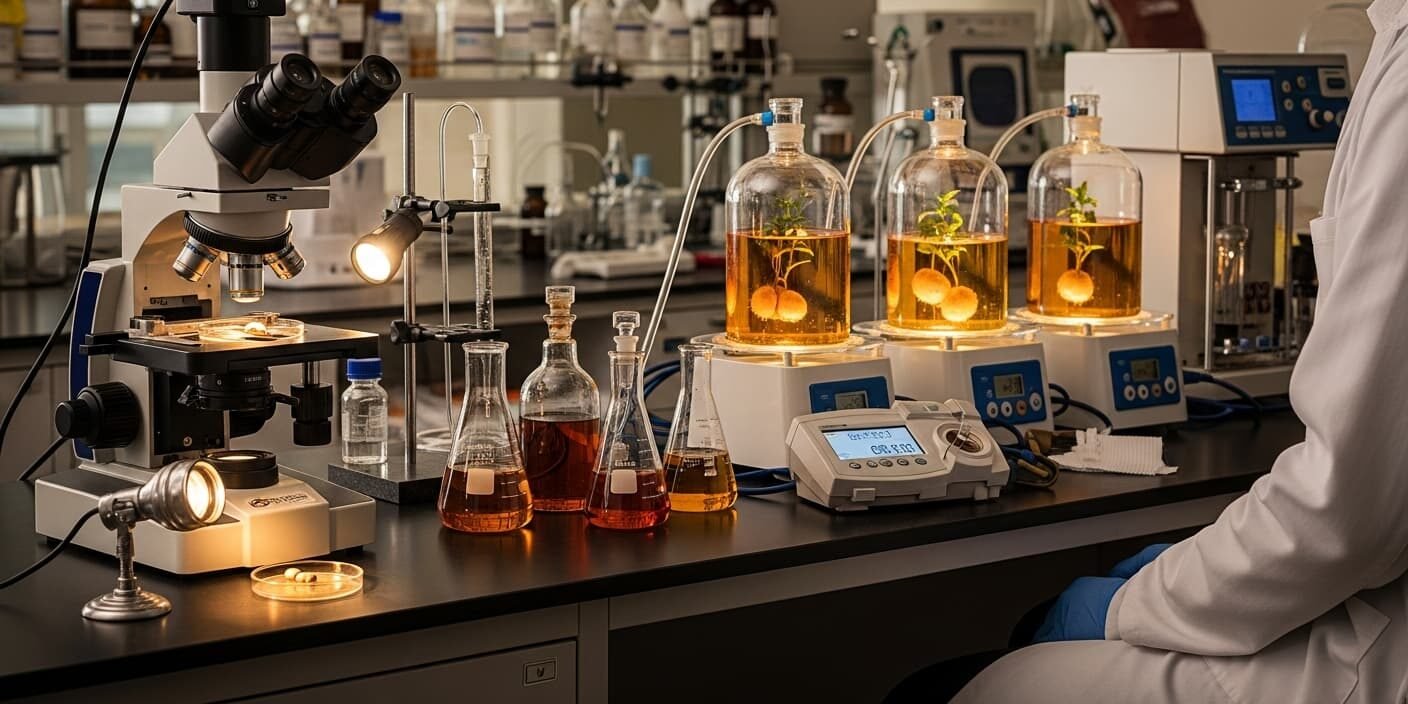
When I first read about the Finnish institute VTT and its project for coffee cultivated from plant cells, I was speechless. It was not science fiction: it was a real laboratory producing real coffee without a single plant or a single bean grown in a field. The idea that we can replicate coffee biochemistry in a bioreactor to relieve pressure on tropical ecosystems seemed so fascinating to me that I started researching in depth how it works, what stage the technology is at, and what implications it has for the future of the sector. In this article I will tell you everything. Let’s begin!
Current challenges in traditional coffee production
Coffee production faces significant challenges that affect both its quality and its sustainability.
Environmental impact and deforestation
The expansion of coffee-growing land has contributed to deforestation in several regions of the world. The need for more space to plant coffee trees has led to logging, altering ecosystems and causing biodiversity loss. The use of intensive farming practices, such as the application of pesticides and fertilizers, has further increased environmental damage.
Climate change and its effect on coffee plants
Climate change has become an imminent threat to coffee production. Changes in temperatures and weather conditions have altered plant growth patterns. Varieties that once thrived in certain environments now face difficulties due to higher temperatures and prolonged droughts, affecting both the quantity and the quality of the coffee produced.
Growing global demand and its consequences
With more than 10 billion kilograms of coffee produced each year, global demand continues to rise. This pressure on traditional producers leads to a search for more efficient cultivation methods that often worsen the environmental problems mentioned above.
Fundamentals of lab-grown coffee
The process of producing coffee from plant cells is based on well-established biotechnological principles that set it apart from traditional cultivation.
Origin and extraction of plant cells
The first step is obtaining the plant cells. From a small part of the coffee plant, such as a leaf or a shoot, researchers extract the cells needed to begin cultivation without having to maintain the whole plant.
Specific nutrient medium for cell culture
Once the cells are obtained, they are placed in a nutrient medium specifically designed to promote their growth and reproduction. This medium contains the essential nutrients the cells need: sugars, minerals, and vitamins. The formulation of the medium is crucial, as it determines the health and proliferation of the cells during cultivation.
Transfer to bioreactors and cultivation control
When the cell mass reaches a sufficient quantity, it is transferred to bioreactors. These devices make it possible to simulate optimal growth conditions by controlling temperature, pH, nutrient concentration, and oxygenation. This controlled environment enables efficient and uniform mass production.
Drying, roasting, and preparation of the final product
The resulting biomass is dried to remove moisture and then roasted. Roasting transforms the biomass into a product that can be used as a base for coffee. The flavor and aroma profile obtained at this stage is crucial to ensure that the coffee meets consumer expectations.
Research and development in specialized institutes
The role of the Finnish institute VTT in innovation
The VTT institute (Technical Research Centre of Finland) has become a benchmark in the development of lab-grown coffee. Through its research, it has managed to extract cells from coffee plants and cultivate them in a controlled environment, addressing the limitations of conventional agriculture with promising results.
Plant biotechnology and its application to coffee
Plant biotechnology plays a crucial role in this process. Using advanced techniques, researchers can manipulate coffee cells to ensure optimal growth, resulting in products with organoleptic characteristics similar to conventional coffee.
Contribution of scientists and experts to the project
A multidisciplinary team of scientists and experts is involved in the project. From biologists to agricultural engineers, each one contributes their experience to the development of this innovative coffee. Collaboration among these disciplines is key to optimizing the production process and ensuring the quality of the final result.
Sensory characteristics and composition of lab-grown coffee
Comparison between cultivated coffee and regular coffee
Lab-grown coffee offers a sensory profile similar to conventional coffee. Research has shown that the flavor, aroma, and texture are comparable, maintaining organoleptic qualities that consumers value, along with a color and consistency that evoke the experience of a normal cup of coffee.
Iterative optimization of flavor and aroma
The production of lab-grown coffee involves a careful optimization process. Experts carry out frequent cupping tests to identify the right proportions of nutrients and cultivation conditions that allow the flavor and aroma profile to be adjusted iteratively.
Evaluation by expert cupping teams
Lab-grown coffee is not only subjected to chemical analysis; it also undergoes sensory evaluations carried out by specialized tasters who use standardized cupping methods to ensure that the final product meets quality expectations.
Sustainability and environmental benefits
Reduced use of pesticides and fertilizers
The cell culture method uses a controlled approach that minimizes the need for pesticides and chemical fertilizers. Bioreactors provide a pest-free environment, and the use of nutrients in exact quantities optimizes growth without relying on harsh chemicals.
Conservation of water resources and soil
Lab-grown coffee uses significantly less water than conventional cultivation, makes it possible to precisely adjust irrigation to avoid waste, and does not use natural soil, keeping terrestrial ecosystems intact and contributing to biodiversity.
Reduction of deforestation and preservation of ecosystems
By not requiring additional agricultural land, lab-grown coffee protects tropical forests and mountains. The continuity of ecosystem services such as climate regulation and the maintenance of air quality is strengthened, and this progress may inspire other sectors to follow a similar path of sustainable innovation.
The impact on the market and the consumer
Democratized access to coffee without geographic limitations
Production in bioreactors makes it possible to cultivate coffee regardless of external climate conditions. Regions that have not been coffee producers could gain access to this product, creating new market opportunities and reducing dependence on traditional producing areas.
Consumer perception and challenges in product acceptance
The acceptance of lab-grown coffee presents a considerable challenge. Although consumers are looking for more sustainable alternatives, the perception of ‘lab-grown coffee’ may generate skepticism. To address these challenges, educational campaigns, validation by expert cuppers, and open dialogue between producers and consumers are essential.
Influence on prices and stability of the coffee market
Lab-grown coffee has the potential to reduce pressure on traditional crops and expand supply in the market, contributing to long-term price stability.
Regulation and commercialization of cultivated coffee
Approval processes by food safety agencies
For lab-grown coffee to be commercialized, it must go through rigorous approval processes that include evaluating the composition of the final product, verifying the production processes, and reviewing safety studies. This assessment may take several years.
Legal and regulatory challenges in Europe and Spain
The regulatory framework in Europe and Spain presents several challenges: variability in food safety guidelines between countries, a lack of specific regulations for products derived from cell cultures, and possible barriers to market entry due to public perception of biotechnology.
Strategies for introducing the product to the market
Key strategies include awareness campaigns to educate consumers, collaborations with established coffee companies to facilitate distribution, and clear marketing that communicates the product’s sustainability and quality.
Comparison with other innovations in cell-cultured foods
Parallels with cell-cultured food in other industries
Food production through cell culture is not limited to coffee. Lab-grown meat has started to be commercialized in some countries. Both innovations seek to reduce environmental impact and share challenges in consumer acceptance and skepticism about their origin.
Possibilities for future development of plant-based products
The technology can be applied not only to coffee but also to other edible plants. The creation of fruits and vegetables from cells allows us to envision a new era of food production with improvements in quality, flavor, and reduced dependence on conventional agricultural techniques.
Lessons learned from other advances in plant biotechnology
The experience gained has provided valuable lessons: the importance of carrying out taste and quality tests through expert cuppers, the need to comply with strict food safety regulations, incorporating consumer feedback during the development process, and fostering collaboration between scientists and industry experts.
Frequently asked questions from Coffee Lovers about lab-grown coffee
What are plant cells and how are they cultivated?
Plant cells are basic units of plant organisms. In the process of producing lab-grown coffee, they are extracted from parts of coffee plants such as leaves or shoots. Once obtained, they are placed in a specific nutrient medium that allows them to multiply under controlled conditions of temperature, pH, and nutrients.
How long does it take to develop coffee produced entirely in a laboratory?
The process from cell extraction to obtaining the final coffee can take several months, depending on the cultivation conditions and optimization methods used. In addition, the time required for regulatory evaluation must be added, which can take several years before the product reaches the market.
Is lab-grown coffee safe and healthy?
The safety of lab-grown coffee is being rigorously evaluated. Researchers are conducting tests to ensure that the product meets food safety standards. To date, no significant health risks linked to this type of coffee have been found, and its chemical composition is similar to that of conventional coffee.
How is this type of coffee prepared and consumed?
Preparing lab-grown coffee is similar to preparing traditional coffee. It can be used to make espresso, filter coffee, or cold beverages, following the same techniques applied to conventional coffee. The key is to adapt the times and methods to the specific profile of each batch produced.
Can this method increase global coffee production?
Yes, potentially. This approach makes it possible to cultivate coffee in various locations regardless of the climate, reducing dependence on traditional producing areas. This could help stabilize production and meet growing global coffee demand, especially in a context of climate change that threatens current producing regions.
Where can I currently get lab-grown coffee?
At present, lab-grown coffee is still in the research and development phase. It is not commercially available to the general public. It is expected that, after completing the necessary regulatory processes, it may become available in specialty stores and innovative coffee shops in the coming years.
At Coffee Sapiens, we never stop researching to bring you the most fascinating innovations in the world of coffee, including those that could forever change how it is produced. Lab-grown coffee is one of those technologies that deserves our full attention. Thanks for being here, Coffee Lover!
{ “@context”: “https://schema.org”, “@type”: “FAQPage”, “mainEntity”: [ { “@type”: “Question”, “name”: “What are plant cells and how are they cultivated?”, “acceptedAnswer”: { “@type”: “Answer”, “text”: “Plant cells are extracted from parts of coffee plants such as leaves or shoots. They are placed in a specific nutrient medium that allows them to multiply under controlled conditions of temperature, pH, and nutrients inside bioreactors.” } }, { “@type”: “Question”, “name”: “How long does it take to develop coffee produced entirely in a laboratory?”, “acceptedAnswer”: { “@type”: “Answer”, “text”: “The process from cell extraction to the final coffee product can take several months. In addition, the time required for regulatory evaluation must be added, which can take several years before the product reaches the market commercially.” } }, { “@type”: “Question”, “name”: “Is lab-grown coffee safe and healthy?”, “acceptedAnswer”: { “@type”: “Answer”, “text”: “Safety is being rigorously evaluated. To date, no significant health risks have been found, and its chemical composition is similar to that of conventional coffee. Regulatory approval processes will guarantee its safety before it reaches the market.” } }, { “@type”: “Question”, “name”: “How is this type of coffee prepared and consumed?”, “acceptedAnswer”: { “@type”: “Answer”, “text”: “Preparation is similar to traditional coffee. It can be used for espresso, filter coffee, or cold beverages, following the same techniques as with conventional coffee, adapting the times and methods to the specific profile of each batch.” } }, { “@type”: “Question”, “name”: “Can this method increase global coffee production?”, “acceptedAnswer”: { “@type”: “Answer”, “text”: “Yes, potentially. It makes it possible to cultivate coffee in various locations regardless of the climate, reducing dependence on traditional producing areas and helping meet growing global demand, especially in a context of climate change.” } }, { “@type”: “Question”, “name”: “Where can I currently get lab-grown coffee?”, “acceptedAnswer”: { “@type”: “Answer”, “text”: “Lab-grown coffee is currently in the research and development phase and is not commercially available to the general public. It is expected to reach specialty stores and innovative coffee shops in the coming years, after passing the regulatory processes.” } } ] }

Soy Javier Romero, especialista en Marketing Digital, Coffee Lover y redactor de Coffee Sapiens.
Bienvenidos a Coffee Sapiens. Somos un medio digital independiente dedicado a la divulgación, análisis y cultura del café.