
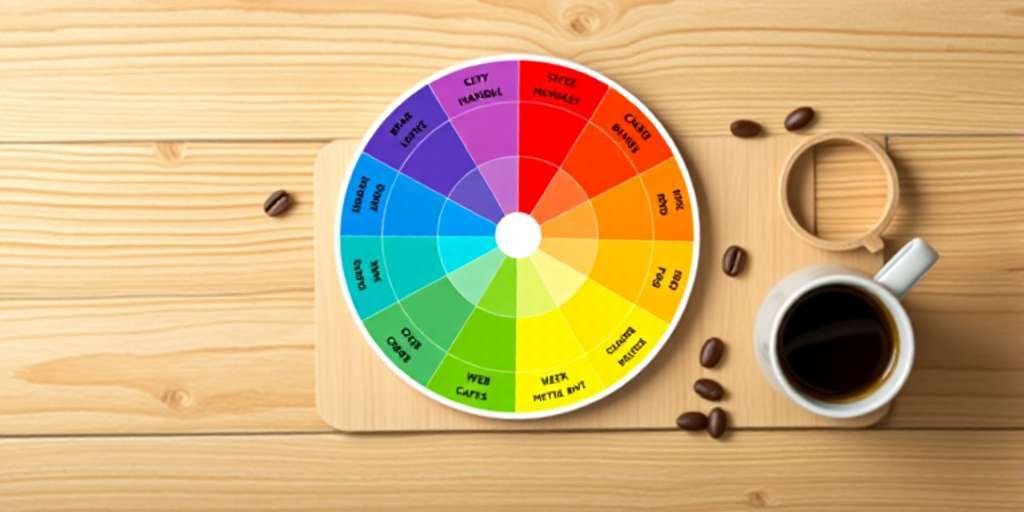
The SCA flavor wheel is an essential tool in the sensory analysis of coffee. Its design makes it possible to identify and classify the various flavors and aromas present in this beverage.
Developed by the Specialty Coffee Association, this wheel has evolved over time, adapting to the needs of coffee professionals. Its use facilitates communication between tasters and improves the quality of the specialty coffee experience.
Origin and evolution of the SCA flavor wheel
The evolution of the SCA flavor wheel has been fundamental to the standardization of sensory analysis in coffee. Its development has provided a systematic approach to understanding and communicating the complexities of this beverage.
History and early development
The concept of the flavor wheel emerged in the early 1990s, driven by the need for coffee tasters to classify flavors more effectively. Before its creation, communication among experts was based on vague and subjective descriptions. One of the most influential forces in this process was the Specialty Coffee Association, which sought to improve the quality of specialty coffee. This initial conceptual design laid the foundations that would, over time, be refined.
2016 update and new version
In 2016, the wheel underwent a significant revision to adapt to the current needs of the sector. This new version expanded the flavor and aroma categories, providing a more complete and diverse representation. The incorporation of modern colors and graphics made it easier to use in cuppings, improving its practical application. This effort was the result of collaborative work with tasters, baristas, and industry experts, who contributed their experience to optimize the tool.
Importance in the world of specialty coffee
The flavor wheel has become an essential element for any coffee professional. Its usefulness extends beyond simply identifying flavors, as it fosters a common language among tasters and producers. It facilitates the education of new baristas and coffee lovers, helping them understand the complexity of each cup. Thanks to its implementation, specialty coffee culture has flourished, establishing a quality standard that has benefited the entire industry. Without a doubt, sensory analysis techniques have gained relevance thanks to this tool, allowing coffee to be enjoyed more consciously and with greater appreciation.
Structure and elements of the flavor wheel
The layout of the flavor wheel is based on a concise structure that makes it easier to identify the different flavor nuances in coffee. Its main components are described below.
Three concentric levels and their meaning
The wheel is made up of three concentric levels that facilitate the classification of flavors and aromas. Each level represents a hierarchy, starting from the center, where the most basic flavors are found, and expanding outward, where more complex varieties can be identified. This orderly design allows tasters to navigate effectively through the different sensations that coffee can offer.
General categories: fruity, floral, sweet, and spicy
The flavors on the wheel are grouped into four general categories, which reflect predominant characteristics of coffee. These are:
- Fruity
- Floral
- Sweet
- Spicy
Each of these categories captures flavor profiles that are essential to coffee appreciation, providing a clear framework for sensory analysis.
Subcategories within fruity and floral
Within the fruity and floral categories, there are several subcategories that identify specific flavors. For example, the fruity category may include berry, citrus, or tropical notes, while the floral category may encompass nuances of jasmine or lavender. These subcategories enrich the sensory experience, allowing tasters to describe precisely what they perceive.
Flavors and aromas in the sweet and spicy categories
On the other hand, the sweet category relates to flavors such as chocolate or caramel, offering a comforting sensation, while the spicy category includes notes such as cinnamon or clove, which add complexity. This diversity of flavors highlights the richness of specialty coffee.
Visual representation and use of color in the wheel
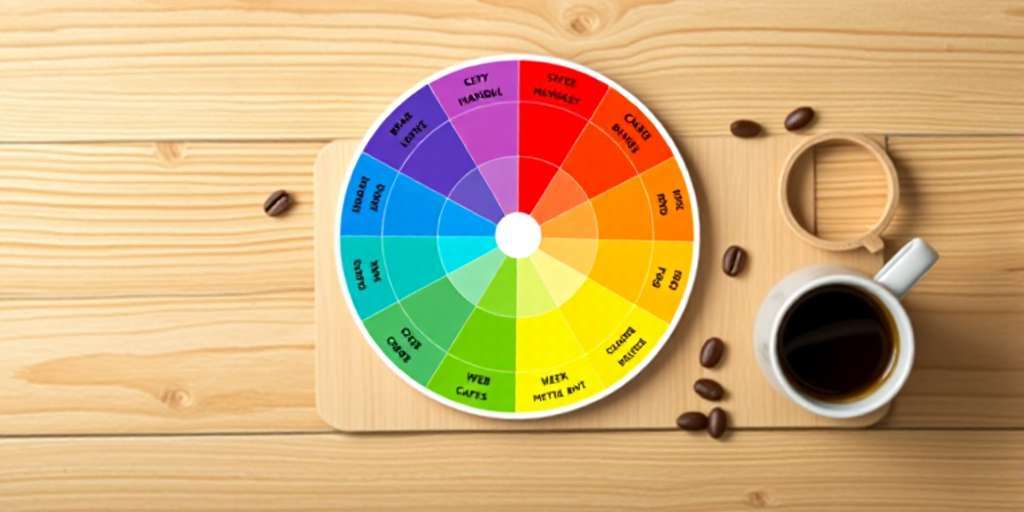
The visual representation of the flavor wheel uses a distinctive color scheme that makes it easier to identify each category. Warm colors for sweet flavors contrast with cooler tones for fruity ones, promoting intuitive navigation. This color palette is not only visually appealing, but also plays a functional role in the sensory identification process.
Function of the wheel as a sensory tool
The SCA flavor wheel is fundamental for understanding and classifying the sensory characteristics of coffee. Its use allows for a richer and deeper experience in cupping, facilitating access to a common language among tasters and enthusiasts.
Identification of coffee flavors and aromas
This instrument becomes an essential ally for distinguishing the nuances found in different coffee varieties. The methodology used involves a process of careful observation, in which each aroma and flavor can be cataloged. This helps create more precise sensory profiles.
Application in specialty coffee cupping
The wheel is integrated into the specialty coffee cupping process as a visual guide that allows tasters to identify and communicate their perceptions. It is common for the wheel to be used during a cupping to select predominant flavors, making the process more interactive and enriching.
Palate training and common language
Training the palate is essential for tasters. The wheel offers a structure that makes this training possible, helping professionals and enthusiasts develop a more precise sensory vocabulary.
Importance of language for tasters
A shared language facilitates effective communication among tasters. Being able to express sensory experiences not only reinforces individual knowledge, but also contributes to the development of quality standards in the coffee industry.
How to train the sensory sense with the wheel
The exercise of becoming familiar with the wheel involves regular cuppings, where participants are invited to explore different coffees using the descriptors provided. Repetition and practice are key to reaching a level of proficiency in flavor identification.
Use in laboratories and sensory analysis
The flavor wheel is also used in laboratory settings to carry out rigorous sensory analyses. This ensures that cupping results are measured and standardized, contributing to the research and development of new methods for coffee preparation and selection.
How to use the flavor wheel in practice
The practical application of the flavor wheel can greatly enrich the experience of tasting coffee, encouraging the identification of nuances and unique characteristics in each cup.
Steps to carry out a cupping with the wheel
Coffee preparation and recommended accessories
It is essential to select a good bean and prepare the coffee properly. It is recommended to use freshly ground coffee to maximize the freshness and intensity of the flavors. Essential accessories include:
- A French press, Chemex, or any extraction method that highlights the coffee’s characteristics.
- A grind size with an appropriate texture, neither too fine nor too coarse, depending on the selected method.
- Clean water, preferably filtered, at a temperature between 90-96°C.
Techniques for identifying notes and descriptors
During the cupping, it is essential to be in an environment free of distractions. The steps to follow are as follows:
- Smell the coffee before infusion to capture the dry aromas.
- Once prepared, inhale the aromas from the surface of the hot coffee.
- Taste small sips, allowing the liquid to cover the entire tongue and the roof of the mouth.
- Identify the notes using the flavor wheel as a guide in the sensory exploration.
Interpretation of results and entries in the sensory journal
Recording the findings in a sensory journal is essential for comparing experiences. Each cupping should include:
- The date and origin of the coffee.
- The notes and descriptors identified during each use of the wheel.
- Reflections on the preparation and the cupping process.
This allows not only the tracking of personal progress, but also a reference for future coffee selections.
Practical examples with different coffees
To put the use of the flavor wheel into practice, cuppings can be carried out with coffees from different origins. For example:
- Coffees from Ethiopia usually present floral and fruity notes.
- Coffees from Guatemala tend to be sweeter and have a fuller body.
- Coffees from Brazil frequently stand out for their nutty and chocolate notes.
Comparing and contrasting these profiles helps deepen appreciation for specialty coffee and mastery of the wheel’s use.
Impact of external factors on sensory perception
The sensory perception of coffee is influenced by various external factors that can alter the way its flavors and aromas are experienced. These aspects are crucial for coffee tasters and enthusiasts.
Influence of the roasting process on flavors and aromas
The roasting process is decisive in defining the coffee’s flavor profile. During this procedure, the beans undergo chemical transformations that affect both their aroma and taste. As the coffee is roasted, volatile compounds develop that contribute to the complexity of the beverage. Roast levels, which can range from light to dark, provide different nuances:
- Light roast usually highlights fruity and floral notes.
- A medium roast tends to balance acidity and body, creating a rounder profile.
- Dark roast, on the other hand, frequently produces more bitter and earthy flavors.
Effect of the brewing and consumption method
The method used to prepare the coffee also has a considerable impact on the sensory experience. Extraction techniques, such as espresso, French press, or filter, extract different components from the coffee, resulting in unique flavor profiles. For example:
- Espresso offers a concentrated flavor, with a rich crema that adds texture.
- French press allows for a fuller extraction, which intensifies the oils and aromatic nuances.
- Drip methods usually produce a smoother coffee, with bright acidity.
Each method affects not only the flavors, but also the perception of the coffee’s freshness and intensity.
Role of freshly ground coffee in the sensory experience
Using freshly ground coffee is crucial to maximizing the sensory experience. Aromatic compounds begin to degrade quickly after grinding, causing a significant loss of flavor. The aroma of coffee ground at the time of preparation plays an essential role, as it contributes to the overall perception of the coffee. To preserve freshness, it is recommended to:
- Grind the beans just before preparing the beverage.
- Store the coffee in airtight containers and in a cool place.
- Use high-quality beans for a better sensory experience.
The freshness of the coffee has a direct effect on the intensity of the perceived flavors and aromas, highlighting the importance of each step in the preparation process.
Applications and benefits in the world of coffee
The SCA flavor wheel has various applications that are fundamental in the coffee sector, both for professionals and enthusiasts. Its use enriches the sensory experience and promotes a greater understanding of specialty coffee.
Use by baristas and professional tasters
The tool has become an essential resource for baristas and tasters. These experts use it to:
- Identify flavor and aroma profiles during cuppings.
- Improve communication about the characteristics of each coffee.
- Be part of their ongoing training in tasting techniques.
Help in the purchase and selection of specialty coffees
Coffee buyers and distributors benefit from using this wheel to evaluate different samples. This allows them to:
- Make more informed selections based on the desired flavor profile.
- Ensure consistency in the quality of the product offered.
Contribution to coffee quality and standardization
The application of the SCA flavor wheel encourages standardization in coffee evaluation. Thus, it contributes significantly to:
- Improve the overall quality of specialty coffee.
- Establish a common language that facilitates evaluation across countries and cultures.
Promotion of coffee culture and conscious consumption
The wheel also plays a crucial role in spreading a richer and more conscious coffee culture. Through its use, practices such as the following are promoted:
- Valuing origin and preparation methods.
- Promoting more informed and sustainable consumption.
Frequently asked questions about the SCA flavor wheel
This section addresses some of the most common questions that arise around the SCA flavor wheel. The objective is to provide useful clarification for those interested in the sensory analysis of coffee.
What is the flavor wheel and what is it for?
The SCA flavor wheel is a tool designed to help identify and describe the various sensory characteristics of coffee. It serves as a guide for tasters and baristas, facilitating communication about the nuances of flavor and aroma that can be found in different coffee varieties. Thanks to its design, it offers a structured way to understand the complexity of the notes that can be perceived when tasting this beverage.
How do you start using it as a beginner?
Starting to use the flavor wheel does not require prior experience. These steps can be followed:
- Become familiar with the general categories: fruity, floral, sweet, and spicy.
- Carry out simple tastings of different coffees, paying attention to the aromas and flavors that appear.
- Use the wheel as a reference during the cupping, noting the notes that are identified.
Is training needed to interpret the wheel?
Although formal training can be beneficial, it is not strictly necessary. Practice and experimentation are key to developing the ability to interpret the wheel. Participating in guided cuppings can offer an enriching experience that helps improve the ability to recognize flavors and aromas.
What differences are there between flavors and aromas on the wheel?
Flavors and aromas are intrinsically related, but they are distinct. Flavors are the perceptions experienced on the tongue, such as sweetness or acidity. On the other hand, aromas are perceived through the nose and may include subtler and more complex notes. The wheel helps break down both characteristics for better understanding.
Where can the flavor wheel be accessed visually?
The SCA flavor wheel is available on numerous platforms. It can be found in physical format, such as posters, as well as on various coffee-specialized websites. This visual resource is essential for those who want to delve deeper into coffee cupping and sensory analysis, offering direct access to a wide range of flavors and aromas.

Soy Javier Romero, especialista en Marketing Digital, Coffee Lover y redactor de Coffee Sapiens.
Bienvenidos a Coffee Sapiens. Somos un medio digital independiente dedicado a la divulgación, análisis y cultura del café.