
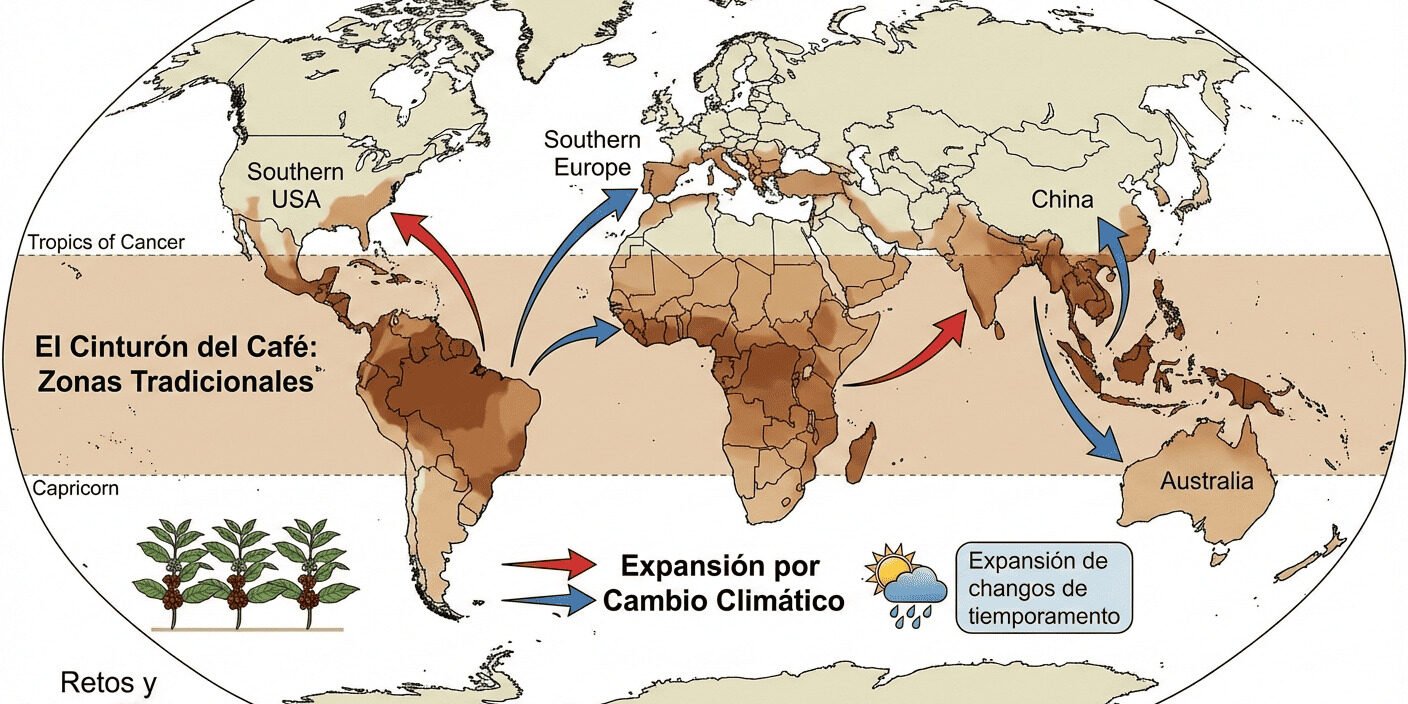
The Coffee Belt is a geographic strip that extends between the Tropics of Cancer and Capricorn. This area is essential for coffee cultivation, as its climate and soil characteristics allow for the production of different varieties of high-quality beans.
The combination of tropical climate, suitable altitude, and nutrient-rich soils contributes to the development of unique flavor profiles. Some of the most prominent producing countries are found in the Coffee Belt, where each region adds different nuances to the coffee.
Definition and scope of the Coffee Belt
This term describes a geographic strip where the optimal conditions for coffee cultivation exist.
Geographic location between the Tropics of Cancer and Capricorn
The Coffee Belt is located between the Tropics of Cancer and Capricorn. This area encompasses various regions of the world, where warm temperatures and a tropical climate predominate. This belt is essential for coffee production, as it offers a habitat conducive to the growth of coffee plants.
Importance of the tropical climate in coffee cultivation
The tropical climate plays a crucial role in coffee development. This type of climate guarantees:
- Constant temperatures, ranging between 15°C and 30°C, favoring optimal growth.
- Annual rainfall cycles, which allow the alternation between wet and dry periods, essential for bean ripening.
Soil characteristics and their influence on quality
The type of soil is another determining factor in the quality of the coffee produced. Volcanic soils, in particular, are valued for their mineral richness. These soil characteristics facilitate the development of healthy plants and, as a result, beans with complex and distinctive flavor profiles.
Ideal conditions for growing coffee in the Belt
Coffee cultivation in this privileged region depends on a set of environmental factors that combine to offer the perfect conditions for the growth of the coffee plant.
Suitable temperatures and altitude for the coffee plant
Warm temperatures are essential for coffee development. An ideal range lies between 15°C and 30°C, allowing optimal bean ripening. Altitude is another key element; generally, Arabica coffee is grown from 900 meters above sea level. At these elevations, temperatures tend to be cooler, which contributes to more complex flavors.
Rainfall cycles: wet and dry periods
The rainfall cycle directly affects coffee quality. During the growing season, coffee plants require enough water. However, dry periods are necessary to promote bean ripening, which is crucial for obtaining high-quality coffee.
Volcanic soils and their mineral contribution
Soils in the Coffee Belt, especially volcanic ones, are highly valued. These soils are rich in essential nutrients that benefit the growth of the coffee plant. Their excellent drainage and mineral composition provide the necessary foundation for obtaining coffees with distinctive flavor profiles.
Coffee varieties in the Belt area
The diversity of coffee varieties grown in this region is remarkable. There are different species that bring unique flavors and characteristics through their cultivation. The most prominent are Arabica coffee and Robusta coffee.
Arabica Coffee: characteristics and growing areas
Considered the jewel of the coffee world, this species is prized for its superior quality. Grown mainly at high altitudes, it stands out for its smoothness and complexity.
Flavor profile and typical notes
Arabica beans usually offer a more sophisticated flavor profile. Their notes include floral and fruity nuances and a touch of balanced acidity, making them a preferred choice for specialty coffees.
Climate requirements and recommended altitude
Arabica Coffee thrives at altitudes above 900 meters. It requires cool temperatures and moderate humidity, characteristics that favor slow ripening and the complexity of its flavors.
Robusta Coffee: resilience and flavor
This species, more resilient and higher yielding, is grown in less demanding conditions. Although less prized than Arabica, it has its own value in the coffee landscape.
Growing areas and specific conditions
Robusta Coffee grows well at lower altitudes, where the climate is hot and humid. Its ability to resist diseases and pests makes it a popular option in various regions.
Use in blends and instant coffee
Robusta is widely used in the creation of blends, especially in commercial and instant coffees. Its strength and body contribute to the intensity sought in many preparations.
Other varieties: Liberica Coffee and its uniqueness
Less common than the previous ones, Liberica Coffee has a unique profile. Its flavor is often described as fruity and floral, with a distinctive texture that makes it interesting to certain consumers.
Leading producing countries in the Coffee Belt
Coffee production in the Coffee Belt encompasses a magnificent variety of countries and regions, each with characteristics that influence the quality and flavor of this product so highly valued around the world.
Latin America: Brazil, Colombia, Guatemala and Mexico
On this continent, coffee production is fundamental to the economy and culture of several countries.
Regional differences in flavor and quality
- Brazil: Known for its chocolate notes and smoothness.
- Colombia: Coffees with a perfect balance between acidity and sweetness.
- Guatemala: Stands out for its diversity of flavors and complexity.
- Mexico: Famous for its smoothness and nutty notes.
Iconic regions and their characteristics
Production regions in Latin America are recognized for their exceptional climate and soils. For example, coffee from Colombia is grown at high altitudes, allowing slow ripening that highlights its flavors. In contrast, Brazilian plantations take advantage of their vast area to grow both Arabica and Robusta of different quality levels.
Africa and Arabia: Ethiopia, Kenya, Uganda and Ivory Coast
This continent is renowned for producing coffees rich in flavor and diversity.
Diversity of profiles and floral notes
- Ethiopia: Known as the birthplace of coffee, it offers floral and fruity beans.
- Kenya: Coffees with high acidity and citrus notes.
- Uganda: Produces mainly Robusta coffee with intense flavors.
- Ivory Coast: Offers coffees with earthier notes.
Historical and cultural importance in production
In African culture, coffee holds a prominent place. Ethiopia, in particular, has a rich tradition in which coffee is not only a beverage, but also a symbol of celebration and sociability.
Asia and the Pacific: Vietnam, Indonesia, India and Papua New Guinea
In these countries, the diversity of cultivation methods and coffee types is remarkable.
Predominance of Robusta coffee and its nuances
- Vietnam: The world’s leading producer of Robusta, appreciated for its strong body.
- Indonesia: Coffees from Sumatra and Java that stand out for their earthy characteristics.
- India: Offers a blend of Arabica and Robusta, varying in flavor.
- Papua New Guinea: Known for its fruity and exotic profile.
Full-bodied coffees with earthy aromas
These coffees usually have a more earthy and strong profile, which makes them perfect for blends or instant coffee. The region’s geographical configuration, together with its fertile soils, contributes to this unique characteristic.
Maps and key areas within the Coffee Belt
The geographic understanding of the Coffee Belt is essential to appreciate the diversity of its production. Below are the main regions and characteristics of the producing zones.
Geographic representation of the main producing regions
The Coffee Belt covers much of Latin America, Africa, and Asia, where recognized varieties are produced. These are some of the key areas:
- Latin America: Brazil, Colombia, Mexico and Guatemala.
- Africa: Ethiopia, Kenya and Uganda.
- Asia and the Pacific: Vietnam, Indonesia and India.
Areas with the highest concentration of cultivation by altitude
Coffee cultivation is concentrated in higher-altitude areas due to its impact on flavor. In general, the following elevations stand out:
- Arabica Coffee: Grown from 900 meters above sea level, where cool climates aid ripening.
- Robusta Coffee: Grows at lower altitudes, showing greater resistance to diseases and pests.
Influence of mountain ranges and volcanoes on the soil
Mountain formations and volcanoes play a crucial role in soil quality. They provide vital minerals that enrich coffee cultivation. Regions with volcanic soils such as:
- The highlands of Guatemala, which produce coffees with complex notes.
- The mountains of Ethiopia, recognized for their biodiversity of flavors.
The influence of the Coffee Belt on the market and quality
The Coffee Belt plays a fundamental role in the global coffee market due to its diversity and quality. Its geographical and climatic characteristics shape not only cultivation, but also the consumer experience.
How geographical conditions affect flavor and cup profile
Differences in altitude, climate, and soil type in the Coffee Belt directly influence the beans’ flavor profiles. The determining factors include:
- Temperature and humidity that affect bean development.
- Altitude, which contributes to the complexity of the flavors.
- The mineral composition of the soil, which imparts unique characteristics to the coffee.
The rise of specialty coffee and traceability
Currently, interest in specialty coffee has increased notably. This rise is due to a focus on quality, variety, and sustainability. Factors such as:
- Traceability, which allows consumers to know the origin of their coffee.
- Attention to cultivation methods that preserve biodiversity and support farmers.
Relationship between coffee quality and sustainability in the Belt
Coffee quality is closely linked to sustainable practices. Producing communities implement methods that respect the environment and promote the local economy. This approach has benefits such as:
- Improvement of the flavor profile through responsible agricultural practices.
- Support for the local economy and preservation of cultural traditions.
Coffee Belt and major brands: the Starbucks case
The impact of the Coffee Belt is clearly reflected in the strategies of major brands like Starbucks, which has focused its efforts on obtaining coffee from this rich producing strip.
Coffee sourcing and suppliers within the Belt
The search for quality coffee has led Starbucks to establish strong relationships with producers within the Coffee Belt. The brand works with select suppliers in various regions, guaranteeing the quality and freshness of its beans. This supply network includes:
- Colombia
- Brazil
- Ethiopia
- Vietnam
Impact on the selection and profile of Starbucks coffees
Each selected coffee variety adds a unique dimension to the coffee chain’s menu. Beans from the Belt bring different notes and flavor profiles, enriching the offering. For example:
- Colombian coffees are known for their balance.
- Beans from Ethiopia stand out for their floral notes.
- Vietnamese Robusta provides a robust body.
Sustainability projects and support for producers
Starbucks has also committed to sustainable practices through initiatives that support farmers in the Coffee Belt. This includes training and financing programs, encouraging responsible cultivation and improved coffee quality. These actions allow producers to earn better incomes and ensure a viable future for coffee cultivation in the region.
Fun facts and frequently asked questions about the Coffee Belt
This section explores various fun facts and frequently asked questions related to the Coffee Belt, providing interesting information for lovers of this beverage.
Why isn’t coffee grown outside the Belt?
Climatic conditions outside the Coffee Belt are not suitable for coffee cultivation. Coffee plants require constant and specific temperatures, as well as nutrient-rich soils. Outside this strip, temperature variations and the lack of necessary nutrients negatively affect the growth and quality of the beans.
Differences between coffees according to altitude and climate
Altitude and climate are determining factors in coffee’s flavor profile. At higher altitudes, particularly with Arabica coffee, beans ripen more slowly, which enhances the complexity of their flavors. In contrast, Robusta coffee, grown at lower altitudes, has earthier aromas and a more robust flavor.
How to better prepare coffee according to its origin
Coffee preparation can vary depending on its origin. For example:
- Coffees from Colombia are usually served as filter coffee to highlight their smoothness and fruity notes.
- Coffee from Ethiopia, with its wide range of floral flavors, is best enjoyed in a French press.
- For Vietnamese Robustas, a brewing method such as traditional filtered coffee usually enhances their body and intense flavor.
Myths and realities about Arabica and Robusta varieties
There are various beliefs about Arabica and Robusta coffee. One of the most common myths is that Arabica is always superior. Although it can offer more complex flavors, Robusta is valued for its resilience and caffeine content. Both have characteristics that make them unique in their own context.

Soy Javier Romero, especialista en Marketing Digital, Coffee Lover y redactor de Coffee Sapiens.
Bienvenidos a Coffee Sapiens. Somos un medio digital independiente dedicado a la divulgación, análisis y cultura del café.